

Are F7 V bank filters resistant to chemical corrosion?
Hey there! As a supplier of F7 V bank filters, I often get asked if these filters are resistant to chemical corrosion. It's a valid question, especially when you're dealing with environments where chemicals are present. So, let's dive into this topic and find out if F7 V bank filters can stand up to chemical challenges.
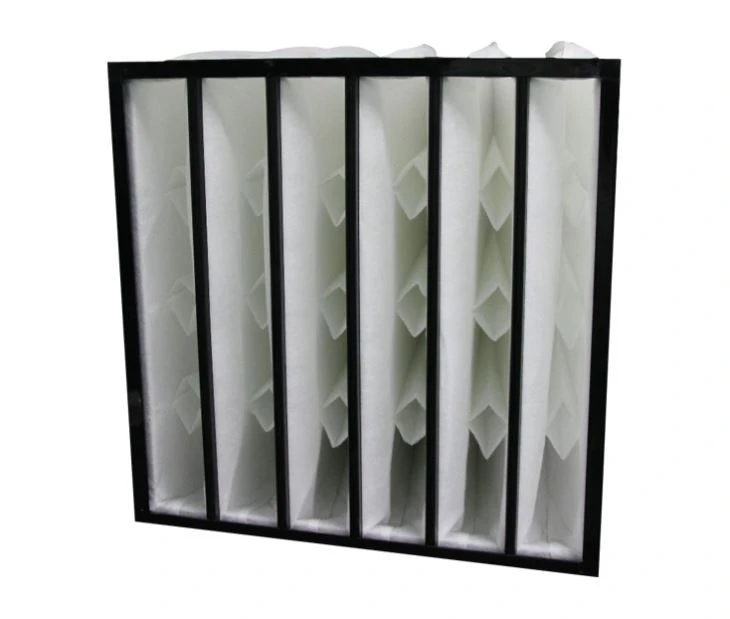
First off, let's understand what F7 V bank filters are. These filters are a type of air filter commonly used in HVAC systems. They're designed to capture a wide range of particles, from dust and pollen to smaller, more harmful contaminants. The "V bank" design refers to the shape of the filter, which is arranged in a V pattern to increase the filter's surface area and efficiency.
Now, when it comes to chemical corrosion, it's important to know that different chemicals can have different effects on materials. Some chemicals are highly reactive and can quickly break down or damage certain substances. Others may have a more mild or slow - acting impact.
The resistance of F7 V bank filters to chemical corrosion depends largely on the materials they're made of. Most F7 V bank filters have a filter media that is typically made from synthetic fibers. These synthetic fibers are chosen for their ability to trap particles effectively, but they also play a role in chemical resistance.
In general, many synthetic fibers used in F7 V bank filters have a decent level of resistance to common chemicals. For example, they can often withstand exposure to mild acids and alkalis. This is great news for applications where there might be small amounts of these substances in the air, such as in some industrial workshops or commercial buildings.
However, it's important to note that there are limits. If the filters are exposed to highly concentrated or aggressive chemicals, they may start to degrade. For instance, strong oxidizing agents like chlorine or ozone can break down the synthetic fibers over time. This can lead to a decrease in the filter's efficiency and lifespan.
Another factor to consider is the frame of the F7 V bank filter. The frame is usually made of metal or plastic. Metal frames, such as galvanized steel, can offer good structural support. But they may be more susceptible to corrosion if exposed to certain chemicals, especially those that are acidic. Plastic frames, on the other hand, can be more resistant to many chemicals, but they may not be as strong as metal frames in some high - stress applications.
To give you a better idea of how F7 V bank filters compare to other types of filters in terms of chemical resistance, let's take a look at some related products. You can check out Self - supported Bag Filters. These filters also have their own unique characteristics when it comes to chemical exposure. Similarly, Sub Efficient Dense Pleat Filter and Reverse Rigid Pocket Filter have different chemical resistance profiles based on their construction and materials.
If you're working in an environment with a high risk of chemical exposure, it's crucial to assess the specific chemicals present. You can then choose the appropriate filter based on its chemical resistance properties. In some cases, it might be necessary to use additional protective measures, such as pre - filters or chemical scrubbers, to reduce the amount of chemicals reaching the F7 V bank filters.
It's also a good idea to keep an eye on the condition of the filters. Regular inspections can help you detect any signs of chemical damage early on. If you notice that the filter media is starting to look discolored, brittle, or if there are holes forming, it could be a sign of chemical corrosion.
In addition to chemical resistance, F7 V bank filters have other important features. They offer high filtration efficiency, which means they can remove a large percentage of particles from the air. This is essential for maintaining good indoor air quality, especially in places where people spend a lot of time, like offices, schools, and hospitals.
The V bank design also allows for a larger dust - holding capacity compared to some other filter designs. This means that the filters can last longer between replacements, which can save you time and money in the long run.
So, to sum it up, F7 V bank filters can have a reasonable level of resistance to chemical corrosion, especially when dealing with common, mild chemicals. But they do have their limits, and it's important to be aware of the specific chemicals in your environment.
If you're in the market for F7 V bank filters or have any questions about their chemical resistance, feel free to reach out. I'm here to help you make the right choice for your filtration needs. Whether you're running a small business or a large industrial facility, having the right filters can make a big difference in the quality of your air and the performance of your HVAC system.
Let's work together to find the best filtration solution for your unique situation. Contact me if you want to discuss more about F7 V bank filters and start a procurement negotiation.

References
- General knowledge on air filtration and chemical properties of filter materials.
- Industry reports on the performance of F7 V bank filters in different environments.