

Can F8 V bank filters be used in combination with other filters?
As a supplier of F8 V bank filters, I often get asked whether these filters can be used in combination with other filters. This is a crucial question for many customers, especially those in industries where air quality is of utmost importance. In this blog post, I'll delve into the details of using F8 V bank filters in conjunction with other types of filters, exploring the benefits, considerations, and best practices.
Understanding F8 V Bank Filters
Before we discuss the combination of filters, let's briefly understand what F8 V bank filters are. F8 V bank filters are a type of high - efficiency air filter commonly used in commercial and industrial ventilation systems. They are designed to capture a wide range of airborne particles, including dust, pollen, mold spores, and some bacteria. The "F8" classification indicates the filter's efficiency level according to the European standard EN 779. These filters have a V - shaped design, which provides a larger filtration surface area compared to flat filters. This increased surface area allows for higher air flow rates and longer service life, as the particles are distributed over a larger area, reducing the pressure drop across the filter.
Benefits of Combining F8 V Bank Filters with Other Filters
- Enhanced Filtration Efficiency: One of the primary benefits of combining F8 V bank filters with other filters is the improvement in overall filtration efficiency. For example, pre - filters can be used upstream of the F8 V bank filters to remove larger particles. This not only protects the F8 V bank filters from premature clogging but also allows them to focus on capturing smaller, more harmful particles. As a result, the air quality in the environment is significantly improved.
- Extended Filter Lifespan: By using a combination of filters, the workload is distributed among them. Pre - filters take on the task of removing large particles, while the F8 V bank filters deal with finer particles. This reduces the stress on the F8 V bank filters, extending their service life and reducing the frequency of filter replacements. This, in turn, leads to cost savings in terms of both filter replacement and maintenance.
- Customized Filtration Solutions: Different industries have different air quality requirements. Combining F8 V bank filters with other filters allows for the creation of customized filtration solutions. For instance, in a pharmaceutical manufacturing facility, where strict air quality standards are in place, F8 V bank filters can be combined with Reverse Rigid Pocket Filter for enhanced protection against fine particles and microorganisms.
Types of Filters that Can be Combined with F8 V Bank Filters
- Pre - Filters: Pre - filters are typically the first line of defense in an air filtration system. They are designed to capture large particles such as dust, lint, and hair. Common types of pre - filters include panel filters and bag filters. These filters have a relatively low efficiency rating but are very effective at removing large particles, protecting the more expensive and high - efficiency F8 V bank filters downstream.
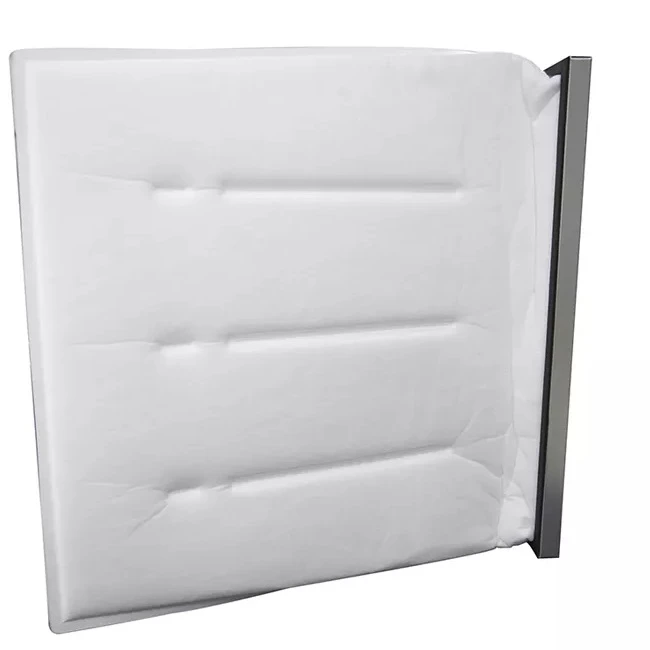
- Rigid Pocket Filters: Rigid Pocket Filter can be used in combination with F8 V bank filters. Rigid pocket filters have a unique pocket - shaped design that provides a large filtration area. They are often used in applications where a high air flow rate is required. When combined with F8 V bank filters, they can further enhance the filtration of medium - sized particles, improving the overall air quality.
- Extended Surface Rigid Cell Filters: Extended Surface Rigid Cell Filters are another option for combination with F8 V bank filters. These filters have an extended surface area, which allows for high - efficiency filtration of fine particles. They are commonly used in cleanroom applications and other environments where strict air quality control is necessary. When used in conjunction with F8 V bank filters, they can provide a multi - stage filtration process, ensuring that the air is thoroughly cleaned.
Considerations When Combining Filters
- Compatibility: It is essential to ensure that the filters are compatible with each other. This includes factors such as the size, shape, and mounting method of the filters. Incompatible filters may not fit properly in the filtration system, leading to air bypass and reduced filtration efficiency.
- Pressure Drop: Each filter in the system contributes to the overall pressure drop. When combining filters, it is important to consider the cumulative pressure drop across the entire filtration system. A high pressure drop can reduce the air flow rate and increase the energy consumption of the ventilation system. Therefore, it is necessary to select filters with appropriate pressure drop characteristics to maintain an optimal balance between filtration efficiency and energy consumption.
- Filter Replacement Schedule: Different filters have different service lives. When combining filters, it is important to establish a proper filter replacement schedule. Pre - filters may need to be replaced more frequently than F8 V bank filters, for example. A well - planned replacement schedule ensures that the filtration system operates at peak efficiency at all times.
Best Practices for Combining Filters
- System Design: Proper system design is crucial when combining filters. The filters should be arranged in the correct order, with pre - filters upstream of the F8 V bank filters. The airflow path should be carefully designed to ensure that the air passes through each filter evenly, maximizing the filtration efficiency.
- Regular Maintenance: Regular maintenance is essential for the effective operation of a combined filtration system. This includes inspecting the filters for damage, checking the pressure drop across the filters, and replacing the filters as needed. By performing regular maintenance, the system can be kept in good working condition, and the air quality can be maintained at a high level.
- Testing and Monitoring: It is important to test and monitor the performance of the combined filtration system regularly. This can be done by measuring the air quality parameters such as particle concentration, pressure drop, and air flow rate. Based on the test results, adjustments can be made to the filtration system, such as changing the filter replacement schedule or adjusting the airflow rate.
Conclusion
In conclusion, F8 V bank filters can be effectively used in combination with other filters to enhance filtration efficiency, extend filter lifespan, and create customized filtration solutions. By carefully selecting the types of filters, considering compatibility and pressure drop, and following best practices for system design and maintenance, customers can achieve optimal air quality in their environments.

If you are interested in learning more about how F8 V bank filters can be combined with other filters for your specific application, or if you are looking to purchase high - quality F8 V bank filters, please feel free to contact us. We are here to provide you with professional advice and support to meet your air filtration needs.
References
- EN 779:2012, "Air filters for general ventilation - Determination of the filtration performance".
- ASHRAE Handbook - HVAC Systems and Equipment, American Society of Heating, Refrigerating and Air - Conditioning Engineers.