

Do F7 V bank filters require calibration?
As a supplier of F7 V bank filters, I often encounter questions from customers regarding the necessity of calibration. In this blog post, I will delve into the topic of whether F7 V bank filters require calibration, exploring the technical aspects, practical implications, and industry standards.
Understanding F7 V Bank Filters
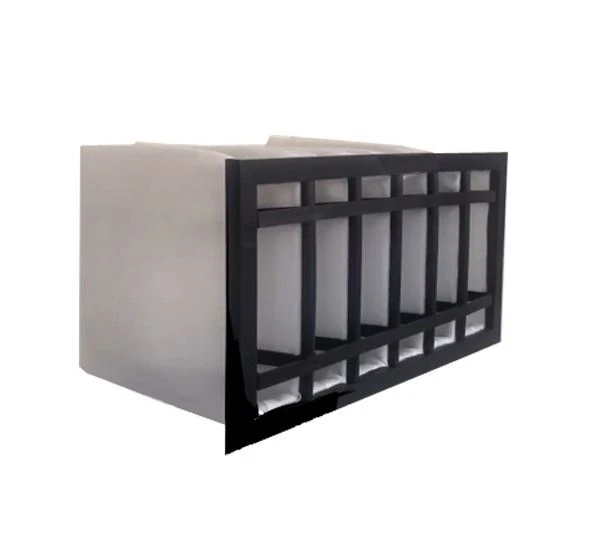
Before discussing calibration, it's essential to understand what F7 V bank filters are and their function. F7 V bank filters are a type of air filter commonly used in HVAC (Heating, Ventilation, and Air Conditioning) systems. They are designed to remove airborne particles, such as dust, pollen, and other contaminants, from the air. The "F7" designation refers to the filter's efficiency rating according to the European Standard EN 779. Filters in the F7 class have an average arrestance of 90 - 95% for particles in the size range of 0.4 - 1.0 micrometers.
The V bank configuration of these filters provides a large surface area for filtration, which increases the filter's dust - holding capacity and reduces the pressure drop across the filter. This design allows for more efficient and longer - lasting filtration, making F7 V bank filters a popular choice in commercial and industrial applications.
The Concept of Calibration
Calibration is the process of comparing a measurement device or system to a known standard to ensure its accuracy. In the context of air filters, calibration typically refers to verifying the filter's performance characteristics, such as its efficiency, pressure drop, and dust - holding capacity. Calibration can be done through laboratory testing or on - site measurements.
For air filters, calibration is important for several reasons. Firstly, it ensures that the filter is performing as specified by the manufacturer. This is crucial for maintaining the quality of the indoor air and the proper operation of the HVAC system. Secondly, calibration can help identify any issues or degradation in the filter's performance over time, allowing for timely replacement or maintenance.
Do F7 V Bank Filters Require Calibration?
The answer to whether F7 V bank filters require calibration is not straightforward and depends on several factors.
1. Manufacturer's Specifications
Most reputable manufacturers of F7 V bank filters conduct extensive testing during the production process to ensure that their filters meet the specified performance standards. These tests typically include measurements of efficiency, pressure drop, and dust - holding capacity. Once a filter has been manufactured and tested, it is generally assumed to be within the specified performance range.
However, over time, factors such as dust loading, airflow variations, and environmental conditions can affect the filter's performance. In some cases, the manufacturer may recommend periodic calibration or performance verification to ensure that the filter continues to meet the required standards.
2. Application Requirements
The need for calibration also depends on the specific application of the F7 V bank filter. In some critical applications, such as cleanrooms, hospitals, or pharmaceutical manufacturing facilities, strict air quality standards must be maintained. In these cases, regular calibration of the filters may be necessary to ensure that the indoor air quality meets the required specifications.
On the other hand, in less critical applications, such as general commercial buildings, the need for calibration may be less urgent. As long as the filter is replaced at the recommended intervals and the HVAC system is operating properly, the filter's performance may be considered acceptable without frequent calibration.
3. Regulatory Requirements
In some industries, regulatory bodies may require regular calibration of air filters to ensure compliance with environmental and safety standards. For example, in the food and beverage industry, air filters may need to be calibrated to prevent contamination of the products. Failure to comply with these regulations can result in fines or other penalties.
Methods of Calibration
If calibration of F7 V bank filters is deemed necessary, there are several methods that can be used.
Laboratory Testing
Laboratory testing is the most accurate method of calibrating air filters. In a laboratory setting, filters can be tested using standardized test methods, such as those described in EN 779 or ASHRAE 52.2. These tests involve measuring the filter's efficiency, pressure drop, and dust - holding capacity under controlled conditions.
Laboratory testing can provide detailed information about the filter's performance and can help identify any deviations from the manufacturer's specifications. However, it is also the most expensive and time - consuming method of calibration.
On - Site Measurements
On - site measurements can be used to monitor the performance of F7 V bank filters in real - time. This can be done using instruments such as pressure gauges to measure the pressure drop across the filter and particle counters to measure the concentration of airborne particles.

On - site measurements are less accurate than laboratory testing but are more convenient and cost - effective. They can be used to detect any significant changes in the filter's performance and to determine when the filter needs to be replaced.
Related Products
In addition to F7 V bank filters, we also offer a range of related products that can enhance the performance of your HVAC system. Reverse Rigid Pocket Filter is a type of filter that is designed to provide high - efficiency filtration in a compact design. Glass Fiber Pocket Filters are known for their excellent dust - holding capacity and high - temperature resistance. Plastic Air Filter is a cost - effective option that is suitable for a wide range of applications.
Conclusion
In conclusion, whether F7 V bank filters require calibration depends on a variety of factors, including the manufacturer's specifications, the application requirements, and regulatory requirements. While calibration is not always necessary, it can be beneficial in ensuring the proper performance of the filter and the quality of the indoor air.
If you are unsure whether your F7 V bank filters need calibration or if you have any other questions about our products, please feel free to contact us. We are always ready to assist you with your air filtration needs and can provide you with professional advice and solutions.
References
- EN 779:2012, "Air filters for general ventilation — Determination of the filtration performance".
- ASHRAE 52.2 - 2017, "Method of Testing General Ventilation Air - Cleaning Devices for Removal Efficiency by Particle Size".