

Do nylon mesh air filters produce noise?
Do nylon mesh air filters produce noise?
As a supplier of Nylon Mesh Air Filters, I often encounter various questions from customers. One question that comes up frequently is whether nylon mesh air filters produce noise. In this blog post, I'll explore this topic in detail, drawing on scientific knowledge and real - world experience.
Understanding Nylon Mesh Air Filters
Nylon mesh air filters are a popular choice in many ventilation and air - purification systems. They are made from nylon fibers woven into a mesh structure. These filters are known for their durability, washability, and relatively high efficiency in capturing larger particles such as dust, lint, and pet dander. You can find more information about our Nylon Air Filters and Nylon Mesh Pre Air Filter on our website.
The Science of Noise Generation in Air Filters
Noise in air filters is generally generated due to the interaction between the air flowing through the filter and the filter material itself. When air passes through a filter, it experiences resistance. This resistance can cause turbulence in the air flow, which in turn can generate sound waves. The intensity and frequency of the noise depend on several factors, including the air velocity, the density of the filter media, and the design of the filter.
Air Velocity
The speed at which air passes through the filter is a critical factor in noise generation. Higher air velocities typically result in more turbulence and, therefore, more noise. In a well - designed ventilation system, the air velocity is carefully controlled to ensure efficient filtration without excessive noise. If the air velocity is too high, the nylon mesh may start to vibrate, adding to the noise level.
Filter Media Density
The density of the nylon mesh also plays a role. A denser mesh will offer more resistance to the air flow. While a denser mesh can capture smaller particles more effectively, it can also increase the likelihood of noise generation. This is because the air has to force its way through the tighter spaces in the mesh, creating more turbulence.
Filter Design
The design of the filter, including its shape and the way it is installed, can impact noise levels. For example, a poorly installed filter may have gaps or uneven surfaces, which can cause the air to flow in an irregular pattern, leading to noise. Additionally, the frame of the filter can also affect noise. A rigid and well - constructed frame can help to reduce vibrations and minimize noise.
Real - World Observations
In most real - world applications, nylon mesh air filters do not produce significant noise when properly installed and used within the recommended air - flow parameters. Our customers often report that the noise from their ventilation systems is minimal with our nylon mesh filters.
However, there are situations where noise can become an issue. For instance, if the ventilation system is operating at a much higher capacity than it was designed for, the air velocity through the filter may be too high, resulting in increased noise. Also, if the filter is dirty or clogged, the resistance to air flow will increase, which can lead to more turbulence and noise.
Another factor to consider is the quality of the nylon mesh. Lower - quality mesh may have irregularities in the weaving, which can cause uneven air flow and generate noise. At our company, we use high - quality nylon materials and strict manufacturing processes to ensure that our filters have a uniform mesh structure, reducing the risk of noise.
Comparing with Other Types of Filters
Let's compare nylon mesh air filters with Washable Metal Mesh Air Filter. Metal mesh filters are generally more rigid than nylon mesh filters. In some cases, the metal mesh can resonate with the air flow, especially at certain frequencies, which may result in a distinct humming or rattling noise.

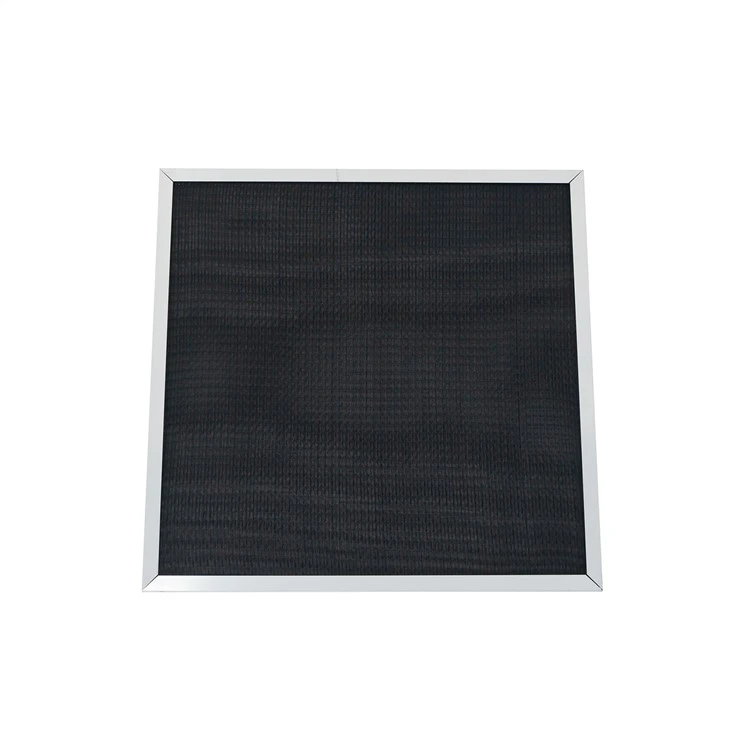
On the other hand, nylon mesh filters are more flexible. While they can vibrate if the air velocity is too high, they often produce a softer, less intrusive noise compared to metal mesh filters. The flexibility of the nylon mesh can also help to absorb some of the vibrations, reducing the overall noise level.
Mitigating Noise from Nylon Mesh Air Filters
If you are experiencing noise from your nylon mesh air filter, there are several steps you can take to reduce it.
First, check the air - flow rate of your ventilation system. Make sure it is operating within the recommended range. You may need to adjust the settings of your ventilation fan or blower to reduce the air velocity through the filter.
Second, regularly clean your nylon mesh filter. A dirty filter can significantly increase the resistance to air flow and cause more noise. Our nylon mesh filters are washable, which makes maintenance easy. Simply remove the filter, wash it with mild soap and water, and let it dry before reinstalling.
Third, ensure that the filter is properly installed. Check for any gaps or loose connections around the filter frame. A well - sealed filter will help to ensure a smooth and even air flow, reducing the chances of noise generation.
Conclusion
In conclusion, nylon mesh air filters typically do not produce significant noise when used correctly. Noise generation is mainly related to factors such as air velocity, filter media density, and filter design. By understanding these factors and taking appropriate measures, you can minimize the noise from your nylon mesh air filter.
If you are interested in our Nylon Mesh Air Filters or have any questions about noise reduction or other aspects of air filtration, we invite you to contact us for a procurement discussion. We are committed to providing high - quality products and excellent customer service.
References
- ASHRAE Handbook - Fundamentals. American Society of Heating, Refrigerating and Air - Conditioning Engineers.
- "Air Filtration: Principles and Applications" by Klaus Willeke and E. Neil Light.