

How do F8 V bank filters perform in filtering pollen?
Hey there! As a supplier of F8 V bank filters, I'm super stoked to chat with you about how these bad boys perform when it comes to filtering pollen. Pollen can be a real pain in the neck, especially for those of us who suffer from allergies. It's everywhere during certain times of the year, and it can really mess up our indoor air quality. But fear not! F8 V bank filters are here to save the day.
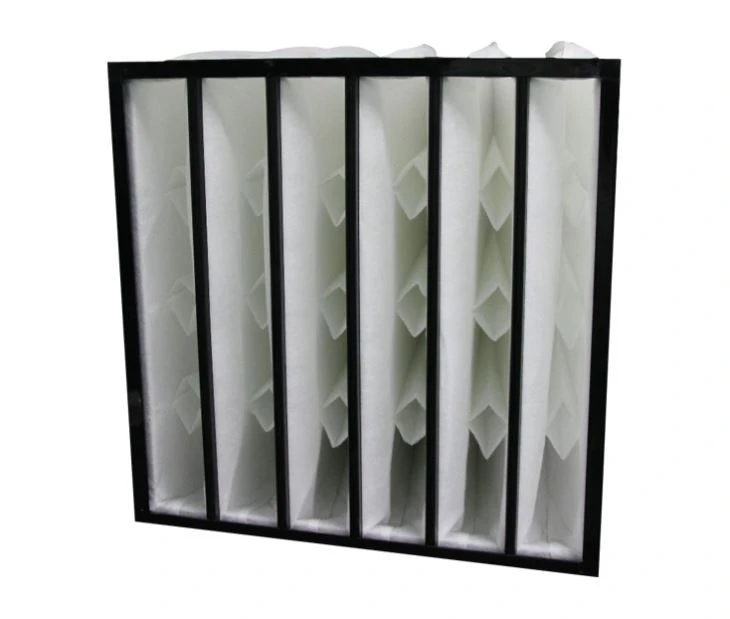
First off, let's talk a bit about what F8 V bank filters are. These filters are designed to capture and remove a wide range of airborne particles, including pollen. They're part of a family of air filters that are known for their high efficiency and reliability. The "V bank" design refers to the shape of the filter, which consists of multiple panels arranged in a V shape. This design increases the surface area of the filter, allowing it to capture more particles and provide better filtration.
Now, let's get into the nitty - gritty of how F8 V bank filters handle pollen. Pollen grains are relatively large compared to some other airborne particles, typically ranging from about 10 to 100 micrometers in diameter. F8 V bank filters are rated to capture particles in the range of 1 - 10 micrometers with an efficiency of around 80 - 90%. This means that they're more than capable of capturing pollen grains, as most of them fall well within the filter's effective range.
One of the key factors that makes F8 V bank filters so effective at filtering pollen is their media. The filter media is made up of a fine - fiber material that acts like a net, trapping pollen grains as air passes through. The fibers are arranged in a way that creates a maze - like structure, which increases the chances of pollen particles colliding with and sticking to the fibers.
Another advantage of F8 V bank filters is their construction. The V bank design not only increases the surface area but also helps to distribute the airflow evenly across the filter. This ensures that all parts of the filter are being used effectively, maximizing its pollen - capturing capabilities. Plus, the rigid frame of the filter helps to maintain its shape, even under high airflow conditions, which is important for consistent performance.
Let's compare F8 V bank filters with some other types of filters on the market. For example, the ABS Rigid Pocket Air Filters are also designed to capture airborne particles. However, their pocket - style design may not provide the same level of airflow distribution as the V bank design. The pockets can sometimes become clogged unevenly, reducing the overall efficiency of the filter.
The Self - supported Bag Filters are another option. While they are effective at capturing larger particles, they may not be as efficient at capturing the smaller pollen grains as F8 V bank filters. Their bag - like structure may also be more prone to sagging over time, which can affect the airflow and filtration performance.
And then there are the Rigid HEPA Pocket Filters. These filters are extremely efficient at capturing very small particles, but they can be overkill for just filtering pollen. They're also usually more expensive and may have a higher pressure drop, which means they require more energy to operate.

In real - world applications, F8 V bank filters have proven to be a great choice for pollen filtration. For example, in residential settings, they can be installed in HVAC systems to keep the indoor air clean and free of pollen. This is especially important for allergy sufferers, as it can significantly reduce their exposure to pollen and relieve their symptoms.
In commercial buildings such as offices, schools, and hospitals, F8 V bank filters can also play a crucial role. They help to maintain a healthy indoor environment by removing pollen from the incoming air. This is not only beneficial for the occupants' health but also for the overall performance of the HVAC system. By preventing pollen from clogging the system, the filters can extend the lifespan of the equipment and reduce maintenance costs.
When it comes to maintenance, F8 V bank filters are relatively easy to take care of. They should be checked regularly to see if they need to be replaced. The frequency of replacement depends on several factors, such as the level of pollen in the air, the airflow rate, and the size of the filter. In general, it's a good idea to replace the filters every 3 - 6 months, but this can vary.
If you're thinking about purchasing F8 V bank filters for pollen filtration, there are a few things to keep in mind. First, make sure you choose the right size and model for your HVAC system. You can consult with a professional or refer to the system's manual to determine the appropriate filter specifications.
Second, consider the quality of the filters. Not all F8 V bank filters are created equal. Look for filters that are made from high - quality materials and have been tested and certified to meet industry standards.
Finally, think about the long - term costs. While F8 V bank filters may have an upfront cost, they can save you money in the long run by reducing energy consumption and maintenance costs.
So, if you're tired of dealing with pollen in your indoor air, F8 V bank filters are definitely worth considering. They offer a cost - effective and efficient solution for pollen filtration. Whether you're a homeowner looking to improve your indoor air quality or a business owner wanting to maintain a healthy environment for your employees and customers, these filters can do the job.
If you're interested in learning more about our F8 V bank filters or would like to discuss a potential purchase, feel free to reach out. We're here to help you find the best filtration solution for your needs.
References
- Air Filtration Handbook, various editions, covering principles of air filtration and filter performance.
- Industry reports on indoor air quality and the impact of pollen on health and HVAC systems.