

How do G4 Pleated Air Filters compare to electrostatic precipitator air filters?
When it comes to air filtration solutions, two prominent options in the market are G4 Pleated Air Filters and electrostatic precipitator air filters. As a supplier of G4 Pleated Air Filters, I've had the opportunity to closely observe the performance, advantages, and limitations of both types of filters. In this blog post, I'll provide a comprehensive comparison between these two air filtration technologies to help you make an informed decision for your specific needs.
How G4 Pleated Air Filters Work
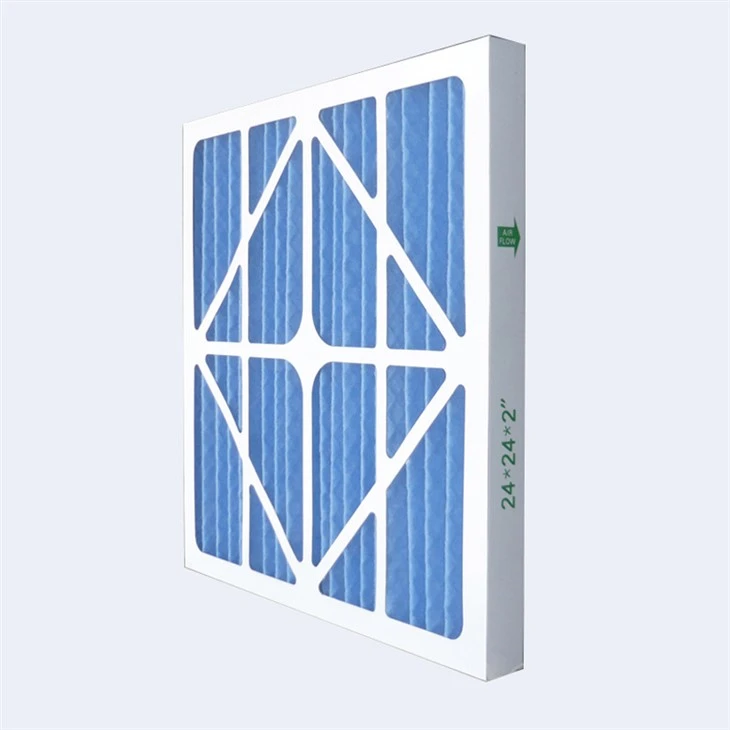
G4 Pleated Air Filters are a type of mechanical air filter designed to capture and remove particulate matter from the air. The "G4" designation refers to the filter's efficiency class according to the European standard EN 779. These filters are typically made of synthetic fiber materials, which are pleated to increase the surface area available for filtration.
The pleating process allows G4 filters to capture a larger volume of particles compared to flat filters of the same size. As air passes through the filter, particles are trapped within the fibers of the filter media. The efficiency of G4 Pleated Air Filters in removing particles is generally in the range of 40% - 60% for particles sized between 5 and 10 micrometers. This makes them suitable for use as pre - filters in HVAC systems, where they can help protect more expensive and high - efficiency filters downstream.
For example, our Cardboard Air Filter G4 and Synthetic Fiber Materials Paper Frame Air Filters are popular choices in the market. They are cost - effective and easy to install, making them ideal for a wide range of applications.
How Electrostatic Precipitator Air Filters Work
Electrostatic precipitator air filters operate on a different principle. These filters use an electrostatic charge to attract and capture particles in the air. Inside an electrostatic precipitator, air passes through an ionization section where particles are given an electric charge. Then, the charged particles are attracted to collector plates with the opposite charge and are removed from the air stream.
One of the key advantages of electrostatic precipitator air filters is their high efficiency in removing small particles. They can capture particles as small as 0.01 micrometers with high efficiency, which is much smaller than what G4 Pleated Air Filters can typically handle. This makes them suitable for applications where very clean air is required, such as in some industrial processes, clean rooms, and hospitals.
Performance Comparison
Particle Removal Efficiency
As mentioned earlier, G4 Pleated Air Filters are effective at removing larger particles in the range of 5 - 10 micrometers, with an efficiency of 40% - 60%. Electrostatic precipitator air filters, on the other hand, can achieve very high efficiency (often over 90%) in removing particles as small as 0.01 micrometers. If your main concern is removing fine dust, smoke, and other microscopic particles, electrostatic precipitators have a clear advantage. However, for larger particles commonly found in general HVAC applications, G4 Pleated Air Filters can provide sufficient filtration.
Pressure Drop
Pressure drop is an important factor to consider in air filtration systems. A high pressure drop means that the HVAC system has to work harder to push air through the filter, which can lead to increased energy consumption. G4 Pleated Air Filters typically have a relatively low pressure drop. This is because the pleated design allows air to flow through the filter with less resistance compared to some other types of filters.
Electrostatic precipitator air filters can also have a relatively low pressure drop, especially when they are clean. However, over time, as the collector plates accumulate particles, the pressure drop may increase. Regular cleaning of the collector plates is required to maintain a low pressure drop and optimal performance.
Maintenance Requirements
G4 Pleated Air Filters are generally disposable. Once they reach their maximum dirt - holding capacity, they can simply be replaced with a new filter. This makes maintenance relatively straightforward and cost - effective. Our Pre Filter Air options are easy to install and replace, minimizing downtime in your HVAC system.
Electrostatic precipitator air filters require more frequent and complex maintenance. The collector plates need to be cleaned regularly to remove the accumulated particles. If not cleaned properly, the performance of the filter can degrade significantly. Additionally, the ionization section may require occasional inspection and maintenance to ensure that the electrostatic charge is functioning correctly.
Cost Comparison
Initial Cost
G4 Pleated Air Filters are usually more affordable in terms of initial cost. They are simple in design and made from relatively inexpensive materials, which makes them a cost - effective option for many applications. Electrostatic precipitator air filters, on the other hand, are more complex in design and require specialized components, such as ionization sections and collector plates. This results in a higher initial purchase price.
Operating Cost
In terms of operating cost, G4 Pleated Air Filters have a relatively low energy consumption due to their low pressure drop. The cost of replacing these filters is also relatively low. Electrostatic precipitator air filters may have lower energy consumption in terms of pressure drop, but they require regular cleaning and maintenance, which can add to the operating cost. Additionally, if any components of the electrostatic precipitator need to be replaced, it can be expensive.
Applications
G4 Pleated Air Filters are widely used in general HVAC systems as pre - filters. They can be found in commercial buildings, residential homes, and light industrial applications. Their main function is to protect more expensive and high - efficiency filters downstream and to remove larger particles from the air.

Electrostatic precipitator air filters are commonly used in applications where very high air quality is required. This includes industrial processes where the presence of fine particles can affect product quality, clean rooms in the semiconductor and pharmaceutical industries, and hospitals where the spread of airborne pathogens needs to be minimized.
Conclusion
Both G4 Pleated Air Filters and electrostatic precipitator air filters have their own unique advantages and disadvantages. If you are looking for a cost - effective, easy - to - maintain solution for general HVAC applications where larger particles are the main concern, G4 Pleated Air Filters are an excellent choice. On the other hand, if you need to remove very fine particles and require a high level of air cleanliness, electrostatic precipitator air filters may be more suitable.
As a supplier of high - quality G4 Pleated Air Filters, we are committed to providing our customers with the best products and services. If you are interested in learning more about our G4 Pleated Air Filters or have any questions regarding air filtration, we encourage you to contact us for a detailed discussion and to explore the possibilities of a purchase. We can help you determine the most appropriate air filtration solution for your specific needs.
References
- EN 779:2012, "Air filters for general ventilation - Determination of the filtration performance"
- Various technical documents from air filtration manufacturers