

How do I choose the right HEPA diffuser for my needs?
Hey there! I'm a supplier of HEPA diffusers, and I know firsthand how overwhelming it can be to choose the right one for your needs. With so many options out there, it's easy to get lost in a sea of technical jargon and product specifications. But don't worry, I'm here to help! In this blog post, I'll walk you through the key factors to consider when selecting a HEPA diffuser, and I'll share some tips and tricks to make the process as painless as possible.
What is a HEPA Diffuser?
Before we dive into the selection process, let's start by defining what a HEPA diffuser is. HEPA stands for High-Efficiency Particulate Air, and a HEPA diffuser is a device that filters and distributes clean air throughout a space. It works by pulling in air from the surrounding environment, passing it through a HEPA filter to remove contaminants, and then releasing the clean air back into the room. HEPA diffusers are commonly used in a variety of settings, including hospitals, laboratories, clean rooms, and residential homes, to improve indoor air quality and reduce the risk of airborne illnesses.
Factors to Consider When Choosing a HEPA Diffuser
Now that you know what a HEPA diffuser is, let's take a look at the key factors to consider when choosing one for your needs.
Airflow Rate
The airflow rate of a HEPA diffuser refers to the amount of air that it can move through the filter and into the room per minute. This is an important factor to consider because it determines how quickly the diffuser can clean the air in your space. As a general rule, you'll want to choose a diffuser with an airflow rate that is appropriate for the size of your room. A larger room will require a diffuser with a higher airflow rate, while a smaller room can get by with a lower airflow rate.
Filter Efficiency
The filter efficiency of a HEPA diffuser refers to its ability to remove contaminants from the air. HEPA filters are rated based on their Minimum Efficiency Reporting Value (MERV), which ranges from 1 to 20. The higher the MERV rating, the more efficient the filter is at removing contaminants. For most applications, a HEPA filter with a MERV rating of 17 or higher is recommended. This will ensure that the filter can remove a wide range of contaminants, including dust, pollen, mold spores, and bacteria.
Noise Level
The noise level of a HEPA diffuser is another important factor to consider, especially if you plan to use it in a quiet environment, such as a bedroom or a library. Some diffusers can be quite noisy, which can be a distraction and make it difficult to sleep or concentrate. Look for a diffuser with a low noise level, typically measured in decibels (dB). A diffuser with a noise level of 50 dB or lower is considered to be quiet.
Size and Design
The size and design of a HEPA diffuser are also important factors to consider, especially if you have limited space in your room. HEPA diffusers come in a variety of sizes and shapes, so you'll want to choose one that fits your space and your aesthetic preferences. Some diffusers are designed to be mounted on the ceiling, while others can be placed on the floor or on a table. Consider the location where you plan to use the diffuser and choose a size and design that works best for you.
Maintenance Requirements
Finally, you'll want to consider the maintenance requirements of a HEPA diffuser before you make a purchase. HEPA filters need to be replaced regularly to ensure that they continue to function effectively. The frequency of filter replacement will depend on the usage of the diffuser and the environment in which it is used. Some diffusers have indicator lights that will alert you when it's time to replace the filter, while others require you to keep track of the filter replacement schedule manually. Make sure you choose a diffuser that is easy to maintain and that comes with clear instructions on how to replace the filter.
Types of HEPA Diffusers
Now that you know the key factors to consider when choosing a HEPA diffuser, let's take a look at the different types of diffusers that are available on the market.
Replaceable High Efficiency Air Outlet
The Replaceable High Efficiency Air Outlet is a type of HEPA diffuser that is designed to be installed in the ceiling. It features a replaceable HEPA filter that can be easily removed and replaced when it becomes dirty. This type of diffuser is ideal for use in large commercial spaces, such as hospitals and laboratories, where a high level of air filtration is required.

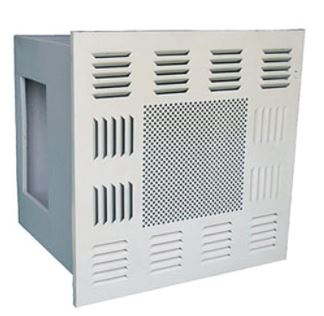
Hepa Box
The Hepa Box is another type of HEPA diffuser that is designed to be installed in the ceiling. It features a built-in HEPA filter that is enclosed in a box-shaped housing. This type of diffuser is ideal for use in clean rooms and other controlled environments, where a high level of air cleanliness is required.
Ceiling Indoor Replaceable ULPA Filter Unit
The Ceiling Indoor Replaceable ULPA Filter Unit is a type of HEPA diffuser that is designed to be installed in the ceiling. It features a replaceable ULPA filter, which is even more efficient than a HEPA filter at removing contaminants from the air. This type of diffuser is ideal for use in applications where a very high level of air cleanliness is required, such as semiconductor manufacturing facilities and pharmaceutical laboratories.
Tips for Choosing the Right HEPA Diffuser
Now that you know the different types of HEPA diffusers that are available, here are some tips to help you choose the right one for your needs:
- Do your research: Before you make a purchase, take the time to research different HEPA diffusers and compare their features and prices. Read reviews from other customers to get an idea of how well the diffusers work and how easy they are to maintain.
- Consider your budget: HEPA diffusers can vary in price depending on their size, features, and brand. Set a budget for yourself and look for a diffuser that fits within your price range.
- Choose a reputable brand: Look for a HEPA diffuser from a reputable brand that has a proven track record of producing high-quality products. This will ensure that you get a diffuser that is reliable and that will last for a long time.
- Get professional advice: If you're not sure which HEPA diffuser is right for your needs, consider getting professional advice from an HVAC contractor or an air quality expert. They can help you assess your needs and recommend a diffuser that is suitable for your space.
Conclusion
Choosing the right HEPA diffuser for your needs can be a challenging task, but it doesn't have to be. By considering the key factors outlined in this blog post, doing your research, and following the tips provided, you can find a diffuser that will effectively clean the air in your space and improve your indoor air quality. If you have any questions or need further assistance, please don't hesitate to contact us. We're here to help you find the right HEPA diffuser for your needs and to provide you with the support and service that you deserve.
References
- American Society of Heating, Refrigerating and Air-Conditioning Engineers (ASHRAE). (2020). ANSI/ASHRAE Standard 52.2-2017: Method of Testing General Ventilation Air-Cleaning Devices for Removal Efficiency by Particle Size.
- U.S. Environmental Protection Agency (EPA). (2021). Indoor Air Quality: HEPA Filters.
- Centers for Disease Control and Prevention (CDC). (2021). Ventilation in Buildings.