

How to check the integrity of the filters in a clean bench?
How to check the integrity of the filters in a clean bench?
As a reputable clean bench supplier, we understand the critical role that filters play in maintaining the cleanliness and functionality of clean benches. Clean benches are widely used in various industries, including pharmaceuticals, electronics, and biotechnology, to provide a controlled environment free from contaminants. The filters in these clean benches are the first line of defense against particles and microorganisms, and their integrity is essential for ensuring the quality of the work environment. In this blog post, we will discuss how to check the integrity of the filters in a clean bench.
Understanding the Types of Filters in a Clean Bench
Before we dive into the inspection process, it's important to understand the types of filters commonly used in clean benches. The most common types are pre - filters and HEPA (High - Efficiency Particulate Air) filters.
Pre - filters are designed to capture larger particles, such as dust and lint. They act as a first stage of filtration, protecting the more expensive and sensitive HEPA filters from premature clogging. HEPA filters, on the other hand, are capable of removing at least 99.97% of particles that are 0.3 micrometers in diameter or larger, as well as a high percentage of smaller particles.

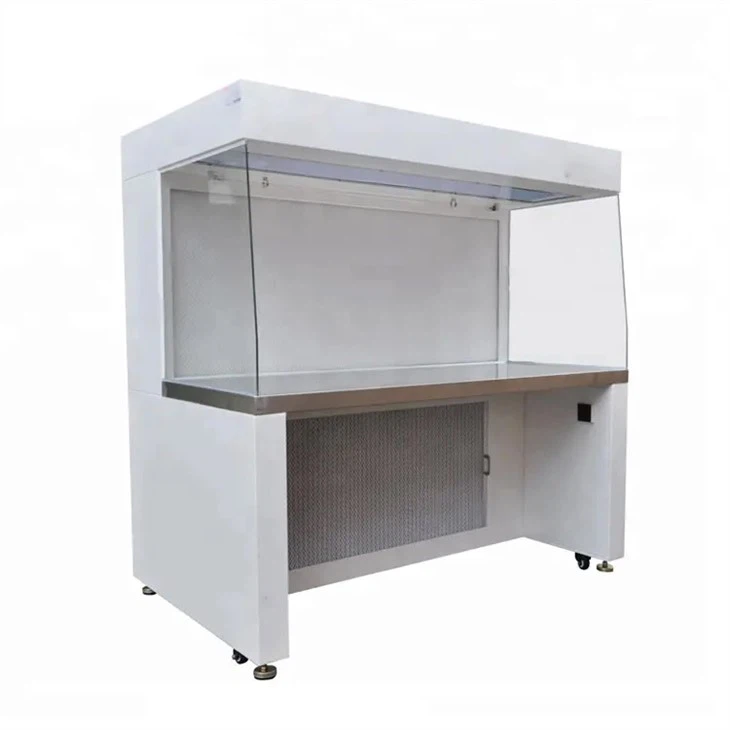
Visual Inspection
The first step in checking the integrity of the filters is a visual inspection. This can be done regularly as part of routine maintenance.
- Pre - filters: Remove the pre - filter from the clean bench. Check for any signs of physical damage, such as tears, holes, or excessive dirt buildup. If the pre - filter is dirty, it may need to be replaced or cleaned, depending on the type of pre - filter. Some pre - filters are washable, while others are disposable.
- HEPA filters: Inspect the HEPA filter for visible signs of damage. Look for any holes, tears, or loose seals around the edges of the filter. A damaged HEPA filter can allow unfiltered air to enter the clean bench, compromising its performance.
Pressure Drop Testing
Pressure drop testing is a common method used to assess the performance and integrity of filters.
- Principle: As air passes through a filter, there is a pressure difference between the upstream and downstream sides of the filter. This pressure difference, known as the pressure drop, increases as the filter becomes clogged with particles. By monitoring the pressure drop over time, we can determine the condition of the filter.
- Testing Procedure: Use a differential pressure gauge to measure the pressure drop across the filter. Compare the measured pressure drop with the manufacturer's specifications. If the pressure drop is significantly higher than the recommended value, it may indicate that the filter is clogged and needs to be replaced.
Particle Counting
Particle counting is a more accurate method for checking the integrity of filters, especially HEPA filters.
- Principle: A particle counter is used to measure the number and size of particles in the air upstream and downstream of the filter. If the filter is intact, the particle concentration downstream should be significantly lower than the upstream concentration.
- Testing Procedure: Place the particle counter at the appropriate locations, one upstream and one downstream of the filter. Take measurements under normal operating conditions of the clean bench. Compare the particle counts. If the downstream particle count exceeds the acceptable limit, it may indicate a leak in the filter or improper installation.
DOP (Dioctyl Phthalate) or PAO (Polyalphaolefin) Testing
DOP or PAO testing is a highly sensitive method for detecting leaks in HEPA filters.
- Principle: A challenge aerosol, such as DOP or PAO, is introduced upstream of the filter. A photometer is used to measure the concentration of the aerosol downstream of the filter. Any significant increase in the downstream aerosol concentration indicates a leak in the filter.
- Testing Procedure: This test should be performed by trained professionals using specialized equipment. The clean bench needs to be shut down during the test, and the aerosol is introduced into the upstream air stream. The photometer is used to scan the entire surface of the filter to detect any leaks.
Importance of Regular Filter Integrity Checks
Regularly checking the integrity of the filters in a clean bench is crucial for several reasons.
- Product Quality: In industries such as pharmaceuticals and electronics, even a small amount of contamination can affect the quality of the products. By ensuring the integrity of the filters, we can prevent contaminants from entering the work area and maintain the quality of the products.
- Equipment Performance: Clogged or damaged filters can reduce the airflow in the clean bench, leading to inefficient operation. This can increase energy consumption and may even cause the clean bench to malfunction.
- Operator Safety: A clean bench provides a safe working environment for operators. By maintaining the integrity of the filters, we can protect operators from exposure to harmful particles and microorganisms.
Our Clean Bench Offerings
As a clean bench supplier, we offer a wide range of high - quality clean benches to meet the diverse needs of our customers. Our Ultra Clean Bench is designed to provide the highest level of cleanliness, making it suitable for applications where strict contamination control is required. The Low Noise Clean Bench is ideal for environments where noise levels need to be minimized, such as laboratories and research facilities. And our Laminar Flow Hood Clean Bench offers a unidirectional airflow, ensuring a consistent and clean working environment.
Conclusion
Checking the integrity of the filters in a clean bench is an essential part of its maintenance. By performing regular visual inspections, pressure drop tests, particle counting, and, if necessary, DOP or PAO testing, we can ensure the proper functioning of the clean bench and protect the quality of the work environment. If you are in need of high - quality clean benches or have any questions about filter integrity checks, please feel free to contact us for procurement and further discussions.
References
- "Cleanroom Technology Handbook", John Wiley & Sons, 2018
- "Fundamentals of Air Filtration", American Filtration & Separations Society, 2020