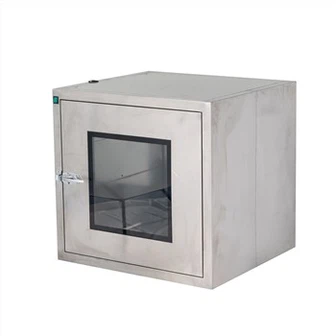
Hepa Filter Operating Room
Hepa Filter Operating Room The clean surgery department consists of eight operating rooms, a central clean hall, anesthesia room, recovery room and other ancillary rooms. The operating room has no external protective structure, and the operating room purification level requirements are Class 1,000 ( Level I) 1 room, 4 rooms with level 10,000 (level II), and 3 rooms with level 100,000 (level III). The design temperature and humidity of the operating room take into account the physiological characteristics of children and are controlled at 24 to 28°C, which can be adjusted locally in the operating room. , the operating room is designed with a relative humidity of 50% to 60%.
Division of operating room air conditioning system:
1. The air conditioning system of high-level operating rooms should be set up independently. The so-called high-level operating room refers to an operating room with a level of 1,000 or above. The reason is that the air-conditioning air supply volume of a high-level operating room is large. For example, for an operating room of the same area, the air-conditioning air volume of a 100-level operating room is times that of a 100,000-level operating room, which is 10,000-level operating room. times. In addition, the frequency of use of high-level operating rooms is much lower than that of low-level operating rooms. In this way, whether one air-conditioning system supports multiple high-level operating rooms, or one air-conditioning system supports one high-level operating room and multiple low-level operating rooms, there will be Keep the air-conditioning system in a "big horse-drawn cart" operating state for a long time. For example, an air-conditioning system supports one operating room with a level of 100 and two operating rooms with a level of 10,000, or four operating rooms with a level of 100,000. As long as the high-level operating rooms are not in use, the system design air volume must be at least greater than 112% and 112% of the required air volume at this time. 84%, that is, the air volume required by the system at this time is only 47% of the system's designed air volume. Moreover, such changes in air volume caused by the use of the operating room should not be adjusted by frequency conversion speed regulation. Only the main air valve can be adjusted. This method adjusts the air volume to adapt to changes in system air volume. However, this method is obviously not energy-saving. Therefore, no matter from the perspective of energy conservation, or from the perspective of usability and flexibility, high-level operating rooms should have independent air-conditioning systems "per room", that is, one purification air-conditioning system corresponds to one operating room.
2. For low-level operating rooms, although the air-conditioning air volume is much smaller than that of high-level operating rooms, the number of operating rooms burdened by an air-conditioning system should not be too many because the usage of hospital operating rooms is uncertain. The higher the level of the hospital, the more operating rooms are equipped to meet special busy conditions. There are many operating rooms, and the simultaneous use coefficient under normal circumstances is low. Therefore, when an air-conditioning system bears a large number of operating rooms, the system is often in a state of "supply exceeds demand", and its operating energy consumption is bound to be high, just like an air-conditioning system. The hospital reflects the saying "it can be built but cannot be used". The author believes that for low-level operating rooms, the burden of one air-conditioning system should not be more than four to five operating rooms.
3. The central clean hall, clean corridor, high-level operating room preparation area, sterile room, etc. should be borne by a separate air-conditioning system. The purpose is to ensure that the external air environment of the operating room is always in a "war" state. The integration of air conditioning in low-level operating room air conditioning systems is obviously unreasonable. Because the combined air-conditioning system consumes too much air supply energy when the operating room is out of use, or it cannot ensure that the external climate environment of the operating room is under control.
The principle of division of the air-conditioning system in the operating department should be flexible adjustment, each performing its own responsibilities, and energy conservation.

Determination of air supply volume and air flow organization:
When designing air conditioners in hospital operating departments, they are basically limited to the design ideas of industrial clean rooms. However, copying the design ideas of industrial clean rooms into the design of clean air conditioners in hospital operating rooms will bring about two problems: ① The air volume of high-level clean rooms is too large , Class 100 operating rooms should have high-efficiency filter air outlets on the ceiling, so the air supply volume of a 36m2 operating room is 32400m3/h~45360m3/h. With such a large air supply volume, it is difficult to control the noise of the wind system. ② For operating rooms below Class 1,000, the pollution control in key areas of the operating room is not ideal under the same air volume. Operating rooms below Class 1,000 can use turbulent airflow organization. The usual practice is to evenly install high-efficiency filter air outlets on the ceiling of the entire room. The theoretical basis for this airflow organization is "whole room dilution and purification". Under ideal circumstances, the same bacterial concentration can be achieved indoors, which will affect the critical areas of the operating room. Get lower contamination levels.
A. For operating rooms of all levels, the concept of dilution and purification of the whole room has been broken through, and the concept of local enhanced purification has been introduced. The air supply vents of all operating rooms are concentrated above the operating bed, that is, centered around the shadowless lamp hanging rod. "Laminar flow air supply box" adopts different air supply section sizes according to different levels.
B. For Class 100 or Class 1,000 operating rooms, the air volume is determined by multiplying the area covered by the clean airflow by the cross-sectional wind speed of the air supply area.
C. For 10,000-level and 100,000-level operating rooms, the ventilation rate method is used to determine the air supply volume. For 10,000-level operating rooms, n=30 times/h and for 100,000-level operating rooms are n=20 times/h. The bacterial concentration achieved in the surgical area is 50% of that in other indoor areas, that is, the air pollution in the surgical area is reduced from the whole-room dilution and purification method to the local enhanced air supply method.
The hospital's operating room using the above design ideas has achieved good results after being put into use. It has achieved a smaller air volume and formed a cleaner and more hygienic climate environment in key areas of the operating room than other areas of the operating room.

Set up primary-efficiency and medium-efficiency fresh air filter units
In the design of purification and air-conditioning systems in some operating rooms, the issue of fresh air filtration has not been given sufficient attention. The fresh air is often directly mixed with the air-conditioning return air without independent filtration treatment. As a result, the life of medium-efficiency and Hepa Filter Operating Room is shortened. Frequent replacement increases the operation and maintenance costs of the system and even affects the normal use of the operating room. This is because before the fresh air and return air are mixed, the difference in dust concentration between the two is too large. Even if the fresh air has undergone preliminary treatment, its dust concentration after treatment is higher than that of the return air from a 100,000-level air conditioner within the same particle size range. The dust concentration is about 70 times greater, which is tens of thousands of times the dust concentration in the same particle size range in the return air of a 100-level air conditioner, so that medium-efficiency or even high-efficiency filters do not have sufficient protection. In order to solve this problem, we installed an independent primary- and medium-efficiency fresh air filter unit on the fresh air path, so that the fresh air passes through two stages of filtration and then mixes with the return air. At this time, the fresh air and return air before mixing are in the same particle size range. The dust concentration is relatively close, which truly protects the medium-efficiency and high-efficiency filters. Moreover, the primary and medium-efficiency filters of the fresh air filter unit are easy to clean and replace. Compared with replacing high-efficiency filters, they require less investment and are easy to maintain. Another advantage of setting up a fresh air filter unit on the fresh air path is to ensure the fresh air volume, because the fresh air filter unit with a constant air volume itself is equivalent to a "metering pump".
Use constant air volume valve to solve air balance problem:
The pressure distribution in various areas of the operating department has a great influence on ensuring the effect of a Hepa Filter Operating Room. To ensure reasonable pressure distribution, in addition to correct air balance calculations, more importantly, there should be good adjustment methods for both supply and return air. In the past, the air volume adjustment device was mainly a manual split multi-leaf regulating valve. This type of valve is not ideal for precise adjustment of air volume. In practice, it has problems such as difficulty in adjustment and long debugging cycle.
Factory Show:


FAQ:
Q1.Are you a manufacture or trading company?
A:We are a manufacure.
Snyli Environmental Technology (Shandong) Co., Ltd was established in 2010, is a professional service provider of air purification products integrating R&D, production and sales, with registered brand- SYNLI.
Q2: Where are air filters commonly used?
A :HAVC(heating, air conditioning and ventilation systems) painting stations, chemical plants, pharmaceutical plants, cement or asphalt powder plants, clean rooms, power stations, heavy metal industries, gas turbines and cogeneration power plants, engineering and equipment plants, drying and baking rooms, hospitals, etc.
Q3: What are your testing criteria?
A: EN779:2012 ISO9001
Q4: What is the international standard for air filters?
A:Euro :Pre (G1-G4), Medium (F5-F9), HEPA (H10-H14) ULPA (U15-U17)
American :Pre (MERV5-7), Medium (MERV8-14), HEPA (MERV15-19) ULPA(MERV 20)
Q5: What is your sample policy?
A: The sample price will be the product price of the standard order. If you make a demo order after receiving the sample and proofing (reaching our MOQ), we will roughly understand the sample price and sample price in the order, and give us your MOQ price.
Q6: How about your after-sales service?
A: Even if we have confidence in the quality of our products, the products may be damaged due to some unpredictable reasons. Please use and maintain the products you purchased correctly in accordance with the user manual or the recommendations of the sales staff. Contact the household to understand the usage of the product, provide suggestions or support professional maintenance services according to the warranty policy.