

How to Choose Activated Carbon Cartridge Filter for Industrial Air Filtration?
Industrial facilities often face air quality challenges caused by process emissions, chemical vapors, and unwanted odors. Conventional particulate filters can capture airborne dust, but they are not designed to remove most gaseous contaminants. An Activated Carbon Cartridge Filter offers a practical solution for applications requiring gas phase filtration. However, selecting the right filter involves more than choosing a cartridge size. Carbon properties, target contaminants, airflow, operating conditions, and system compatibility all influence filtration performance.
This guide explains 6 important factors to help industrial buyers select a suitable carbon filtration solution.
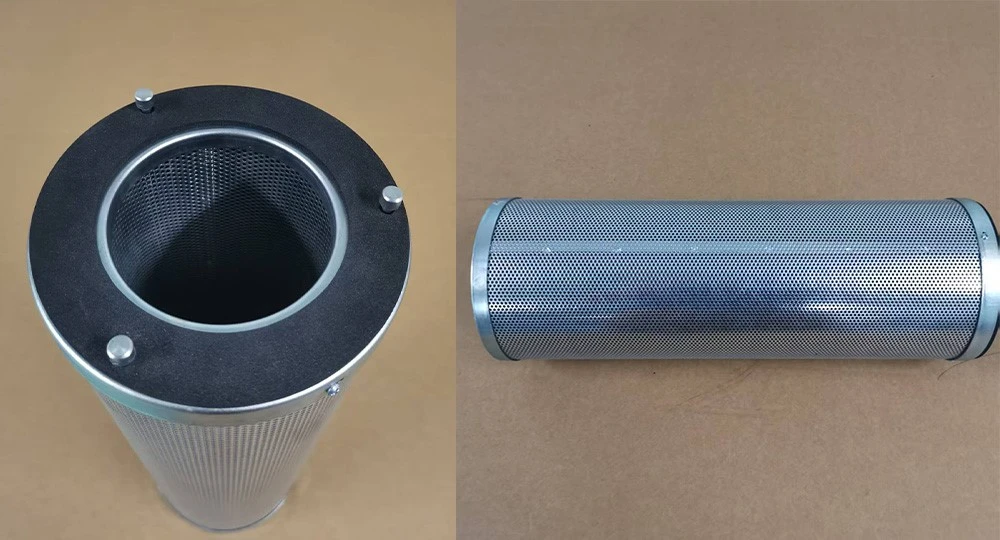
Understand How Activated Carbon Cartridge Filters Work
An Activated Carbon Cartridge Filter uses porous activated carbon to adsorb selected gas and vapor molecules from an airstream. During adsorption, contaminant molecules attach to the internal and external surfaces of the carbon rather than being collected through conventional mechanical particle filtration.
Granular activated carbon (GAC) is commonly used because its developed pore structure provides a large surface area for molecular contact.
A Granular Activated Carbon Filter is primarily intended for gas phase contaminant control. For applications involving both particles and gases, particulate filtration is generally installed upstream to protect the carbon media.
5 Key Factors When Choosing an Activated Carbon Cartridge Filter
1. Identify the Target Contaminants
The first step is to determine which gases or vapors need to be controlled. Different compounds have different adsorption characteristics, so one carbon type cannot be assumed to work equally well for every application.
For example, untreated activated carbon may be suitable for certain organic vapors, while acidic or alkaline gases may require specially treated media.
Before purchasing an Industrial Activated Carbon Filter, provide the supplier with the actual chemical names whenever possible. A general description such as industrial odor removal is not sufficient for accurate media selection.
2. Select the Appropriate Carbon Media
Not all activated carbon has identical adsorption performance. Its properties depend on the raw material, activation process, pore structure, particle size, and any additional chemical treatment.
Important specifications to evaluate include:
- Surface area: Indicates the developed internal surface available for adsorption.
- Pore structure: Influences which molecules can access the adsorption sites.
- Particle size: Affects diffusion distance and airflow resistance.
- Adsorption capacity: Indicates how much of a particular contaminant the media can retain under defined test conditions.
- Chemical treatment: May improve suitability for specific reactive gases.
3. Evaluate Contact Time and Carbon Capacity
Contact time describes how long contaminated air interacts with the adsorption media. Longer residence time generally provides more opportunity for contaminant adsorption, although actual performance also depends on the contaminant, carbon properties, and airflow distribution.
Carbon capacity is equally important. It describes the amount of a selected contaminant that the carbon can retain under specified conditions.
Do not assume that more carbon automatically guarantees better performance. The entire cartridge configuration must be evaluated.
4. Consider Temperature and Relative Humidity
Operating conditions can significantly affect activated carbon performance.
According to ASHRAE, increasing temperature generally reduces the adsorption capacity of physical adsorbents. High relative humidity can also reduce adsorption performance for certain compounds because water molecules compete for adsorption sites.
Before selecting a Gas Phase Air Filter, confirm:
- Normal operating temperature.
- Maximum and minimum temperature.
- Relative humidity.
- Expected changes in operating conditions.
- Potential condensation or moisture exposure.
These details help suppliers evaluate whether the selected carbon media is suitable for the actual application.
5. Check Cartridge Dimensions and System Compatibility
The filter must fit the existing equipment while maintaining suitable airflow conditions.
For cylindrical cartridge assemblies, buyers should confirm:
- Cartridge diameter and length.
- Number of cartridges required.
- Overall housing dimensions.
- Housing material and corrosion resistance.
- Connection and sealing arrangements.
Activated Carbon Air Filter should match both the available installation space and the ventilation system requirements. Custom dimensions and cartridge arrangements should be assessed against the actual equipment drawings.
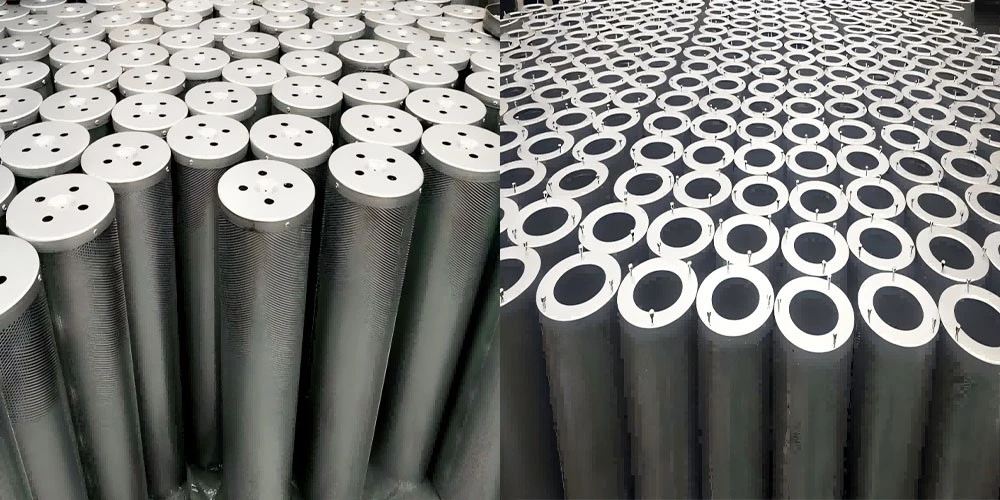
Common Industrial Applications
An Activated Carbon Cartridge Filter can be used in different industrial and commercial environments where compatible gaseous contaminants require control.
- Manufacturing Facilities: Helps manage selected process related vapors and odors.
- Commercial HVAC Systems: Supports the removal of certain gaseous contaminants from ventilation air.
- Chemical Processing Plants: Uses appropriately selected carbon media for specific chemical vapors and gases.
- Wastewater Treatment Facilities: Can help control certain odor causing compounds in ventilation exhaust.
- Industrial Exhaust Systems: Provides gas phase adsorption as part of an appropriately designed air treatment system.
For applications with high contaminant concentrations, variable emissions, or complex gas mixtures, a complete engineering assessment is necessary. Activated carbon filtration may also be combined with other treatment technologies when required.
Common Selection Mistakes to Avoid
Before ordering, watch out for these frequent mistakes:
- Choosing carbon without identifying contaminants: Different gases require different adsorption properties.
- Ignoring operating conditions: Temperature and humidity can affect carbon performance.
- Selecting by size alone: Cartridge dimensions do not establish adsorption capacity.
- Overlooking prefiltration: Dust accumulation can increase pressure drop and reduce airflow.
- Ignoring breakthrough monitoring: Carbon replacement should be based on performance requirements and suitable monitoring methods.
Monitoring outlet contaminant concentration, airflow, pressure differential, and operating conditions helps evaluate filter performance and plan maintenance.
Why Choose SNYLI for Your Carbon Filtration Project?
SNYLI specializes in industrial air filtration products and air purification equipment, providing solutions for different ventilation and cleanroom requirements.
For customers sourcing an Activated Carbon Cartridge Filter, SNYLI offers different carbon media options, metal housing configurations, and cartridge specifications according to project requirements.
Whether you are replacing existing filter cartridges or developing a new industrial air filtration system, providing operating information helps us recommend a more suitable configuration.

Looking for a suitable carbon filtration solution?
Contact SNYLI with your target contaminants, airflow rate, operating temperature, humidity, and installation dimensions.
Our team will help evaluate your requirements and provide a product recommendation and quotation.


