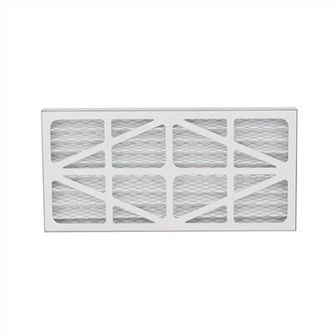
PP Hepa Cleaner
PP Hepa Cleaner It is a colorless, odorless, non-toxic, translucent solid substance. Polypropylene is a thermoplastic synthetic resin with excellent performance. It is a colorless, translucent, thermoplastic, lightweight general-purpose plastic. Polypropylene gas filter element is a filter element material used for gas filtration. It is made of polypropylene fiber and has good filtering effect and durability.Filter particulate matter in the gas Remove odor from the gas Protect equipment Improve air quality In short, the functions of polypropylene gas filter elements include filtering particulate matter in the gas, removing odor from the gas, protecting equipment and improving air quality. Using polypropylene gas filter elements can effectively protect human health and the normal operation of equipment, and improve the quality of life and work.
----------------------------The characteristics and performance of PE filter element----------------------------
The porosity of PE polyethylene high molecular weight filter element is as high as 60%, which ensures a larger fluid flow rate per unit area;
Smooth outer surface: The outer surface is smooth without wrinkles and protrusions, impurities are not easy to adhere, and backwashing is easy and thorough;
Strong anti-fouling ability: The filtration accuracy of small outside and large inside prevents impurities from remaining in the filter element, and can press the sludge to 70% of the water content;
Excellent cost performance: Excellent comprehensive performance, low price, suitable for water treatment, environmental sewage treatment, reclaimed water reuse, chemical product filtration and other working conditions with large flow.
Resistant to corrosion by strong acids and strong alkalis, and resistant to dissolution by organic solvents;
Excellent strength and wear resistance ensure its service life, long service life and long service life (7) No threshing phenomenon, strong pressure resistance.
Polyethylene is a thermoplastic resin material. Under normal circumstances, if it is only in contact with it at room temperature, it will not be harmful to the human body. However, if polyethylene is denatured at high temperature and in long-term and large-scale contact, it may cause certain harm to the human body. Therefore, it is recommended to avoid long-term contact with polyethylene and its products after high-temperature denaturation in daily life. Therefore, high-molecular polyethylene PE will not be used in hepa air conditioner air filters.
Class A laminar flow hood and DOP laminar flow hood filtration configuration requirements H14 liquid tank sealed high-efficiency filter: Class A laminar flow hood/DOP laminar flow hood is a local purification equipment, which is composed of a fan and a hepa media filter and electrical control components, similar to FFU, but it has no standard size and model, and provides laminar protection for the corresponding environment. The shell is 304 stainless steel. The service is very wide and can be owned by basically all industries. At present, it is widely used in the pharmaceutical industry, food industry, electronics industry, chemical industry, daily necessities, aerospace, etc. The high-efficiency filter can be spliced together by multiple units. According to national standards, the noise is controlled within 65dB, and the average wind speed at the outlet of the high-efficiency filter should be greater than 0.45m/s. The laminar flow hood is used to achieve the purpose of local laminar flow in the turbulent clean room, and it is widely used. Especially in pharmaceutical factories, the air inlet of the laminar flow hood can be at the back or the top, which meets the new GMP dynamic level 100, and the wind speed in the working area reaches 0.45m/s±20%.

----------------------------How often should the HEPA filter be replaced----------------------------
In the pharmaceutical industry, air filter with hepa filter are used as terminal filters for the treatment and filtration of production space air. Aseptic production requires the mandatory use of h13 hepa, and solid and semi-solid dosage forms are sometimes used. H13 to H14 (DIN1822) are two types of HEPA filters, the latter with a retention rate of 99.995%. But how often must they be replaced?
From a practical point of view, we can say that the maximum service life depends directly on the upstream and downstream pressure difference. Filter replacement only makes sense when the upstream and downstream pressure difference reaches a certain value that affects the performance of the ventilation system, or when the energy demand exceeds the cost of filter replacement. However, the filter must be able to pass the leak test (as mentioned above). In fact, many companies do not use a h13 hepa filter air purifier for more than 8 years. As mentioned above, there is no regulation that stipulates such a value, which is only based on experience.
----------------------------Problems with 24x24 hepa filter 99.99 replacement----------------------------
Does the PP Hepa Cleaner of the air conditioning system of a small-volume injection workshop have to be replaced regularly? If it is not replaced regularly, is it okay to only replace the high-efficiency room with unqualified air volume and the high-efficiency room with unqualified leaks during air conditioning verification?
Replacing the high-efficiency filter is necessary according to the air volume and leak detection during air conditioning verification, but at the same time, the maximum use cycle of the specific hepa certified air purifier should also be formulated, so there should still be a regular concept. At the same time, the filter integrity test must be performed regularly.
----------------------------Clean area A-level high-efficiency filter leak detection----------------------------
Consultation content: Can the clean area A-level high-efficiency filter leak detection use dust particle counter scanning leak detection? If so, what is the standard for judging no leakage?
High-efficiency filter leak detection can generally use dust particle counters in non-critical areas, but it is not recommended to use dust particle counters to scan leak detection for h14 hepa filter air purifier in Class A clean areas.
Compared with clean rooms, clean laminar flow hoods have the advantages of low investment, quick results, low requirements for factory construction, easy installation, and power saving. They can be flexibly installed above process points that require high cleanliness. They can be used individually or combined into a strip-shaped clean area. There are two types of clean laminar flow hoods: internal fan and external fan. The installation methods are hanging and floor-standing. The main application occasions of laminar flow hoods are: biological and pharmaceutical industries (large infusion filling, injection production, etc.) to meet the local high cleanliness production process requirements. Class A laminar flow hood | liquid tank sealed laminar flow hood | DOP laminar flow hood product features: 1. Laminar flow hood is a vertical laminar air supply purification unit that can provide local high cleanliness. 2. Installation method: generally ceiling or ceiling installation 3. Main application occasions: biological and pharmaceutical industries (large infusion filling, injection production, etc.) to meet the local high cleanliness production process requirements 4. Laminar flow hood classification: A, side air inlet laminar flow hood; B, top air inlet laminar flow hood; C, laminar flow hood without fan Class A laminar flow hood | liquid tank sealed laminar flow hood | DOP laminar flow hood Specifications: Cleanliness: ISO 5 level (FS209E100 level) Noise: ≤63dBA Surface wind speed: 0.45m/s, adjustable Power supply: 1φ 220V 50/60Hz.Class A laminar flow hood | liquid tank sealed laminar flow hood | DOP laminar flow hood Product advantages:
1. Lifelong maintenance-free high-efficiency external rotor centrifugal fan, smoother operation and more energy-saving
2. High-quality cold-rolled steel plate painted, outstanding quality
3. Unique sealing design makes the seal more reliable
4. Unique internal flow guide design, more uniform air outlet
5. More compact volume, saving your precious space
6. Various structural forms, top delivery, side delivery air inlet, external air inlet ring and other non-standard design options to meet different installation methods and different usage requirements

----------------------------DOP laminar flow hood features----------------------------
Laminar flow hood is divided into hanging and bracket structure design. Flexible and simple installation.
Independent unit air supply system effectively ensures uniform and stable air flow.
Large-area laminar flow hood can adopt external fan box structure, low noise, strong versatility, and can be equipped with air conditioning system.
Unique negative pressure sealing design easily passes PAO scanning verification.
Equipped with H14 liquid tank sealed PP Hepa Cleaner, with filter pressure difference plate display, real-time monitoring system effective operation.
The independently developed small liquid product touch screen control system has stepless speed regulation, convenient and simple operation, and multiple sets of fans can realize group control operation.
The wind speed sensor can be installed to automatically adjust the air supply speed of the system, so that the wind speed in the working area is always in a uniform and stable operating state (0.45 ± 20% m/s); 8. The laminar flow hood with non-standard size and irregular shape can be customized according to user requirements.
Keywords: hepa filter box | air bear filter box | box fan air purifier | inline air filter box | box fan hepa filter | duct filter box