

Do F8 V bank filters require maintenance?
Do F8 V bank filters require maintenance?
As a supplier of F8 V bank filters, I am often asked whether these filters require maintenance. The short answer is yes, they do. However, the level and frequency of maintenance can vary depending on several factors. In this blog post, I'll delve into the details of F8 V bank filter maintenance, why it's crucial, and how you can effectively manage it.
Understanding F8 V bank filters
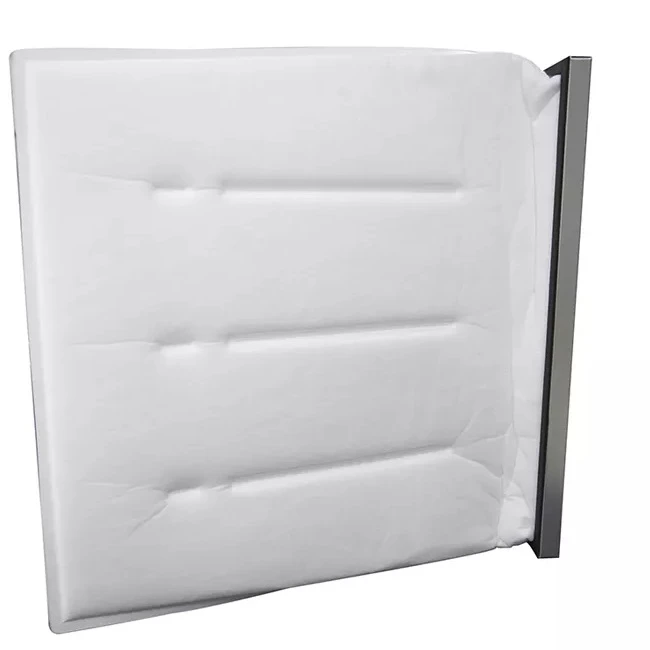
F8 V bank filters are a type of air filter commonly used in HVAC (Heating, Ventilation, and Air Conditioning) systems. They are designed to capture a wide range of airborne particles, including dust, pollen, mold spores, and some bacteria. The "F8" classification indicates the filter's efficiency rating, with F8 filters typically having an efficiency of around 80 - 90% in capturing particles in the size range of 1 - 10 microns.
The V bank design is characterized by multiple filter panels arranged in a V-shaped configuration. This design increases the filter's surface area, allowing for more efficient air filtration and a longer service life compared to some other filter types.
Why maintenance is necessary
- Maintaining filtration efficiency: Over time, as the filter captures more and more particles, its efficiency can start to decline. A clogged filter has a reduced ability to trap new particles, which means that more contaminants can pass through the filter and into the HVAC system and the indoor environment. This can lead to poor air quality, which is a concern for both residential and commercial spaces, especially in environments where air quality is critical, such as hospitals, laboratories, and cleanrooms.
- Preventing system damage: A dirty or clogged F8 V bank filter can also cause problems for the HVAC system itself. When the filter is blocked, the air flow through the system is restricted. This can put additional strain on the blower motor, leading to increased energy consumption and potentially shortening the lifespan of the motor. In some cases, it can even cause the system to overheat, which may result in costly repairs or system failures.
- Ensuring optimal performance: Regular maintenance helps to keep the F8 V bank filter operating at its best. This means that the HVAC system can maintain a consistent temperature and humidity level, providing a comfortable and healthy indoor environment.
Factors affecting maintenance requirements
- Operating environment: The amount of particulate matter in the air is a major factor in determining how often the filter needs to be maintained. In areas with high levels of dust, such as construction sites or industrial areas, the filter may become clogged more quickly and require more frequent maintenance. On the other hand, in a relatively clean environment, such as a well - sealed office building, the filter may last longer between maintenance intervals.
- Airflow rate: A higher airflow rate through the filter can cause particles to accumulate more rapidly. If the HVAC system is operating at a high capacity or if there are multiple air changes per hour in the space, the filter will need to be checked and maintained more often.
- Filter quality: The quality of the F8 V bank filter itself can also affect its maintenance requirements. Higher - quality filters are often designed to have a longer service life and may be more resistant to clogging. As a supplier, I always recommend choosing filters from reputable manufacturers to ensure better performance and reduced maintenance needs.
Types of maintenance
- Inspection: Regular inspection is the first step in maintaining F8 V bank filters. This involves visually checking the filter for signs of dirt, damage, or clogging. You can do this by removing the filter from the HVAC system and examining it closely. Look for areas where the filter appears to be more dirty than others, as well as any holes or tears in the filter media.
- Cleaning: In some cases, F8 V bank filters can be cleaned and reused. However, not all filters are suitable for cleaning, so it's important to check the manufacturer's instructions. If the filter is cleanable, you can use a gentle stream of compressed air or a vacuum cleaner to remove the loose particles from the filter. Be careful not to damage the filter media during the cleaning process.
- Replacement: Eventually, even with proper cleaning, the filter will reach the end of its useful life and need to be replaced. The frequency of replacement depends on the factors mentioned above, but as a general rule, F8 V bank filters should be replaced every 3 - 6 months in most commercial and residential applications.
Comparison with other filter types
When considering the maintenance requirements of F8 V bank filters, it's useful to compare them with other types of air filters. For example, Rigid Pocket Filter and Reverse Rigid Pocket Filters also require maintenance, but their design and construction may result in different maintenance intervals and procedures. Rigid pocket filters typically have a more open structure, which can make them less prone to clogging compared to some other filter types. However, they still need to be inspected and replaced regularly to ensure optimal performance.
Rigid HEPA Pocket Filters are designed to capture even smaller particles with a very high efficiency. These filters are often used in critical applications where air quality is of the utmost importance. While they offer excellent filtration performance, they may require more frequent maintenance and replacement due to their high - efficiency design and the fact that they capture a larger proportion of the airborne particles.
Tips for effective maintenance
- Establish a maintenance schedule: Based on the operating environment and the manufacturer's recommendations, create a regular maintenance schedule for your F8 V bank filters. This will help you stay on top of the maintenance tasks and ensure that the filters are always in good working condition.
- Train your staff: If you are responsible for maintaining the HVAC system in a commercial or industrial setting, make sure that your staff is properly trained in filter inspection, cleaning, and replacement procedures. This will help to ensure that the maintenance is done correctly and safely.
- Keep records: Maintain a record of all filter inspections, cleanings, and replacements. This can help you track the performance of the filters over time and identify any trends or issues that may need to be addressed.
Conclusion
In conclusion, F8 V bank filters do require maintenance to ensure their optimal performance, maintain good air quality, and prevent damage to the HVAC system. By understanding the factors that affect maintenance requirements, performing regular inspections, and following the appropriate cleaning and replacement procedures, you can keep your F8 V bank filters in top condition.
If you are in need of high - quality F8 V bank filters or have any questions about their maintenance, please feel free to contact us. We are here to provide you with the best products and advice to meet your air filtration needs.

References
- ASHRAE (American Society of Heating, Refrigerating and Air - Conditioning Engineers). "ASHRAE Handbook - HVAC Systems and Equipment".
- Manufacturer's manuals for F8 V bank filters.