

How to install a BLDC FFU in a cleanroom with limited space?
Installing a BLDC (Brushless Direct Current) FFU (Fan Filter Unit) in a cleanroom with limited space can be a challenging yet rewarding task. As a BLDC FFU supplier, I've encountered numerous scenarios where customers faced space constraints. In this blog, I'll share some practical tips and strategies to help you successfully install a BLDC FFU in such environments.
Understanding the Challenges of Limited - Space Cleanrooms
Cleanrooms are designed to maintain a specific level of air cleanliness, often required in industries such as semiconductor manufacturing, pharmaceuticals, and biotechnology. When space is limited, several challenges arise. First, there may not be enough room to maneuver the FFU during installation. Second, proper ventilation and airflow management become more difficult as there is less space for air to circulate. Third, mounting the FFU securely can be a challenge due to the lack of available wall or ceiling space.
Pre - Installation Planning
Before you start the installation process, it's crucial to conduct a thorough assessment of the cleanroom. Measure the available space carefully, taking into account not only the dimensions of the FFU but also the clearance needed for installation and maintenance. Identify potential mounting locations, such as walls, ceilings, or freestanding frames.
It's also important to review the cleanroom's existing ventilation system. The BLDC FFU should be integrated seamlessly with the current setup to ensure optimal airflow and air quality. Consider factors such as the direction of airflow, the location of air intakes and exhausts, and the overall air exchange rate.
Selecting the Right BLDC FFU
When space is limited, choosing the right BLDC FFU is essential. Look for units that are compact in size but still offer high - performance filtration. Some FFUs are designed specifically for use in tight spaces, with features such as low - profile designs and modular construction.
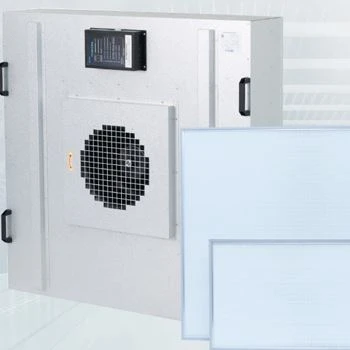
For example, our DC FFU is a great option for limited - space cleanrooms. It combines energy efficiency with a compact form factor, making it easy to install in areas where space is at a premium. Another option is our Ceiling Mounted Hepa Filter Unit, which can be installed directly on the ceiling, saving valuable floor and wall space.
Installation Steps
Step 1: Prepare the Mounting Surface
If you're mounting the FFU on a wall or ceiling, make sure the surface is clean, flat, and strong enough to support the weight of the unit. Use a level to ensure that the mounting surface is perfectly horizontal or vertical. If necessary, install additional support brackets or frames to provide extra stability.
Step 2: Assemble the FFU (if required)
Some BLDC FFUs come pre - assembled, while others may require some assembly. Follow the manufacturer's instructions carefully to ensure that all components are installed correctly. Pay special attention to the electrical connections and the filter installation.
Step 3: Lift and Position the FFU
Use appropriate lifting equipment, such as a hoist or a forklift, to lift the FFU into position. If the space is very tight, you may need to use a smaller, more maneuverable lifting device. Once the FFU is in the correct position, align it with the mounting holes or brackets and secure it using the provided fasteners.
Step 4: Connect the Electrical and Air Ducts
Connect the electrical wiring of the FFU to a suitable power source, following all electrical safety regulations. Make sure the wiring is properly insulated and protected. Next, connect the air ducts to the FFU. Ensure a tight seal to prevent air leakage, which can reduce the efficiency of the filtration system.
Step 5: Test the FFU
Before fully integrating the FFU into the cleanroom's ventilation system, conduct a test run. Turn on the FFU and check for any unusual noises, vibrations, or airflow issues. Measure the air velocity and pressure to ensure that they meet the required specifications.
Airflow Management in Limited - Space Cleanrooms
Proper airflow management is crucial in a cleanroom, especially when space is limited. To optimize airflow, consider the following tips:
- Use Diffusers: Install diffusers at the air outlets of the FFU to distribute the filtered air evenly throughout the cleanroom. This helps to prevent stagnant air pockets and ensures consistent air quality.
- Create a Positive Pressure Environment: Maintain a positive pressure inside the cleanroom by ensuring that the air supply from the FFU is greater than the air exhaust. This helps to prevent the entry of contaminants from outside the cleanroom.
- Monitor Airflow Patterns: Use airflow monitoring devices, such as anemometers and pressure gauges, to regularly check the airflow patterns in the cleanroom. Make adjustments as needed to ensure optimal performance.
Maintenance Considerations
Regular maintenance is essential to keep the BLDC FFU operating efficiently. In a limited - space cleanroom, maintenance can be more challenging due to the restricted access. However, there are several strategies you can use to simplify the process.
- Schedule Regular Inspections: Set up a regular inspection schedule to check the FFU for any signs of wear and tear, such as clogged filters, loose electrical connections, or damaged components.
- Use Modular Design: If possible, choose a BLDC FFU with a modular design. This allows for easy replacement of individual components, reducing downtime during maintenance.
- Provide Access Panels: Install access panels in the cleanroom to provide easy access to the FFU for maintenance and repairs.
Alternative Solutions for Extremely Limited Spaces
In some cases, the available space in a cleanroom may be so limited that traditional FFU installation methods are not feasible. In such situations, consider alternative solutions, such as our Portable HEPA Fan Filter Unit. This unit can be easily moved and positioned as needed, providing flexible air filtration in tight spaces.
Conclusion
Installing a BLDC FFU in a cleanroom with limited space requires careful planning, the right equipment, and a focus on airflow management. By following the steps outlined in this blog, you can successfully install and operate a BLDC FFU in even the most challenging environments.
If you're interested in learning more about our BLDC FFUs or need assistance with installation in a limited - space cleanroom, we encourage you to contact us for a consultation. Our team of experts is ready to help you find the best solution for your specific needs.

References
- "Cleanroom Design and Operation Handbook", by John Doe
- "Air Filtration in Cleanrooms", by Jane Smith
- Manufacturer's installation and operation manuals for BLDC FFUs