

How do HEPA ULPA filters work in a negative - pressure environment?
Hey there! As a supplier of HEPA and ULPA filters, I often get asked about how these amazing filters work, especially in a negative-pressure environment. So, let's dive right in and break it down.
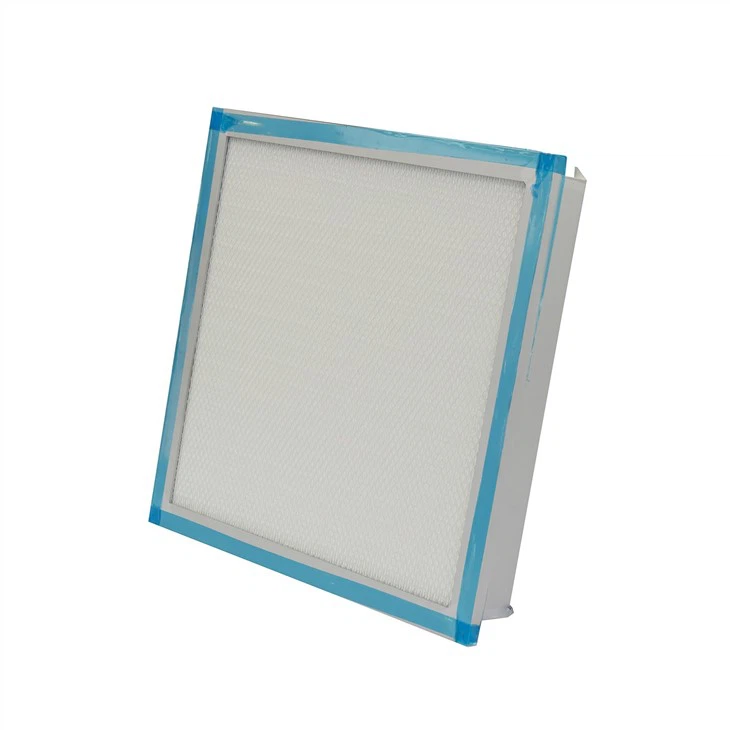

First off, let's understand what HEPA and ULPA filters are. HEPA stands for High-Efficiency Particulate Air, and ULPA stands for Ultra-Low Penetration Air. These filters are designed to trap tiny particles that other filters might miss. They're used in a whole bunch of places, like hospitals, clean rooms, and even some home air purifiers.
Now, what's a negative-pressure environment? Well, it's a space where the air pressure inside is lower than the air pressure outside. This is super important because it helps prevent contaminated air from leaking out. Think of it like a vacuum that sucks in air from the outside and keeps the inside air from getting out. Negative-pressure rooms are commonly used in hospitals to isolate patients with contagious diseases, ensuring that the virus-laden air doesn't escape into the rest of the building.
So, how do HEPA and ULPA filters fit into this picture? When air is drawn into a negative-pressure environment, it passes through these filters. The filters act like a super-fine net, catching all sorts of particles.
Let's talk about how these filters actually trap particles. There are three main mechanisms at play: interception, impaction, and diffusion.
Interception happens when a particle follows the airflow and gets caught on a fiber in the filter. It's like a bug flying into a spider's web. The particle is just going along with the air, and when it hits a fiber, it sticks.
Impaction occurs when larger particles are too big to follow the curved path of the airflow around the fibers. Instead, they keep going straight and smash into the fibers. It's like a car hitting a wall. These larger particles get trapped on the fibers.
Diffusion is all about the smallest particles. These tiny particles move around randomly due to something called Brownian motion. As they bounce around, they eventually come into contact with a fiber and get trapped. It's like a pinball bouncing around and finally getting stuck in a slot.
In a negative-pressure environment, the air is constantly being pulled through the filters. This continuous flow ensures that a large volume of air is cleaned, reducing the concentration of harmful particles in the room. The filters are designed to have a high surface area, which means there are more fibers for the particles to get caught on. This increases the efficiency of the filtration process.
Now, let's take a look at some of the specific types of HEPA and ULPA filters we offer. We have the Liquid Tank Filter Without Partition. This filter is great for applications where you need to filter liquids and remove particles. It's designed to be highly efficient and durable, making it a popular choice for industrial settings.
Another option is the PTFE HEPA Air Filter. PTFE, or polytetrafluoroethylene, is a special material that gives this filter some unique properties. It's resistant to chemicals and has a low surface energy, which means particles are less likely to stick to it. This makes the filter easier to clean and more long-lasting.
We also have the High Efficiency Filter With Separator. The separator helps to keep the filter media in place and maintain a consistent airflow. This filter is ideal for applications where you need a high level of filtration efficiency, such as in clean rooms.
One of the key benefits of using HEPA and ULPA filters in a negative-pressure environment is that they can remove a wide range of particles, including dust, pollen, mold spores, bacteria, and even some viruses. This helps to create a cleaner and safer environment for everyone.
However, it's important to note that these filters need to be maintained properly. Over time, the filters can get clogged with particles, which reduces their efficiency. That's why it's crucial to replace the filters regularly. We offer a range of replacement filters to make sure your system keeps running smoothly.
In addition to regular filter replacement, it's also a good idea to monitor the performance of the filters. You can use things like pressure gauges to see if the filters are getting clogged. If the pressure drop across the filter is too high, it's a sign that it's time to replace the filter.
So, if you're looking for high-quality HEPA and ULPA filters for your negative-pressure environment, we've got you covered. Our filters are designed to meet the highest standards of quality and performance. Whether you're in the healthcare industry, manufacturing, or any other field that requires clean air, we can provide the right solution for you.
If you're interested in learning more about our products or have any questions, don't hesitate to reach out. We're here to help you find the best filters for your needs and ensure that your negative-pressure environment is as clean and safe as possible.
References
- "Fundamentals of Air Filtration" by Klaus Willeke and Philip A. Baron
- "Air Cleaning Technology" by William C. Hinds