

How does a HEPA diffuser handle volatile organic compounds (VOCs)?
Hey there! As a supplier of HEPA diffusers, I often get asked about how these nifty devices handle volatile organic compounds, or VOCs for short. So, I thought I'd break it down for you in this blog post.
First off, let's talk about what VOCs are. VOCs are a group of chemicals that can easily turn into vapors or gases at room temperature. They come from a whole bunch of sources, like paints, cleaning products, furniture, and even some building materials. And the thing is, some VOCs can be pretty harmful to our health. They can cause all sorts of problems, from headaches and dizziness to more serious long - term health issues like damage to the liver, kidneys, and central nervous system.
Now, let's get to the main question: how does a HEPA diffuser deal with these pesky VOCs?
A HEPA diffuser is a key part of an air filtration system. The HEPA in HEPA diffuser stands for High - Efficiency Particulate Air. These filters are designed to trap tiny particles in the air. But VOCs are different from regular particles. They're in a gaseous form, so a standard HEPA filter on its own isn't going to be super effective at removing them.
However, a well - designed HEPA diffuser system can still play a role in handling VOCs. Many HEPA diffusers are part of a more comprehensive air purification setup. They're often combined with other technologies to target VOCs.
One common approach is to use activated carbon filters along with the HEPA filter. Activated carbon is like a sponge for gases and odors. It has a huge surface area with lots of tiny pores. When air passes through the activated carbon filter in the HEPA diffuser system, the VOC molecules get stuck to the surface of the carbon. This process is called adsorption.
Let me give you an example. Say you've just painted a room. The paint releases a bunch of VOCs into the air. As the air circulates through the HEPA diffuser, the HEPA filter first captures any larger particles like dust that might be in the air. Then, the air moves through the activated carbon filter. The VOCs from the paint, such as formaldehyde and benzene, get adsorbed onto the carbon, reducing their concentration in the air.
Another way a HEPA diffuser can help with VOCs is by improving air circulation. By constantly moving the air around, it helps to dilute the concentration of VOCs in a space. When the air is stagnant, the VOCs can build up in one area, making the air quality worse. But with a HEPA diffuser, the air is continuously being pulled in, filtered, and then pushed back out into the room. This keeps the air fresh and reduces the chances of a high - concentration VOC hotspot forming.
Now, let's talk about some of the products we offer as a HEPA diffuser supplier. We have a range of high - quality HEPA diffuser components that can be part of an effective VOC - handling system.
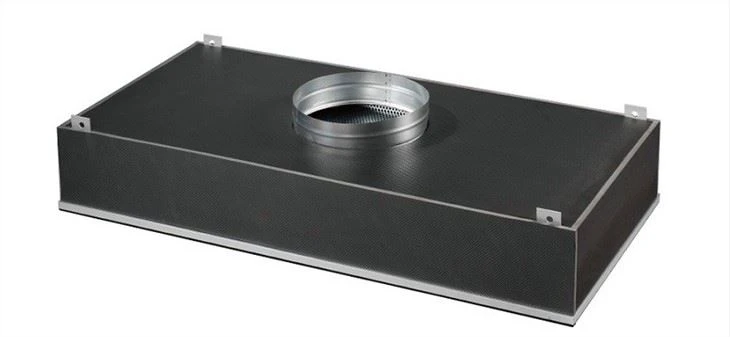
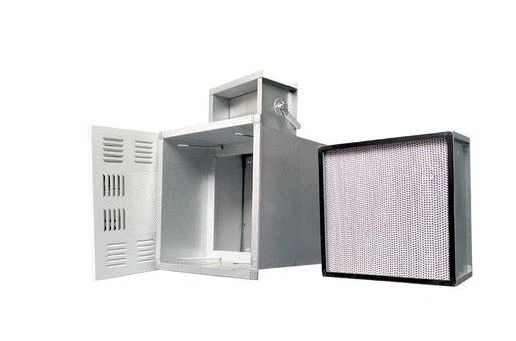
For instance, our Ceiling Terminal HEPA Filter Modules are great for ceiling - mounted air filtration systems. These modules are designed to fit seamlessly into your existing setup and can be combined with activated carbon filters to target VOCs. They have a high - efficiency HEPA filter that captures particles as small as 0.3 microns with a very high efficiency rate.
Our White HEPA Filter Box is another option. It's a compact and stylish solution that can be used in various settings, from homes to offices. The filter box can be customized with additional filtration layers, including activated carbon, to enhance its ability to deal with VOCs.
And then there's our Ceiling Replaceable HEPA ULPA Filter. This filter is not only highly efficient at capturing particles but can also be part of a system that addresses VOCs. The replaceable design means you can easily swap out the filter when it gets dirty or when the activated carbon reaches its capacity.
When it comes to choosing the right HEPA diffuser setup for handling VOCs, there are a few things to consider. First, think about the size of the space. A larger area will need a more powerful system to effectively circulate and filter the air. Second, consider the source and concentration of VOCs in the area. If you're dealing with a high - VOC environment, like a chemical laboratory or a newly renovated building, you'll need a more robust filtration system.
In addition to the activated carbon and HEPA combination, some advanced HEPA diffuser systems use other technologies to tackle VOCs. For example, photocatalytic oxidation (PCO) is a process where a catalyst is activated by light to break down VOCs into less harmful substances like carbon dioxide and water. Some HEPA diffusers can be equipped with PCO technology to enhance their VOC - removal capabilities.
It's also important to maintain your HEPA diffuser system properly. Regularly changing the filters, especially the activated carbon filter, is crucial. Over time, the activated carbon will become saturated with VOCs and other gases, and it won't be as effective at adsorbing new molecules. So, make sure to follow the manufacturer's recommendations for filter replacement.
In conclusion, while a HEPA diffuser on its own can't completely eliminate VOCs, when combined with other technologies like activated carbon filters and PCO, it can be a powerful tool in improving indoor air quality and reducing the concentration of VOCs.
If you're interested in learning more about our HEPA diffuser products and how they can help you handle VOCs in your space, don't hesitate to reach out. We're here to assist you in finding the right solution for your specific needs. Whether you're a homeowner looking to improve the air quality in your living room or a business owner in charge of a large commercial space, we have the expertise and products to help.
References
- "Indoor Air Quality: An Introduction for Health Professionals" by John D. Spengler, et al.
- "Air Filtration: An Integrated Approach to the Design and Evaluation of Systems" by Jack C. Chow.