

How to test the performance of a DC FFU?
Hey there! As a DC FFU supplier, I've been in the business long enough to know how crucial it is to test the performance of these units. DC FFUs, or Direct Current Fan Filter Units, are widely used in cleanrooms, semiconductor manufacturing, and other environments where air quality is super important. In this blog, I'm gonna share with you how to test the performance of a DC FFU.
Airflow Rate Testing
The airflow rate is one of the most important performance indicators of a DC FFU. It determines how much air the unit can move through the filter in a given time. To test the airflow rate, you'll need an airflow meter.
First, make sure the DC FFU is installed correctly and is running at its normal operating speed. Then, place the airflow meter at the outlet of the FFU. It's important to position the meter accurately to get an accurate reading. You may need to take multiple readings at different points across the outlet to account for any variations in airflow.
Once you've taken the readings, calculate the average airflow rate. Compare this value with the manufacturer's specifications. If the measured airflow rate is significantly lower than the specified value, it could indicate a problem with the fan, the filter, or the ductwork.
Static Pressure Testing
Static pressure is another key parameter to test. It refers to the pressure exerted by the air inside the FFU. Measuring static pressure helps you understand how well the fan is working against the resistance of the filter and the ductwork.
To test the static pressure, you'll need a manometer. Connect the manometer to the appropriate ports on the FFU. Usually, there are ports for measuring the static pressure before and after the filter.
Start the FFU and let it run for a few minutes to stabilize. Then, take the static pressure readings. Calculate the pressure drop across the filter by subtracting the static pressure after the filter from the static pressure before the filter.
A high pressure drop could mean that the filter is clogged and needs to be replaced. On the other hand, a low pressure drop might indicate a problem with the fan or a leak in the ductwork.
Filter Efficiency Testing
The filter in a DC FFU is responsible for removing contaminants from the air. Testing the filter efficiency ensures that the FFU is providing clean air to the environment.
There are different methods to test filter efficiency, but one common approach is the particle counting method. You'll need a particle counter for this test.
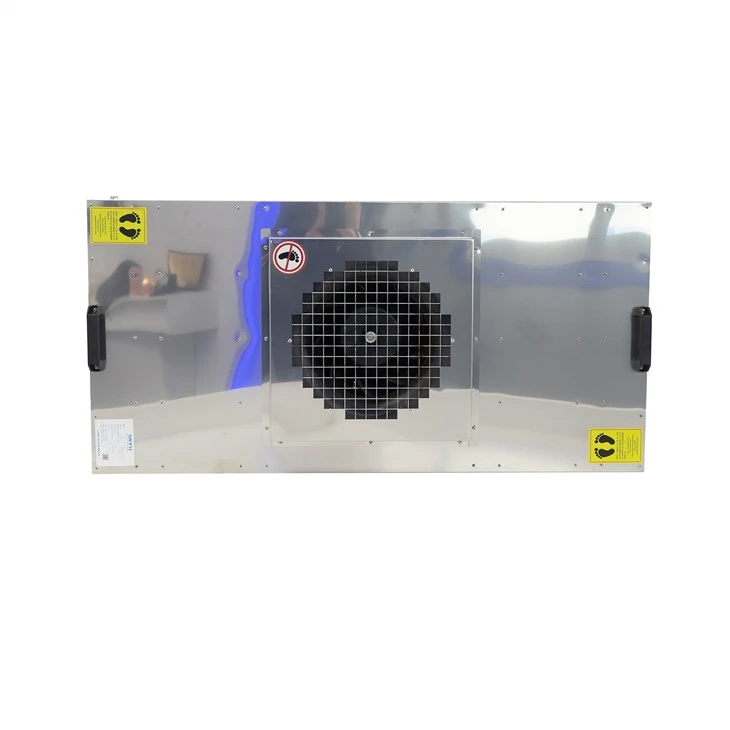

Place the particle counter at the outlet of the FFU. Start the FFU and let it run for a while to establish a stable airflow. Then, take particle count readings at different particle sizes.
Compare the particle counts at the outlet with the particle counts in the incoming air. The difference in particle counts indicates the filter's efficiency. A good filter should significantly reduce the number of particles in the air.
If you're interested in learning more about different types of FFUs, check out these links: Hepa Fan Filter Unit and Laminar Flow Hood HEPA Fan Filter Unit FFU. Also, if you want to know about AC FFUs, click AC FFU.
Noise Level Testing
Noise can be a major concern, especially in environments where people are working. Testing the noise level of a DC FFU helps ensure that it meets the acceptable noise standards.
To test the noise level, you'll need a sound level meter. Place the sound level meter at a specific distance from the FFU, usually 1 meter away and at ear height.
Start the FFU and let it run at its normal operating speed. Take the noise level reading. Compare this value with the manufacturer's specifications and the relevant noise standards for the environment.
If the noise level is too high, it could be due to a problem with the fan motor, the fan blades, or the mounting of the FFU.
Power Consumption Testing
Power consumption is an important factor, especially for long - term operation. Testing the power consumption of a DC FFU helps you evaluate its energy efficiency.
You'll need a power meter for this test. Connect the power meter to the electrical supply of the FFU.
Start the FFU and let it run for a period of time. The power meter will measure the power consumption in watts. Calculate the energy consumption over a specific period, such as an hour or a day.
Compare the measured power consumption with the manufacturer's specifications. High power consumption could indicate a problem with the fan motor or other electrical components.
Temperature Testing
Temperature can affect the performance and lifespan of a DC FFU. Testing the temperature of the FFU helps you ensure that it's operating within the safe temperature range.
You can use an infrared thermometer to measure the temperature of different parts of the FFU, such as the fan motor, the filter housing, and the electrical components.
Start the FFU and let it run for a while. Then, take temperature readings at regular intervals. If the temperature is too high, it could be due to overloading, poor ventilation, or a problem with the electrical components.
Vibration Testing
Excessive vibration can cause damage to the FFU and its components over time. Testing the vibration level helps you detect any potential problems early.
You'll need a vibration meter for this test. Attach the vibration meter to the FFU at a suitable location, such as the fan housing.
Start the FFU and let it run. The vibration meter will measure the vibration amplitude and frequency. Compare the measured values with the acceptable vibration limits.
High vibration levels could be due to unbalanced fan blades, loose mounting, or a problem with the fan motor.
Conclusion
Testing the performance of a DC FFU is a comprehensive process that involves multiple parameters. By conducting these tests regularly, you can ensure that the FFU is operating efficiently, providing clean air, and meeting the required standards.
If you're in the market for high - quality DC FFUs or have any questions about testing their performance, feel free to reach out for a procurement discussion. We're here to help you find the best solutions for your air filtration needs.
References
- ASHRAE Handbook - HVAC Systems and Equipment
- ISO 14644 - Cleanrooms and associated controlled environments standards