

What is the air pressure of an EC FFU?
What is the air pressure of an EC FFU?
Hey there! As an EC FFU supplier, I often get asked about the air pressure of an EC FFU. So, I thought I'd write a blog post to explain it all.
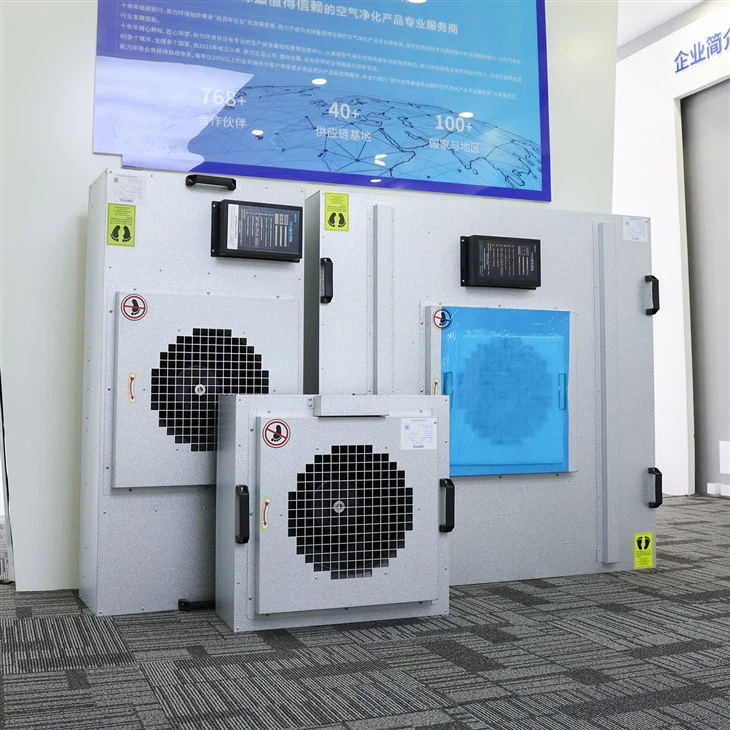
First off, let's talk about what an EC FFU is. An EC FFU, or Electronically Commutated Fan Filter Unit, is a key component in cleanroom environments. It's used to provide a continuous flow of filtered air, helping to maintain a clean and controlled environment. These units are super important in industries like semiconductor manufacturing, pharmaceuticals, and food processing, where even a tiny particle can cause big problems.
Now, onto the main topic - air pressure. The air pressure of an EC FFU is a crucial factor that determines how well it works. In simple terms, air pressure is the force exerted by the air as it moves. For an EC FFU, this pressure is what helps push the air through the filter and into the cleanroom.
There are two main types of air pressure we need to consider: static pressure and total pressure.
Static pressure is like the "resting" pressure of the air. It's the pressure that the FFU needs to overcome to push the air through the filter and ductwork. Think of it as the resistance the air faces. A higher static pressure means there's more resistance, and the FFU has to work harder to move the air. For example, if you have a really thick or clogged filter, the static pressure will be higher.
Total pressure, on the other hand, is the sum of the static pressure and the velocity pressure. The velocity pressure is related to the speed of the air as it moves out of the FFU. A higher total pressure means the FFU can move the air faster and farther.
So, what's the right air pressure for an EC FFU? Well, it depends on a few things. The size of the cleanroom, the type of filter being used, and the desired air flow rate all play a role.
Typically, EC FFUs are designed to operate at a certain range of static pressures. Most regular EC FFUs can handle static pressures between, say, 50 - 250 Pascals. But some high - performance units can go even higher, up to 500 Pascals or more. You might need a higher static pressure if you're using a dense Ffu Hepa Filter or if your ductwork is long and has a lot of bends.
Now, let's talk about how to measure the air pressure of an EC FFU. There are special instruments called manometers that can be used. These can measure both static and total pressure. You simply connect the manometer to the appropriate ports on the FFU, and it will give you a reading of the pressure.
If you find that the air pressure is too low, it could mean that the FFU isn't working efficiently. The air might not be able to pass through the filter properly, and you could end up with a dirty cleanroom. On the other hand, if the air pressure is too high, it could put extra strain on the FFU's motor, leading to premature wear and tear.
As an EC FFU supplier, we offer a wide range of FFUs with different air pressure capabilities. Whether you're looking for a basic DC FFU for a small cleanroom or a high - end DC Fan Filter Unit for a large industrial facility, we've got you covered.
Choosing the right air pressure for your EC FFU is a bit of a balancing act. You want to make sure that the FFU can move enough air through the filter to keep the cleanroom clean, but you also don't want to overwork the unit.
If you're not sure what air pressure is right for your application, we're here to help. Our team of experts can analyze your specific needs, taking into account factors like the size of your cleanroom, the type of work being done, and your budget. We can then recommend the best EC FFU with the appropriate air pressure capabilities.
In conclusion, understanding the air pressure of an EC FFU is essential for getting the most out of your cleanroom system. Whether you're a small business just starting out or a large corporation with complex cleanroom requirements, having the right air pressure can make a big difference.

If you're in the market for an EC FFU or just want to learn more about how air pressure affects performance, don't hesitate to reach out. We'd love to have a chat and help you find the perfect solution for your needs. Let's work together to create a cleaner, more efficient environment for your operations.
References
- "Cleanroom Technology Handbook", Various authors.
- Industry reports on air filtration systems and cleanroom technology.