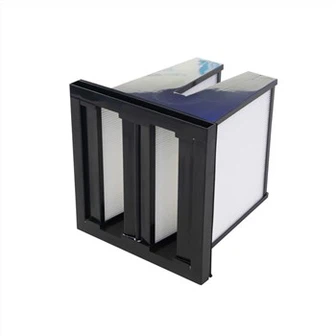
About the use resistance of high-efficiency filters
The filter forms a resistance to airflow. When the filter accumulates dust, the resistance increases, and when the resistance increases to a certain specified value, the filter is scrapped.
The resistance of the new filter is called "initial resistance"; the resistance value corresponding to the scrapped filter is called "final resistance". When designing, a representative resistance value is often required to calculate the design air volume of the system. This resistance value is called "design resistance". The usual method is to take the average value of the initial resistance and the final resistance.
Determine final resistance
The choice of final resistance is directly related to the service life of the filter, the range of system air volume change, and the system energy consumption.
Under normal circumstances, the selection of final resistance is the matter of the air conditioner designer. Experienced engineers can change the final resistance value of the original design according to the site conditions.
Sometimes the designer forgets to tell the user the final resistance value he has selected; sometimes the user changes to another filter type or another supplier, in which case the field engineer has to determine the final resistance value himself.
In most cases, the final resistance is 2 to 4 times higher than the initial resistance.
The dirtier the filter, the faster the resistance increases. A high final resistance value does not mean a significantly longer filter life, but it can lead to a significant reduction in airflow in the air conditioning system. Therefore, it is not necessary to set the final resistance value too high.
Low efficiency filters often use coarse fiber media with a diameter of ≥ 10 mm. Due to the large space between the fibers, excessive resistance may blow the accumulated ash on the filter, at this time, the resistance no longer increases, but the filtration efficiency drops to zero. Therefore, the final resistance value of the filter below G4 should be strictly limited.
Resistance monitoring
A resistance monitoring device should be installed in each filter section. The final resistance should be determined by the instrument, not only by the operator's feeling.
The cheapest resistance monitoring device is a U-tube differential pressure gauge. The inclined tube differential pressure gauge and the curved tube differential pressure gauge are more beautiful, and the grade and price of the differential pressure gauge are higher. In addition, there are differential pressure transmitters that convert resistance into electrical signals.
In addition to a resistance monitoring device with readings, a final resistance alarm device should be added. The less troublesome way is to put a red bar on the differential pressure gauge; the safer way is to use a differential pressure switch.
Recommended value of final resistance
Filtration efficiency specifications | Suggested end resistance(Pa) |
G3 | 100~200 |
G4 | 150~250 |
F5~F6 | 250~300 |
F7~F8 | 300~400 |
400~450 | |
400~600 |