H12 Hepa Filter Selection
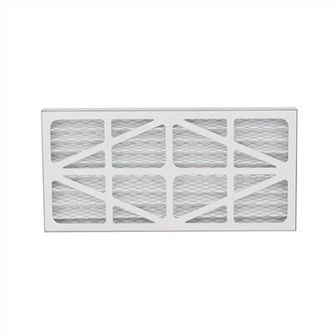
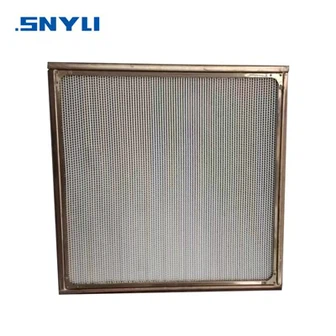
Purification equipment, such as clean workbenches, air showers, laminar flow hoods, etc., generally use coarse-effect filters or medium-effect filters at the fresh air inlet due to the small air volume they process, and high-efficiency filters or H12 Hepa Filter Selection must be used at the air supply end;For the selection and configuration of air filters in purification air conditioning systems, they are generally selected and configured rationally based on the air cleanliness level of the clean room and the special requirements of the production process.
For clean room purification systems of 1000-100,000 levels, three-stage air filtration is usually adopted, namely, coarse-effect, medium-effect and Hepa h13; coarse-effect and medium-effect filters are generally placed in the air handling device, and the medium-effect filter is placed in the positive pressure section, and the sub-high-efficiency or Hepa 14 Filter is generally located at the end of the purification air conditioning system.
For clean air conditioning systems of 100-1000 levels, coarse-effect, medium-effect and sub-Hepa 13 Filter Air Purifier are usually set in the fresh air handling device, and H13 Hepa or Hepa 13 Air Purifier are also set in the clean room circulating air system; generally, the high-efficiency filter is located at the end of the purification air conditioning system, that is, on the ceiling of the clean room; for ultra-high-efficiency filters, they must be set at the end of the purification air conditioning system to ensure the required air cleanliness level requirements.
----------------------------Basic knowledge of clean room air filters----------------------------
Filtration principle:
There are a large number of suspended dust particles in the atmosphere, and their presence greatly affects the precision, miniaturization, high quality, high purity and high reliability of products.
The particulate pollutants suspended in the air are composed of solid or liquid particles. Atmospheric dust can be divided into narrow atmospheric dust and broad atmospheric dust: narrow atmospheric dust refers to solid particles in the atmosphere, that is, real dust; the modern concept of atmospheric dust includes both solid particles and liquid particles. The polydispersed aerosol refers specifically to suspended particles in the atmosphere with a particle size of less than 10μm, which is the broad atmospheric dust. For particles larger than 10μm, because they are heavier, after a period of irregular Brownian motion, under the action of gravity, they will gradually settle to the ground, which is the main target of ventilation and dust removal; dust particles of 0.1-10μm in the atmosphere also move irregularly in the air. Because of their light weight, they are easy to float with the airflow and are difficult to settle to the ground. Therefore, the concept of atmospheric dust in air purification technology is different from the concept of dust in general dust removal technology.
The dust filtered by nylon mesh filters, metal mesh filters, and foam sponge filters used for ventilation and dust removal is mainly used to filter dust larger than 10μm because the pore size of the filter material is large, generally larger than 10μm. Therefore, the filtration efficiency for particles of 0.1~~10μm is very low; if there are certain cleanliness requirements for environmental purification, air filtration technology in clean technology must be adopted to meet the purification requirements. The main task of air purification is to use air filtration technology to capture 0.1-10μm suspended dust particles and microorganisms in the atmosphere according to the production process of various products, different processes, and the air cleanliness level requirements of various rooms, so that the dust particle concentration or bacteria concentration in the clean room or local purification area is controlled within the allowable range to ensure the cleanliness level requirements.
Except for tiny droplets in spherical shape, other suspended particles in the air are crystalline, flake, block, needle, chain, etc., and it is difficult to measure their size from geometric shapes. In clean technology, the meaning of particle size refers to a certain length dimension passing through the inside of the particle, and does not contain the meaning of regular geometric shape. It is just a "nominal size" that is convenient for comparing particle sizes.
The suspended particles in the air are divided into non-biological particles and biological particles: non-biological particles are produced by the crushing, evaporation, combustion, and condensation of solids and liquids, and their formation process has physical or chemical effects. Biological particles include microorganisms, pollen, fluff and villi of plants, etc.; microorganisms generally include viruses, rickettsia, bacteria, fungi, protozoa and algae, among which bacteria and fungi are more directly related to purification. Microorganisms in the air are mainly attached to dust, so filtering out dust in the air can effectively remove microorganisms in the air, which is also the main theoretical basis of biological purification.

----------------------------There are five main functions of the filter layer in capturing particles----------------------------
Interception effect: When particles of a certain size move to the vicinity of the fiber surface, the distance from the center line to the fiber surface is less than the particle radius, and the dust particles will be intercepted by the filter fiber and deposited.
Inertia effect: When the particle mass is large or the speed is high, it collides with the fiber surface due to inertia and deposits.
Diffusion effect: The Brownian motion of particles with small particle size is strong and it is easy to collide with the fiber surface.
Gravity effect: When particles pass through the fiber layer, they are deposited on the fiber due to gravity sedimentation.
Electrostatic effect: Fibers or particles may be charged, generating an electrostatic effect that attracts particles and absorbs the particles to the fiber surface.
As more and more dust is captured, the filtration efficiency of the 20x20 Hepa Filter layer also decreases, and the resistance increases; when the resistance value reaches a certain value or the efficiency drops to a certain value, the filter needs to be replaced in time to ensure the purification cleanliness requirements.
The most commonly used forms of filter media are: non-woven fabrics, chemical fiber materials, and glass fiber materials; they have low resistance and high efficiency at rated air volume, are easy to replace and maintain, have a wide range of applications, and have extremely high use value and application areas in air conditioning purification systems.
----------------------------Purification principle----------------------------
In order to ensure the air cleanliness requirements of the clean room for product production environment or other purposes, a number of comprehensive technical measures must be adopted:
Adopt production processes and equipment that produce less pollutants;
Take necessary isolation negative pressure measures to prevent pollutants generated by the production process from spreading to the surroundings;
Reduce the pollutants brought into the room by personnel and materials;
Strengthen the management of the clean room, and carry out cleaning, sterilization and other work according to regulations;
People and goods must be diverted, and cross-flow of people and goods is not allowed;
The most important technical measures are:
Through the corresponding devices, a sufficient amount of treated clean air is sent in to replace or dilute the air polluted by pollutants generated in the room during normal work; at the same time, take away the pollutants in the room. This is the basic principle of air purification.
Specifically, the air purification treatment in the clean room is to use different methods to send in different amounts of processed clean air according to the different cleanliness level requirements of the room, and at the same time exhaust the corresponding amount of dirty air contaminated by pollutants generated in the room; relying on such a dynamic balance, the indoor environment is maintained at the required air cleanliness level.
Air cleanliness is the degree of the amount of suspended particles in the air in the clean environment. Usually, the air cleanliness is low when the dust concentration in the air is high, and the air cleanliness is high when the dust concentration is low; the air cleanliness level of clean rooms and related controlled environments is divided according to the concentration of suspended particles in the air, that is, the maximum allowable number of particles in each cubic meter of air is used to determine the air cleanliness level.
Because the original cleanliness standard was first formulated by the United States, its unit is the British system, which is also the most widely used one;
When expressed in the British system, the name of the cleanliness level is the maximum allowable number of particles ≥0.5μm in each cubic foot of air;
When expressed in international units, the name of the cleanliness level is the common logarithm of the maximum allowable number of particles ≥0.5μm in each cubic meter of air.

----------------------------Unidirectional and non-unidirectional flow in clean rooms----------------------------
Since clean technology controls the concentration of suspended particles in the atmosphere, and the air volume delivered to the production area or clean room is much larger than that required for ventilation and dust removal and general air-conditioned rooms, its air flow organization form is significantly different from them.
1. The clean air flow pattern should take into account the reduction or avoidance of vortices, and should be conducive to the rapid and effective removal of pollutants;
2. It is necessary to limit and reduce the spread of dust and bacteria emitted by indoor dust sources as much as possible;
3. It should take into account the maintenance of indoor temperature, humidity and the comfort requirements of staff.
----------------------------Airflow patterns are mainly divided into three categories----------------------------
Directional flow: airflow with parallel streamlines in a single direction and consistent wind speed on the cross section;
There are two types: vertical unidirectional flow and horizontal unidirectional flow.
Non-unidirectional flow: refers to airflow that does not meet the definition of unidirectional flow.
Mixed flow: airflow composed of unidirectional flow and non-unidirectional flow.
Generally speaking, the cleanliness level of a unidirectional flow clean room can reach Class 1-100, the cleanliness level of a non-unidirectional flow clean room is between Class 1000 and 100,000, and the cleanliness level of a mixed flow clean room can reach Class 1-100 in some areas.
Keywords: industrial hepa vacuum cleaner | hepa cleaner | air cleaner with hepa filter | air cleaner with hepa filter | best hepa and carbon air purifier | room purifier hepa | h13 filter