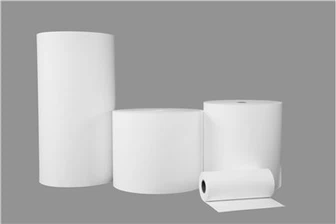
Honeycomb Activated Carbon Air Filter
Honeycomb Activated Carbon Air Filter The main component is coal-based activated carbon. Normal compressive strength is greater than 0.8MPa. Common specifications are 50*50*100mm, 100*100*100mm. Operating temperature is less than 400 degrees Celsius. Pore density is 100 holes/square inch, 150 holes/square inch. Empty tower wind speed is 0.8 meters/second. Specific surface area is greater than 700 square/gram. Appearance: The surface of the product is flat. Uses: Honeycomb activated carbon is widely used in various organic waste gas purification systems with low concentration and large air volume. When passing through the square holes of honeycomb activated carbon, it can fully contact with the activated carbon, and the adsorption efficiency can reach 67.16%. The wind resistance coefficient is small, with excellent adsorption, desorption and gas dynamics. It can be widely used to purify organic gases such as toluene, xylene, benzene, benzene, phenols, lipids, alcohols, aldehydes, etc., odorous gases and various gases containing trace metals. Environmental protection equipment using honeycomb activated carbon has high exhaust gas treatment and purification efficiency, small adsorption bed volume, low equipment energy consumption, can reduce construction and operating costs, and the purified gas fully meets environmental emission requirements.
----------------------------Structure and working principle of honeycomb activated carbon air filter----------------------------
Honeycomb activated carbon filter is mainly composed of activated carbon honeycomb body, air inlet, air outlet and seal. When working, air enters the filter through the air inlet, passes through the activated carbon layer in the honeycomb body, and adsorbs most of the harmful substances. The unadsorbed harmful substances are then discharged through the air outlet to achieve the purpose of purifying the air.
----------------------------Advantages of honeycomb activated carbon filter----------------------------
Efficient adsorption: Honeycomb activated carbon filter uses the high adsorption capacity of activated carbon to effectively adsorb harmful gases in the air, such as formaldehyde, benzene and other volatile organic compounds.
Good filtering effect: The filter layer in the carbon air purifier can not only adsorb harmful substances, but also effectively prevent dust, bacteria and other particles from entering the air.
Small size, easy to install: Honeycomb activated carbon filter is small in size, easy to install, and suitable for various environments, such as home, office, school, etc.
Long life: The activated carbon layer of the honeycomb activated carbon filter has a long replacement cycle, which reduces the cost of use.
Environmentally friendly materials: The honeycomb activated carbon used in the honeycomb activated carbon filter is an environmentally friendly material with a high specific surface area and can effectively purify the air.
----------------------------Application scenarios and maintenance recommendations----------------------------
Honeycomb activated carbon air filters are suitable for various places where air purification is required, such as homes, offices, schools, hospitals, etc. During installation, good sealing should be ensured to prevent air leakage. Under normal use, it is recommended to replace the activated carbon layer every 3-6 months to ensure the filtering effect. If odor or activated carbon discoloration is found, it should be replaced immediately.
As an efficient and practical air filtration device, honeycomb activated carbon air filter has many advantages, such as efficient adsorption, good filtration effect, small size, and easy installation. It can not only effectively remove harmful substances in the air and improve air quality, but also bring improvements to our living environment. When selecting and using honeycomb activated carbon air filters, we should pay attention to its application scenarios, installation and maintenance precautions to ensure that it works normally and achieves the best results.

----------------------------Features and main matters----------------------------
Honeycomb activated carbon has the advantages of water resistance, acid resistance, alkali resistance, high strength, and large specific surface area. During use, try to avoid excessive temperature, which will reduce the adsorption amount, and the adsorption amount will decrease with the increase of temperature. At the same time, avoid high dust content and oil mist, because tar dust mist will block the micropores of activated carbon, increase resistance, and reduce the adsorption effect. If the use environment contains a lot of dense dust and tar, a pre-stage dust removal carbon air filter should be installed to achieve the use effect and the longest service life.
In daily life, honeycomb activated carbon is an important material widely used in the field of air and water pollution control. It has many types, among which the main focus is on the two categories of water-resistant and non-water-resistant activated carbon.
----------------------------honeycomb charcoal and water-resistant honeycomb charcoal----------------------------
The difference in production process between the two Whether it is ordinary honeycomb charcoal or water-resistant honeycomb charcoal, both have undergone the drying production of finished products, but ordinary honeycomb charcoal usually only needs to be naturally air-dried, while water-resistant honeycomb activated carbon needs to be naturally air-dried and then put into a high-temperature kiln for calcination for more than 10 hours. After this high-temperature calcination, the honeycomb activated carbon is truly water-resistant and highly adsorbable. The difference in material selection between the two Honeycomb charcoal usually uses high-quality coal-based activated carbon as the main raw material, which is calcined at high temperature through model pressing, while water-resistant honeycomb activated carbon uses different materials and is forged using a more complex and advanced process. The difference in performance between the two Advantages of ordinary honeycomb activated carbon: simple preparation process and relatively low cost Disadvantages: low adsorption and water resistance Advantages of water-resistant honeycomb activated carbon: strong water resistance and adsorption Disadvantages: cumbersome preparation process and high cost.
Honeycomb Activated Carbon Air Filter is generally used for filtering and decolorization, as a reducing agent and gas absorption. Depending on its application field, the specific role of honeycomb activated carbon is different. For example, during World War II, honeycomb activated carbon was used for gas masks; tap water can be deodorized with honeycomb activated carbon; and at home, honeycomb activated carbon can purify the air and remove harmful substances.
Honeycomb activated carbon manufacturer_water-resistant honeycomb activated carbon_VOCs waste gas treatment activated carbon_air purification
Granular Honeycomb Activated Carbon Air Filter is often used to adsorb molecules. The adsorption of granular honeycomb activated carbon determines its applicability, and the adsorption is related to the pore size distribution of various carbon types. Take steam-activated peat-based, lignite-based and coconut shell-based powdered honeycomb activated carbon as an example: peat-based honeycomb activated carbon has micropores and mesopores, and granular honeycomb activated carbon can be used for a variety of applications; lignite-based carbon has more mesopores, and granular honeycomb activated carbon also has larger mesopores, providing excellent accessibility; coconut shell-based granular honeycomb activated carbon is mainly micropores, which is only suitable for the removal of low molecules;
The granular honeycomb activated carbon activated by chemicals is very porous, mostly in the micropore and mesopore range, but the pore surface is less hydrophobic and more negatively charged than the honeycomb activated carbon activated by steam and chemicals. Take extruded and crushed granular honeycomb activated carbon as an example: peat-based extruded honeycomb activated carbon can be made into varieties with different pore size distributions. The varieties of granular honeycomb activated carbon with micropores as the main feature are mainly used for gold recovery in gas phase applications. The varieties with both micropores and mesopores are mostly used in liquid phase applications, such as the adsorption of small and large molecular impurities in water purification;

The crushed coal-based granular honeycomb activated carbon has both micropores and mesopores, which can be used for a variety of purposes. Lignite-based or coconut shell-based granular honeycomb activated carbon has the same microporous and mesoporous structure as powdered carbon. The technical indicators of honeycomb activated carbon are very important: the performance indicators of honeycomb activated carbon products can be divided into physical performance indicators, honeycomb activated carbon chemical performance indicators, and granular honeycomb activated carbon adsorption performance indicators. The three performance indicators play a very important role in the selection and application of honeycomb activated carbon. The main physical performance indicators of honeycomb activated carbon are: shape, appearance, specific surface area, pore volume, specific gravity, mesh number, particle size, wear resistance, floating rate, etc.
Keywords: carbon air cleaner | hepa activated carbon filter | charcoal air filtration system | active air carbon filter | hepa filter carbon filter air purifier | hepa and charcoal air purifier