F7 F8 F9 Medium Efficiency Filter
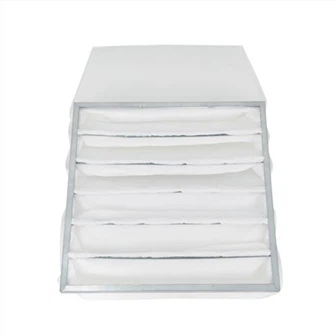
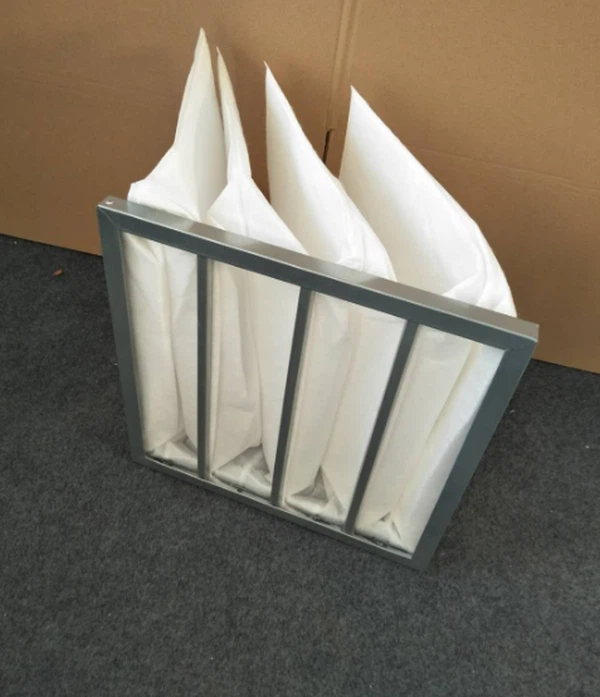
F7 F8 F9 Medium Efficiency Filter are suitable for intermediate filtration in ventilation systems. They are mainly used to filter sub-micron (<1μm) dust particles and various suspended solids. Medium-efficiency filters are generally plate filters, bag filters, and V-type filters (W-type).
The outer frame material can be aluminum alloy frame, galvanized frame, ABS plastic frame, and the filter material is made of polypropylene melt-blown non-woven fabric, polypropylene fiber and spunbond fabric. The air outlet surface is covered with a folded metal mesh or fixed with a mother-and-child keel frame.
High efficiency, low energy consumption, exquisite, and durable! Clean air
----------------------------Product use----------------------------
Bag-type medium-efficiency filters may be used in pig farm air epidemic prevention and control of African swine fever;
Bag filters are also made into anti-salt corrosion filters for dust prevention of equipment at the seaside;
Mainly used for intermediate filtration in central air-conditioning ventilation systems, pharmaceuticals, hospitals, electronics, food, and other industrial purification;
It can also be used as a front-end filter for high-efficiency filtration to reduce the load of high-efficiency over-filtration and extend its service life;
Due to the large windward surface, the air dust volume is large and the wind speed is low, which is considered to be the best medium-efficiency filter structure.
----------------------------Medium-efficiency plate filter----------------------------
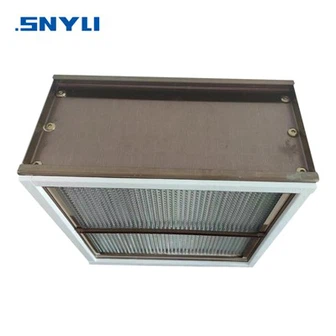
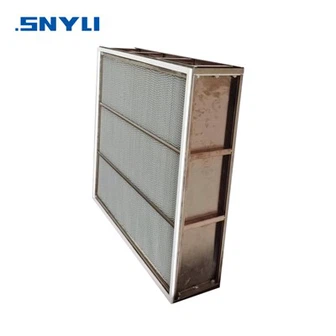
The medium-efficiency filter has a solid metal frame structure.
High dust holding capacity, low resistance, and large air volume.
The thickness is usually 21mm, 25mm, 46mm, etc.
The maximum operating temperature and humidity: 80℃, 80%RH.
----------------------------Product application----------------------------
Intermediate filtration of air conditioning and ventilation systems to avoid dust accumulation and pollution inside the system.
Intermediate filtration of centralized ventilation and air conditioning systems in clean rooms to extend the service life of high-efficiency filters in the later stages.
Ventilation systems in ordinary industrial plants to meet general air cleanliness requirements.
----------------------------Glass fiber medium-efficiency bag filter----------------------------
Product description:
Glass fiber bag medium-efficiency filter uses ultra-fine glass fiber melt-blown filter material - its fibers are fine (diameter 0.5-5um), large in number and fluffy in structure. Compared with other similar products, it has high efficiency, low resistance and long service life. The chemical fiber protective lining on the air outlet surface of the filter material effectively prevents the filter material from being easily damaged and the fiber from leaking.
----------------------------Product structure----------------------------
Outer frame: aluminum frame, stainless steel frame, galvanized frame, ABS plastic outer frame. The filter material is ultra-fine glass fiber melt-blown filter material.
Product efficiency:M5/F5,M6/F6,F7,F8,F9.
----------------------------Product features----------------------------
Optimized "V" filter bag structure, air evenly passes through the entire filter layer;
Low initial resistance, dust holding capacity is 1.5-2 times that of chemical fiber filters, long service life
Thickness is usually 21mm, 25mm, 46mm, etc.
Maximum operating temperature and humidity: 80℃, 80%RH.
----------------------------Product application----------------------------
Widely used in HVAC air inlet filtration for industrial, commercial and large residential buildings. In the European and American markets, it is the preferred filter material for electronic factories (especially chip factories and LCD\plasma panel factories), pharmaceutical factories, automotive spraying workshops, and filament chemical fiber factories.
----------------------------About the pain points of pig farms----------------------------
Large-scale pig farms generally have two pain points: the first is environmental protection, that is, the problem of pig farm deodorization, and the second is the problem of non-epidemic and air epidemic prevention. These two pain points may basically make a pig farm OVER, so we have to pay attention to them.
----------------------------Pig farm deodorization solution----------------------------
By letting the pig farm waste gas pass through the only exhaust outlet, and then installing a water curtain at the outlet for water washing, the harmful components in the waste gas are dissolved. This solution is now generally accepted for pig farm deodorization, and generally needs to be used together with the air filtration at the air intake end. As shown below:
----------------------------Pig farm air prevention of ASF----------------------------
Primary filter + medium efficiency bag filter
Primary filter + high efficiency V-type filter
----------------------------Fattening pig transport vehicle air filter----------------------------
During the transportation and transit of fattened pigs, there is another problem, which is to prevent the epidemic during transit. This is also an issue that needs to be paid attention to, because 60% of the spread of ASF is related to the transit of pigs.
----------------------------Farm pig house air filtration to prevent ASF, pig farm F7F8F9 medium efficiency filter----------------------------
Healthy pig breeding and supply of hygienic meat to the market are valued by each of us, especially the death of a large number of pigs caused by various viruses, and there will also be unsafe pork. Almost all boar stations and more and more sow farms have begun to use air filtration systems to prevent the introduction of airborne diseases such as blue ear disease to ensure the health of pigs. It is not only a food safety issue, but also related to the interests of pig farm owners.
The design of the filter pig house is still under exploration, but the current system design is also in good condition. The air inlet of the air filtration pig house is equipped with a metal mesh to pass leaves, mosquitoes, etc. first to extend the service life of the air filter. The ceiling and wet curtain air inlet are equipped with medium and high efficiency air filters. The air passes through the house, filtering out dust and impurities while blocking the virus. All entrances to the pig house are equipped with double doors to reduce the risk of air entering through negative pressure ventilation. The exhaust fan should also be equipped with a device to prevent air backflow. The breeders must strictly disinfect, shower and change clothes when entering the pig house. The filter not only filters out bioaerosols, but also removes pathogenic microorganisms, greatly reducing the spread of diseases.
----------------------------Common viruses and virus diameters of pig diseases----------------------------
Swine influenza virus 0.08-0.12μm
Blue ear virus (PRRSV) 0.05-0.065μm
Classic swine fever virus (CSFV) 0.04-0.05μm
Pseudorabies virus (PRV) 0.15-0.18μm
Foot-and-mouth disease virus (FMDV) 0.022-0.03μm
Porcine asthma virus (MHYO) 0.3-0.9μm.
----------------------------Ideal air epidemic prevention plan----------------------------
The air filtration plan is: primary filter + high-efficiency 5V filter, double filtration to filter the air in the pig farm to ensure the cleanliness of the air. Of course, considering the cost, medium-efficiency bag filters can be used instead of 5V high-efficiency filters.
Features of epidemic prevention F7 F8 F9 Medium Efficiency Filter:
Anti-humidity, moisture-proof, corrosion-resistant, can adapt to normal filtration in various environments
Composite chemical fiber material, the filtration efficiency can meet the requirements of filtering out common viruses of pig diseases
Pre-filter to filter out large particles and fibers, effectively protecting high-efficiency filters with higher filtration efficiency
The filter is designed as a low-resistance, high-efficiency, partition-free air filter.

----------------------------Types of air filtration systems for pig houses----------------------------
There are three main types of ventilation used in air-filtered pig houses, each with its own advantages and disadvantages.
Positive pressure ventilation
Positive pressure ventilation is to blow filtered air into the house so that the air pressure inside the house is higher than outside the house. The advantage of positive pressure ventilation is that the risk of unfiltered air entering the house is small, and the air tightness requirements for the pig house are relatively low, but the energy consumption is relatively high, and the requirements for fan power are high. The fan selected for positive pressure ventilation
can still provide sufficient air volume under static pressure difference. According to the clean room standard, the static pressure difference between the inside and outside of the house is required to be above 10Pa. In fact, some systems are designed to ensure 30-50Pa.
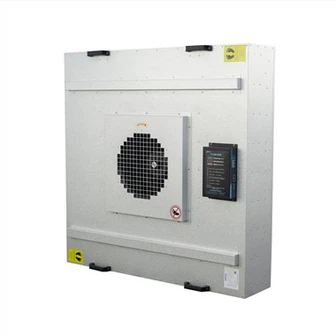
The integrated air filtration unit is a typical positive pressure ventilation air filtration. Figure 1 shows the airflow pattern of Changbai GG, a pig farm in Copley, France, which uses positive pressure air filtration. Fresh air enters the pig house through the air filtration unit (the unit is a three-layer filter of G4, F7, and F9), then enters the building, enters the house through the porous ceiling board (some projects also use ceiling air inlets or ventilation ducts), and is discharged outside the house through the air valve or chimney after entering the house. At present, some projects in China have adopted the design of positive pressure ventilation, but the fan is controlled by the temperature in the house, which makes it difficult to ensure the static pressure difference in the house. The control logic of the system shown in Figure 2 is that the integrated positive pressure filtration unit is controlled by the air pressure inside and outside the house to ensure a stable static pressure difference, and each unit The chimney with air valve is controlled by the temperature in the house to adjust the opening size of the air valve and control the ventilation volume of each unit. In this way, safety is guaranteed and the ventilation volume is adjusted according to the specific situation of each unit.
The pig house air filtration system is used to ensure a high biosafety level in the pig house, so the first consideration when choosing a pig house air filtration system is safety. The positive pressure air filtration system has great advantages in safety and should be the first choice for the pig house air filtration system. Positive pressure ventilation is the most important point to consider when ventilating in winter.
----------------------------Negative pressure ventilation----------------------------
Most of the pig house air filtration systems used in the early days were combined units and positive pressure ventilation systems (as shown in Figure North America began to apply some negative pressure ventilation or neutral ventilation methods when promoting filtration systems after 2005, and installed F7 F8 F9 Medium Efficiency Filter at the air inlet. The author believes that negative pressure ventilation is used because it is relatively easy to add and modify, with lower costs and more convenience. But there is a sentence that everyone needs to remember for the modification project: "Adding air will make your ventilation system better, but it will only make it worse." Increasing air filtration will increase ventilation resistance and increase the static pressure difference between indoors and outdoors. On the one hand, it will reduce the operating efficiency of the fan, and on the other hand, it will increase the risk of unfiltered air entering the pig house through the gaps in the pig house. If this happens, it means that the air filtration system has lost its meaning. Therefore, for safety reasons, the total static pressure difference should not exceed 50Pa, but this will increase the need for filters.
Sealing is another aspect that needs to be done, especially the joints of doors, windows, ceilings and walls, etc., to ensure sealing, and the door design ensures sealing. The backflow of the fan also needs to be considered, and anti-backflow shutters or fan cover bags can be used.
Keywords: air filter bag | 4 bag filter | 2 micron filter bag | filtration bags | bag air filters | ptfe filter bags