What Are The Factors That Affect The Filtration Efficiency Of An Air Filter?
Air filter filtration efficiency is the key data when purchasing air filters. Filtration efficiency affects the selection of purchased products, post-production efficiency and the environment. Since filtration efficiency is so important, what are the factors that affect the filtration efficiency of air filters? The following are four factors analyzed for you.
1. Filter bag material
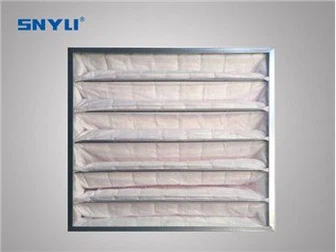
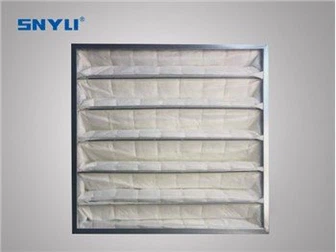
The selection and application of filter bag materials is the core technology of bag dust collectors and plays a decisive role in the performance of high efficiency air filter dust collectors. Due to the environment of each dust collection point, the nature, temperature and technical requirements of processing dust are different. According to different conditions, different filter materials should be selected and corresponding technical protection measures should be taken. The requirements for filter bag materials include the following technical properties: filter bag materials are suitable for different temperatures, good peelability, easy to clean, good air permeability, low resistance, high filtration efficiency, high strength, can withstand high-strength cleaning, use Long life and reasonable price.
2. The influence of filter wind speed
As the wind speed increases, the resistance increases, and when the wind speed decreases, the resistance decreases. For large particles dominated by inertial motion, the wind speed increases, the inertia of the particles increases, and the possibility of hitting obstacles increases, so the filtration efficiency increases. However, when the inertia is large, the rebound force of the obstacle to the particles also increases. If the van der Waals force cannot overcome the rebound force, the particles will run away. Therefore, sometimes the wind speed is increased, and the filter efficiency of the filter for large particles is reduced.
For small particles dominated by diffusion motion, the filtration efficiency depends on the residence time of the particles in the filter medium. The residence time is shortened (the wind speed is increased), the probability of the particles hitting the obstacle is reduced, and the filtration efficiency is lower. If the material is electrostatically charged, the filtration efficiency depends on the residence time of the air flow in the material. The lower the filtration wind speed, the higher the filtration efficiency, both for large and small particles.
Electrostatically charged materials are very sensitive to filtered wind speed. For example, measured at a wind speed of 1 cm/s, the transmittance of 0.3 μm dust is 0.01% (filtration efficiency 99.99%), and when the filtering wind speed is increased to 5.3 cm/s, the measured transmittance is 1.5% (filtered The efficiency is only 98.5%), and the transmittance is two orders of magnitude worse.
3. The influence of humidity
In general, changing the humidity will not affect the efficiency and resistance of the air filter. However, when the air humidity is high, the filter medium may condense, and there is a water film on the contact surface between the particles and the obstacle. The larger the contact surface between the two, the greater the bonding force, and the larger particles are no longer so easy to bounce back, so yes The filtration efficiency of large particles may be improved.
In reality, if the filter is wet enough to carry water, the performance of the filter may undergo various unpredictable changes. For example, for filter paper made of plant fibers, if the water resistance of the paper is not good, the water softens the paper and the fibers compress, and the resistance of the filter will increase rapidly until the filter is blocked. For another example, the high-efficiency filter has water, and the dust will be transported to the leeward side of the material by the water. After air drying, the filter becomes a dust generator.
4. Air leakage
Air leakage directly affects the dust collection effect and life of the dust collector, and the air leakage rate is required to be less than 3%. Bag-type dust collectors generally operate under negative pressure, such as air leakage, it is easy to form a small circuit short circuit. The air volume of the dust collection system is not enough to form positive pressure dust. Air leakage will also reduce the temperature of the system, easy to form moisture and paste bags, increase the dust collection resistance, and reduce the filtering effect of the air filter equipment.