

Can H14 HEPA PTFE filter be used in medical facilities?
Hey there! As a supplier of H14 HEPA PTFE filters, I often get asked if these filters can be used in medical facilities. Well, let's dive right into it and explore this topic in detail.
First off, let's understand what an H14 HEPA PTFE filter is. HEPA stands for High - Efficiency Particulate Air. An H14 rating means that the filter can capture at least 99.995% of particles that are 0.3 micrometers in size. PTFE, or Polytetrafluoroethylene, is a synthetic fluoropolymer. It gives the filter some great properties, like being hydrophobic (it repels water) and having a low friction coefficient.
Medical facilities have some of the strictest air - quality requirements. Why? Because patients in these places are often in a vulnerable state. A clean and sterile environment is crucial to prevent the spread of infections and diseases. For example, in operating rooms, any airborne contaminants can lead to post - operative infections, which can be life - threatening for patients.
So, can H14 HEPA PTFE filters meet these high - stakes requirements? The answer is a resounding yes! Their high filtration efficiency means they can trap a vast majority of harmful particles, including bacteria, viruses, and dust. Bacteria and viruses are often much smaller than 0.3 micrometers, but the H14 HEPA PTFE filters are so good that they can still capture them through a combination of interception, impaction, and diffusion mechanisms.
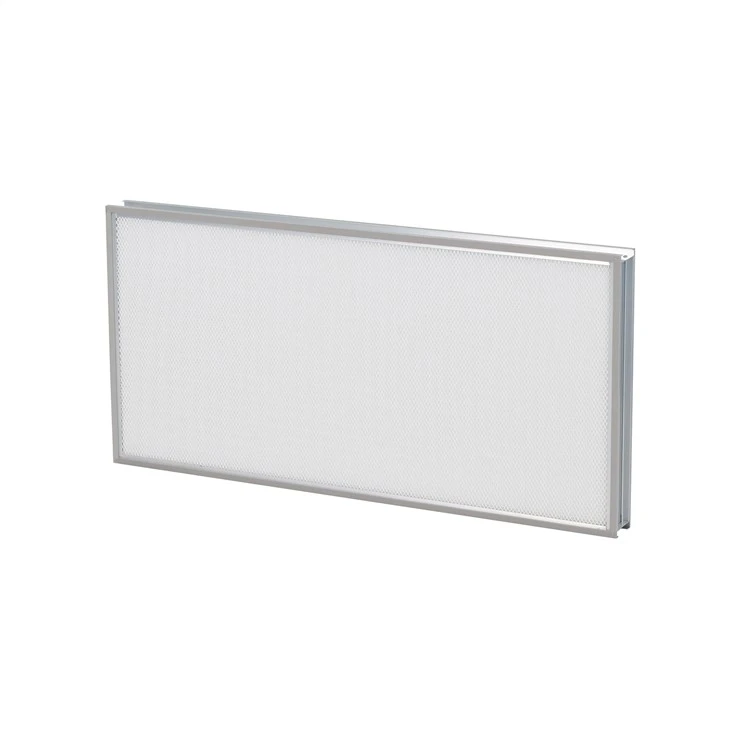

Let's talk about the PTFE part. In medical facilities, moisture can be a big problem. It can promote the growth of mold and bacteria. The hydrophobic nature of PTFE helps keep the filter dry, reducing the risk of microbial growth. This is a huge advantage in a medical setting where cleanliness is of utmost importance.
Another great thing about H14 HEPA PTFE filters is their durability. Medical facilities need filters that can last a long time without losing their effectiveness. These filters can withstand high airflows and pressure differentials, which means they won't break down easily. This reduces the frequency of filter replacements, saving both time and money for the medical facility.
Now, let's compare H14 HEPA PTFE filters with some other types of filters commonly used in the market. For instance, there are Mini Pleat ULPA Air Filter U15 - U16 Mini Pleat ULPA Air Filter U15 - U16. ULPA (Ultra - Low Penetration Air) filters are even more efficient than HEPA filters. However, they also come with a higher price tag and often require more energy to operate. In many medical facilities, the H14 HEPA PTFE filters offer a great balance between efficiency and cost - effectiveness.
Industrial Air Filter Industrial Air Filter are designed for industrial settings. While they can filter out a lot of particles, they may not be as precisely tuned to the specific needs of medical facilities. They might not have the same level of microbial control or the ability to handle the unique air - quality requirements of hospitals and clinics.
Mini - pleated Panel HEPA Filters Mini - pleated Panel HEPA Filters are also popular. They are cost - effective and have a relatively large surface area for filtration. But the H14 HEPA PTFE filters have the added advantage of the PTFE coating, which gives them better moisture resistance and potentially longer lifespan.
In addition to their technical advantages, H14 HEPA PTFE filters are also easy to install. Medical facilities don't have the luxury of long - term shutdowns for filter replacements. These filters can be quickly and easily swapped out, minimizing disruption to normal operations.
However, it's important to note that just having a great filter isn't enough. Regular maintenance and monitoring are still necessary. Medical facilities should have a proper schedule for filter inspections and replacements. This ensures that the air - quality standards are consistently met.
When it comes to choosing a filter for a medical facility, it's also important to consider the overall air - handling system. The filter should be compatible with the existing ventilation system. Our H14 HEPA PTFE filters are designed to be versatile and can be integrated into a wide range of air - handling units.
In conclusion, H14 HEPA PTFE filters are an excellent choice for medical facilities. They offer high - efficiency filtration, moisture resistance, durability, and ease of installation. If you're in charge of air - quality management in a medical facility, I highly recommend considering these filters.
If you're interested in learning more about our H14 HEPA PTFE filters or want to discuss a potential purchase, feel free to reach out. We're here to help you make the best decision for your facility's air - quality needs.
References
- "Air Filtration in Healthcare Facilities" - A comprehensive guide on air - quality requirements in medical settings.
- "The Science of HEPA Filtration" - An in - depth look at how HEPA filters work and their efficiency.
- "PTFE Coatings: Properties and Applications" - Information on the benefits of PTFE in filter technology.