Fresh Air Unit Operation
Fresh Air Unit Operation It is used to process fresh air. In a large building, the fresh air unit is generally used in conjunction with a fan coil. The fan coil fresh air fan is actually almost the same as an air conditioner. Under normal circumstances, the air conditioner itself has a fresh air outlet, and the fresh air is used to ensure indoor air quality and supplement indoor exhaust air. Since the fan coil unit does not have a fresh air outlet, it needs to be provided by a fresh air unit. The treated fresh air provided by the fresh air unit and the return air treated by the fan coil unit may be mixed first and then processed by the fan coil unit before being sent into the room.
The difference between fresh air unit and air conditioning unit:
The fresh air unit mainly processes outdoor air, while the air conditioning unit is used to process the air processed by the fresh air fan. However, the fresh air unit can have return air, and the return air can also have fresh air. The purpose is to better adjust parameters such as temperature and humidity.
Generally speaking, the fresh air unit does not bear the heat and humidity load of the air-conditioned area. Its main function is to supply fresh air. Of course, the ideal state is that the temperature and humidity of the supply air are constant, so the fresh air unit generally controls the temperature and humidity of the supply air.
The air conditioning unit loads the heat and moisture load of the air conditioning area, plays a comprehensive role in processing the air in the air conditioning area, and at the same time ensures a certain amount of fresh air. Air conditioning units usually mainly control the temperature, humidity and air quality of the air conditioning area, and the air treatment process is generally complex.
Air conditioning units are more technologically complex in terms of air treatment than fresh air units, so air conditioning units are mostly used in large public areas where fan coils cannot be installed, while fresh air units are mostly used in small spaces where fan coils are installed. Both air conditioning units and fresh air units are commonly used and installed. Fresh air units and air conditioning units are different, but they can complement each other in function. Comfort 100 recommends that you install fresh air units at the same time, and then install separate fan coil units in each room. In this way, we can learn from each other's strengths and achieve more energy-saving and comfortable results.

Working principle of fresh air unit:
The electric regulating valve is interlocked with the fan to ensure that the air valve is also closed at the same time when the fan power is cut off. The electric control valve can also be linked with the fan. When the fan cuts off the power supply, the electric control valve is closed.
The temperature control system of the fresh air unit consists of a proportional integral temperature controller, a temperature sensor installed in the air supply duct and an electric regulating valve.
The function of the controller is to transmit the supply air temperature detected by the temperature sensor placed in the air supply duct to the thermostat for comparison with the temperature set by the controller, and based on the results of the PI calculation, the thermostat makes electric adjustments. Valve an on/off signal to maintain the supply air temperature within the required range.
When the filter is clogged or exceeds the specified value, the differential pressure switch gives a switching signal.
When cooling is required, the thermostat is placed in cooling mode. When the temperature measured by the sensor reaches or is lower than the set temperature, the thermostat gives a valve closing signal to the electric valve, and the valve closing contact of the electric valve is connected to close the valve. If the measured temperature does not reach the set temperature, the thermostat sends a valve opening signal to the electric valve, and the valve opening contact of the electric valve is connected to open the valve.
When heating is required, the thermostat is placed in the heating mode. When the temperature measured by the sensor reaches or exceeds the set temperature, the thermostat gives a closing signal to the electric valve, and the closing contact of the electric valve is connected to close the valve. . If the measured temperature does not reach the set temperature, the thermostat sends a valve opening signal to the electric valve, and the valve opening contact of the electric valve is connected to open the valve.
When the coil temperature is too low, the low-temperature antifreeze switch gives a switching signal and the fan stops running to prevent the coil from freezing and cracking. The principle of the fresh air unit is not complicated compared with the central air conditioner. The fresh air unit is divided into one-way flow, two-way flow fresh air unit and full heat exchange fresh air unit. The principles of the first two fresh air units are simpler, while the full heat exchange fresh air unit has an energy-saving temperature The working principle of the control system is a bit more complicated.

Fresh air unit functional section:
The fresh air unit has multiple functional sections, including the following:
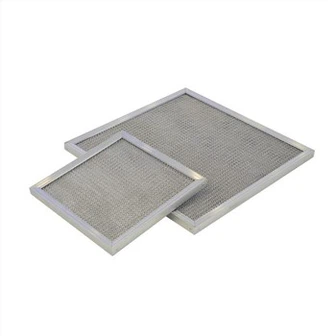
Filtration section: Coarse filter, medium filter, high efficiency filter, etc. can be selected as needed, mainly used to effectively capture dust particles with different diameters.
1.Surface cooling section: Use a surface cooler to cool and dehumidify the fresh air, and control the supply air temperature and humidity.
Humidification section: Use electrode humidification, steam humidification, etc. to ensure strict relative humidity requirements.
Fan section: centrifugal fan or axial flow fan can be selected according to needs, and centrifugal fan is generally used.
Sterilization section: such as ultraviolet lamp sterilization. The above are conventional air treatment sections, which can meet the human body's requirements for temperature, humidity, and air cleanliness in air-conditioned rooms. In addition, considering the need for energy saving, in addition to the above functional sections, the fresh air unit may also be equipped with a heat recovery section. The heat recovery section uses a heat recovery device to recover the cold heat in the exhaust air to pre-cool or preheat the fresh air. This enables energy recovery and utilization.
The selection steps for fresh air blower equipment are as follows:
1. Select the type of fresh air blower according to the installation settings;
2. When selecting equipment air volume and air pressure, the principle is that they should not be less than the design values;
3. Determine the design conditions of cooling capacity and heating capacity;
4. In principle, one fresh air unit is only responsible for the fresh air volume required on one floor.
Operational faults and safe operation of fresh air units:
Failure of the fresh air unit. The main failure of the fresh air unit is that the heat exchanger is frozen and cracked. A building uses a chiller VAV air conditioning system. From construction to commissioning and then put into operation, a total of 4 cases of fresh air unit freezing and cracking accidents occurred. The total number of fresh air unit in the building 15 units, the rate of frost cracking was as high as 27%. The reasons mainly include the following four aspects.
a) The temporary pipeline supplies water to the fresh air unit without flushing
In order to meet the construction deadline, fresh air units are often used for temporary heating. However, due to time constraints, the entire heating system was not formally flushed with water. All water supply and return pipes were connected by branch pipes under the main pipe. As a result, the dirt in the pipelines was found in the fresh air unit closest to the heat exchange station. The heater of the unit continues to accumulate and the flow of hot water continues to decrease, causing the heater to freeze and crack. Essentially speaking, the temporary water supply pipeline was not flushed according to construction regulations during construction and was put into use blindly, causing the heater to freeze and crack.
b) The valve position indicated by the automatic control valve is incorrect
The construction of centralized air-conditioning automatic control systems often lags behind, and debugging of weak current systems often begins only after the building is officially put into use. The fresh air unit was able to operate normally before the automatic control system was activated, but a frost cracking accident occurred after it was activated. The accident occurred during the installation and debugging of the air-conditioning automatic control system in winter. Misoperation during the installation caused the opening and closing indication position of the water valve of the fresh air unit to be exactly opposite to the computer indication of the automatic control system. The water supply to the fresh air unit was actually in the cut-off state indicated by the automatic control system, thus causing ACCIDENT. So when the outdoor temperature drops. When the temperature is below ℃, the air conditioning system should be kept running stably as much as possible. The automatic control installation and debugging of the water system should be arranged in other seasons to avoid accidents caused by debugging errors.
c) There is water in the surface cooler when the fresh air unit is shut down in winter.
After the fresh air unit located in the basement was shut down in winter, the surface cooler suffered a freeze and crack accident, mainly due to the accumulation of water in the surface cooler of the fresh air unit. Possible reasons are as follows:
(a) The air escape valve is not opened when the surface cooler drains water, so there is no passage for air to enter the surface cooler. Therefore, the water in the surface cooler cannot be completely drained, resulting in the surface cooling of the fresh air unit when the outdoor temperature drops in winter. The vessel froze and cracked.
(b) Since there is water in the cold water system pipelines, and the fresh air unit is located lower than the main pipe of the system, if the connecting pipe valve is not closed tightly, the water will slowly seep from the cold water supply and return pipes into the surface cooler. Therefore, despite the drainage operation, freezing and cracking accidents may still occur.
d) The automatic anti-freeze protection device of the fresh air unit lost control when the heater flow was manually adjusted.
The fresh air air conditioning unit must ensure the rated water flow when operating in winter. If the water flow of the heater is too small, it will cause frost cracking accidents. The air outlet parameters of the fresh air unit serving the standard floor of the building remain unchanged, and the hot water flow rate in the heater also remains unchanged. Therefore, freezing and cracking accidents of this type of fresh air unit rarely occur. The fresh air unit located in the basement serves the underground kitchen and restaurant of the building. Since the kitchen exhaust requires a large amount of air conditioning to supplement the air, the fresh air unit must not only undertake the function of outdoor fresh air pretreatment (while supplying indoor air), but also meet the requirements of indoor ventilation. Air temperature adjustment is required.
In severe cold weather in winter, the air conditioning load in the basement is small. When the operator finds that the room temperature is too high, he is eager to lower the temperature and instantly adjusts the water flow rate of the heater of the fresh air unit to very low. At this time, the automatic anti-freeze protection device of the fresh air unit fails. If the outdoor temperature is below 0°C, the heater may freeze and crack.
The cause of the frost cracking accident of the heat exchanger of the fresh air unit is negligence during construction, commissioning, and operation, which should attract the attention of relevant personnel. Adopt fan, circulation pump and electric insulation valve interlocking, add electric heaters, duty fans and other facilities to prevent the heater of the fresh air unit from freezing and cracking, and improve the technical measures for the safe operation of the fresh air unit in winter.

Recommendations for safe operation of fresh air units:
During winter construction, the antifreeze issue of the fresh air unit operation must be taken seriously, and the antifreeze of all air conditioning equipment and pipelines must be paid attention to. Pay attention to the outdoor temperature when performing pressure testing and flushing of pipelines. After flushing, the system must be completely vented without leaving any safety hazards. Temporary heating with fresh air units must also be constructed and accepted according to normal procedures. If there are no self-control measures and dedicated management, it is recommended not to use fresh air air conditioning equipment for temporary heating.
Establish and improve the operation management system. Fresh air units that are deactivated at night must also use fixed water flow or a thermostat to automatically control the opening of the water valve, or an electric heating device to ensure the temperature of the heater of the fresh air unit. Fresh air units should be inspected regularly during winter operation to track weather changes. It is not advisable to arrange debugging and maintenance of the air conditioning system in cold weather to ensure the safety of the air conditioning water system.
When designing the fresh air unit, an effective antifreeze automatic interlocking monitoring device must be installed. When the fan is running, the rated water flow of the heater must first be ensured. When the water temperature is too low or the water flow is too small, it should have an alarm function and promptly shut down the air supply fan and the fresh air entrance insulation damper. A fresh air unit that is not equipped with complete protection measures is actually just a semi-finished product. , there is no safety guarantee when put into operation in cold areas in winter, and it cannot be "on duty" at will.

Keywords: fresh air ventilation system fresh air ventilation system for home hvac fresh air ventilation system fresh air supply system fresh air heat recovery unit fresh air systems for homes