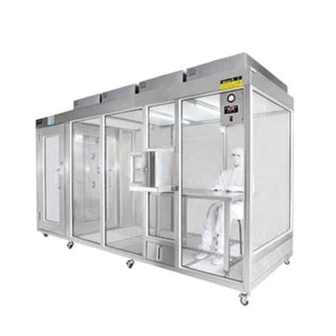
Air Filter Structure And Material Selection
Air Filter Structure And Material Selection Primary filter Structure: The outer frame mainly includes: paper frame, galvanized frame, aluminum alloy frame, and stainless steel plate. There are plate and bag structures.
Filter materials: Fiber filter materials mainly include: chemical fiber non-woven fabrics, glass fiber filter materials, some manufacturers have mixed filter materials of cotton fiber and chemical fiber, and others
Metal mesh etc.
Production method: Most of them are folded and formed, and the metal mesh and filter material are compositely folded.

medium efficiency filter:
Structure: Outer frame materials mainly include: galvanized steel plates, aluminum alloy profiles, plastic frames, paper frames, etc.
Filter materials mainly include: chemical fiber, glass fiber and PP materials.
At present, the most commonly used bag-type medium-efficiency filter with glass fiber and PP filter material. Since there are countless domestic manufacturers of coarse and medium-efficiency filters, the materials and structures used are also diverse. At present, mainstream manufacturers and foreign factories mostly use glass fiber filter materials and some chemical fiber filter materials. Chemical fiber has occupied an increasingly large market due to its advantages of low price and low resistance.

high efficiency air filter:
Structure: The outer frame mainly uses: aluminum alloy profiles, multi-layer plate frames, aluminum plate frames, galvanized steel plate frames. The most commonly used aluminum alloy profile frame is mainly made into a cube-shaped structure.
Filter material: Glass fiber is mostly used, chemical fiber is gradually used, and polytetrafluoroethylene fiber is used to make high-efficiency filters, commonly known as PTFE.
Efficient structures can be divided into those without partitions and those with partitions. The non-separator mainly uses hot melt as the separator of the filter element to facilitate mechanized production. In addition, it has the advantages of small size, light weight, easy installation, stable efficiency, and uniform wind speed. Currently, large batches of filters required in clean factories mostly adopt partition-less structures. Partitions are highly efficient, and aluminum foil and paper are often used in folded shapes as filter element separators to form air passages. The partition board is made of high-quality kraft paper, which is hot rolled or offset paper is used as the partition board. At present, double-sided coated paper is mostly used as partitions. The main purpose is to prevent the partitions from shrinking due to the influence of cold, heat, dryness and humidity, thereby emitting particles. However, according to our company's many years of experience, when the temperature and humidity change, this kind of partition paper may emit larger particles, causing the cleanliness test of the clean workshop to fail. For places with higher cleanliness requirements, customers should be recommended to use high-efficiency air filters without partitions. The price of foreign filters with partitions is higher than that without partitions. Compared with the rectangular channels of filters with partitions, the V-shaped channels of filters without partitions further improve the uniformity of dust holding and extend the use time. life. Baffleless filters for ventilation avoid the use of metal parts, are easy to dispose of, and comply with increasingly stringent environmental requirements. Air Filter Structure And Material Selection Except for some special occasions with high temperature resistance and high safety requirements, filters without partitions can replace filters with partitions.

filter parameters:
Surface speed and filtration speed
Surface velocity and filtration velocity can reflect the ability of the filter to pass air volume.
Surface velocity refers to the airflow velocity on the filter section, generally expressed in m/s. Surface velocity is an important parameter that reflects the structural characteristics of the filter.
The filtration speed refers to the speed of air flow over the area of the filter material. The filtration speed reflects the passing capacity of the filter material and the filtration performance of the filter material. The filtration rate is low, generally speaking, higher efficiency can be obtained. The filtration rate allowed to pass through is low and the resistance of the filter material is large.
Filtration efficiency:
The "filtration efficiency" of the air filter is the ratio of the amount of trapped dust to the original air dust content:
Filtration efficiency = Dust volume captured by the filter/Dust content in the upstream air = 1 - Dust content in the downstream air/Dust content in the upstream air
The meaning of efficiency seems simple, but its meaning and value vary greatly depending on the test methods.
Among the factors that determine filtration efficiency, the "amount" of dust has various meanings, and the calculated and measured filter efficiency values are also varied. In practice, there are the total weight of dust and the number of dust particles; sometimes it is the amount of dust of a certain typical particle size, sometimes it is the amount of all dust; there is also the amount of light that indirectly reflects the concentration using a specific method (colorimetry), Fluorescence quantity (fluorescence method); there is an instantaneous quantity of a certain state, and there is also a weighted average quantity of the efficiency value of the whole process of dust generation.
Penetration rate:
The penetration rate indicates how many dust particles can still pass through the filter. K=(1-η)×100%
resistance:
Filters create resistance to air flow. The resistance of the filter is mainly composed of two parts, the resistance of the filter material and the resistance of the filter structure. When the performance of the filter material is determined, the resistance of the filter is closely related to the structure of the filter, and the resulting impact may be around 50Pa. The filter accumulates dust and the resistance increases. When the resistance increases to a certain specified value, the filter is scrapped.
The resistance of a new filter is called "initial resistance"; the resistance value corresponding to the scrapped filter is called "final resistance".
During design, a representative resistance value is often needed to calculate the design air volume of the system. This resistance value is called "design resistance. The common method is to take the average of the initial resistance and the final resistance.
Dust holding capacity:
Dust holding capacity: Simply put: the ability of the filter to hold dust. The dust holding capacity of the filter is directly related to the service life of the filter. Usually refers to when the final resistance of the running filter reaches a value that is twice its initial resistance, or when the efficiency drops below 85% of the initial efficiency, the amount of dust collected on the filter is regarded as the standard dust holding capacity of the filter, referred to as Dust holding capacity. If the filter operates at an air volume that exceeds the rated air volume, its resistance will increase faster as the dust collection increases.
When the filter reaches the dust collection capacity, a low-efficiency filter will easily show that the efficiency first increases and then decreases. A low-efficiency filter collects large amounts of dust, the filter material is sparse, and the dust particles are lost due to resistance. Air Filter Structure And Material Selection It is easier to penetrate the filter material and peel off, causing secondary pollution. During use, the efficiency of a high-efficiency filter will generally increase as dust accumulation increases.
When the air volume is 1000m3/h, the dust holding capacity of the general pleated non-woven filter is around 100g, the glass fiber filter is around 250-300g, and the high-efficiency filter is around 400-500g. Similar filters with different sizes will have different dust holding capacities.

Factory Show:


FAQ:
Q1.Are you a manufacture or trading company?
A:We are a manufacure.
Snyli Environmental Technology (Shandong) Co., Ltd was established in 2010, is a professional service provider of air purification products integrating R&D, production and sales, with registered brand- SYNLI.
Q2: Where are air filters commonly used?
A :HAVC(heating, air conditioning and ventilation systems) painting stations, chemical plants, pharmaceutical plants, cement or asphalt powder plants, clean rooms, power stations, heavy metal industries, gas turbines and cogeneration power plants, engineering and equipment plants, drying and baking rooms, hospitals, etc.
Q3: What are your testing criteria?
A: EN779:2012 ISO9001
Q4: What is the international standard for air filters?
A:Euro :Pre (G1-G4), Medium (F5-F9), HEPA (H10-H14) ULPA (U15-U17)
American :Pre (MERV5-7), Medium (MERV8-14), HEPA (MERV15-19) ULPA(MERV 20)
Q5: What is your sample policy?
A: The sample price will be the product price of the standard order. If you make a demo order after receiving the sample and proofing (reaching our MOQ), we will roughly understand the sample price and sample price in the order, and give us your MOQ price.
Q6: How about your after-sales service?
A: Even if we have confidence in the quality of our products, the products may be damaged due to some unpredictable reasons. Please use and maintain the products you purchased correctly in accordance with the user manual or the recommendations of the sales staff. Contact the household to understand the usage of the product, provide suggestions or support professional maintenance services according to the warranty policy.