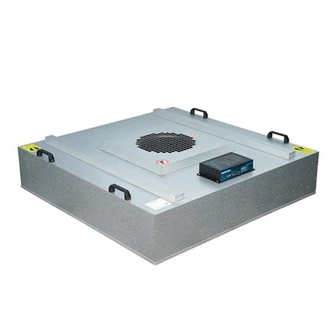
Why Use An 3 Micron Hepa Filter
Why Use An 3 Micron Hepa Filter Ventilation and air conditioning systems require air filter protection
Air conditioning maintenance personnel usually find that the air conditioning system will find the following problems after being used for a long time:
1. Fans, heat exchangers, air valves, pipes and other components are severely dusty and smelly.
2. After the system has been running for several years, the air volume and cold/heat treatment capacity are low, making it difficult to meet the original design requirements;
3. Black stains appear around the air outlet of the comfort air conditioner;
4. People indoors complain about dirty air and physical discomfort;
5. The resistance of the high-efficiency air filter in the clean room system increases too quickly, and it even needs to be replaced every 1-2 years;
6. For the metal/nylon mesh and chemical fiber non-woven fabrics currently used in air conditioners, the resistance will not continue to rise even if they are not cleaned;
The main cause of these problems is dust. The so-called washable filter's ability to block dust is limited. In addition to stopping the air conditioning system for cleaning or replacing expensive system components, a more effective measure is to add an air filter with sufficient efficiency.

Filter selection:
Reasonably determine the efficiency of filters at all levels according to the use requirements of the site
Under normal circumstances, the terminal filter determines the cleanliness of the air, and the front-stage filter plays the role of protecting the terminal filter, that is, extending the service life of the terminal filter, reducing maintenance costs, and protecting the normal operation of the air conditioning system.
Specific process:
1. Determine the efficiency of the final filter according to the cleanliness requirements;
2. Select the protection filter of the final filter. If necessary, select the pre-protection filter of the intermediate filter. The filter that usually plays a protective role is called a pre-filter;
3. The choice of pre-filter should be determined after comprehensive consideration of factors such as the use environment, spare parts costs, operating energy consumption (currently not many domestic users care about energy consumption), maintenance and supply;
4. Issues of special concern: The small hepa air filter at the end of the clean room needs to be protected by a filter with an efficiency no less than F8 (mainly for the treatment of fresh air), and the air conditioning system also needs the protection of air filters;
5. Key points for determining the filter: The performance of the final hepa filter for small room must be reliable, the efficiency specifications of the pre-filter must be reasonable, and it must be easy to maintain.
| place | Main filter efficiency | Common filter elements | special requirements | effect |
| Ordinary central air conditioner main filter |
F5-F7 |
Bag type, no partition combined type | Reasonable efficiency and easy maintenance | Hygiene, protection of interior decoration, protection of air conditioners |
| upscale place Central air conditioning |
F7 |
Bag type, no partition combined type |
- |
Prevent black stains on air vents and fading of interior decoration |
| airport terminal |
F7 |
Bag type, no partition combined type |
- |
Passenger comfort is increasingly valued |
| school, kindergarten |
F7 |
Bag type, no partition combined type | Fireproof | security considerations |
| Clinic, ward |
F7-F8 |
Bag type, no partition combined type | No nutrients | Prevent cross infection |
| museums, libraries |
F7 |
Bag type, no partition combined type |
- |
Protect collections |
| studio |
F7 |
Bag type, no partition combined type |
- |
Protect optical equipment and products |
| Turbulent flow clean room | Efficient | High efficiency with or without partitions | Tested one by one, no flammable materials or nutrients | Generally installed in high-efficiency air supply vents |
| Laminar flow clean room |
Efficient or ultra-efficient |
High efficiency with or without partitions | Scan and inspect each unit one by one to ensure uniform flow rate | Air supply end |
The high-efficiency air filters used in clean rooms of different levels are basically the same. If the quality of the filter is guaranteed, the ventilation parameters (number of air calls or average wind speed) are the key factors that determine the quality of the clean project. High-efficiency air filters used in clean room projects with stricter requirements are generally required to undergo scanning inspection.
The clean room acceptance of many units is carried out in a static state. After a long period of self-cleaning, high cleanliness test results can generally be obtained, but this may not be the case in actual operation.
One-way flow clean room is also called "laminar flow" or uniform flow clean room. The average wind speed of this clean room is very important. The free diffusion speed of dust is 0.15
Fire rating of filter, American Laboratory Standard,
Class 1
The filter (when clean) will not burn when exposed to open flames, and only emits a very small amount of smoke.
Class 2
The Box Type HEPA Filter (when clean) burns slightly when exposed to an open flame, or emits limited smoke, or both at the same time.
The test methods of filtration efficiency, gravimetric method and colorimetric method, were first used by AFI, and some people call them AFI efficiency. If you see "AFI efficiency", you have to judge whether it is gravimetric efficiency (Arrestance) or colorimetric efficiency.
AHU (Air Handling Unit),
Central air conditioning is the place where air filters are most often seen.
Air Filter,
When used in central air conditioners and clean rooms, it is called an air filter; when used in piston engines and small air compressors, it is called an air filter.
AMC (Airborne Molecular Contaminant),
The name given to molecular contaminants in the semiconductor manufacturing industry.
Arrestance,
indoor air quality:
MPPS (Most Penetratiable Particulate Size), Why Use An 3 Micron Hepa Filter the most penetrable particle size
A scanning test method that measures the filtration efficiency of a filter for the most difficult-to-filter particulate matter.
Mini-Pleat
The customary name for a filter without partitions. Sometimes called Close-pleated.
Factory Show:


FAQ:
Q1.Are you a manufacture or trading company?
A:We are a manufacure.
Snyli Environmental Technology (Shandong) Co., Ltd was established in 2010, is a professional service provider of air purification products integrating R&D, production and sales, with registered brand- SYNLI.
Q2: Where are air filters commonly used?
A :HAVC(heating, air conditioning and ventilation systems) painting stations, chemical plants, pharmaceutical plants, cement or asphalt powder plants, clean rooms, power stations, heavy metal industries, gas turbines and cogeneration power plants, engineering and equipment plants, drying and baking rooms, hospitals, etc.
Q3: What are your testing criteria?
A: EN779:2012 ISO9001
Q4: What is the international standard for air filters?
A:Euro :Pre (G1-G4), Medium (F5-F9), HEPA (H10-H14) ULPA (U15-U17)
American :Pre (MERV5-7), Medium (MERV8-14), HEPA (MERV15-19) ULPA(MERV 20)
Q5: What is your sample policy?
A: The sample price will be the product price of the standard order. If you make a demo order after receiving the sample and proofing (reaching our MOQ), we will roughly understand the sample price and sample price in the order, and give us your MOQ price.
Q6: How about your after-sales service?
A: Even if we have confidence in the quality of our products, the products may be damaged due to some unpredictable reasons. Please use and maintain the products you purchased correctly in accordance with the user manual or the recommendations of the sales staff. Contact the household to understand the usage of the product, provide suggestions or support professional maintenance services according to the warranty policy.