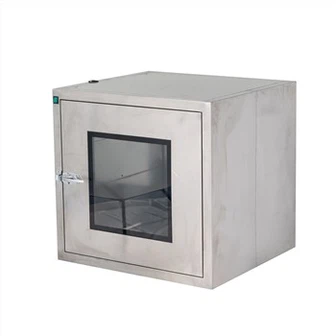
Purification Air Conditioning High Efficiency Filter
Purification Air Conditioning High Efficiency Filter High-efficiency filters are mainly used to capture dust particles and various suspended solids below 0.5um. It uses ultra-fine glass fiber paper as the filter material, offset paper, aluminum film and other materials as the dividing board, and is glued with the wooden frame aluminum alloy. Each unit has been tested by the flame method and has the characteristics of high filtration efficiency, low resistance, and large dust holding capacity. High-efficiency air filters can be widely used in the air supply terminals of air-conditioning in dust-free purification workshops in industries such as optical electronics, LCD liquid crystal manufacturing, biomedicine, precision instruments, beverages and food, PCB printing and other industries. High-efficiency and ultra-high-efficiency filters are used at the end of the clean room. Their structural forms can be divided into: high-efficiency with partitions, high-efficiency without partitions, high-efficiency filters with large air volume, ultra-high-efficiency filters, etc.
The air filter is the core equipment of the air conditioning purification system. The filter forms resistance to the air. As the dust accumulation on the filter increases, the filter resistance will increase. When the filter accumulates too much dust and the resistance is too high, the air volume passing through the filter will be reduced, or the filter may be partially penetrated. Therefore, when the filter resistance increases to a certain specified value, the filter will be scrapped. Therefore, when using filters, you must master the appropriate usage cycle. When the filter is not damaged, the service life is generally determined by resistance.
In addition to its own advantages and disadvantages, such as: filter material, filter area, structural design, initial resistance, etc., the service life of the filter is also related to the dust concentration in the air, actual air volume, final resistance setting and other factors.

To grasp the appropriate use cycle, you must understand the changes in resistance. First, you must understand the following definitions:
1. Rated initial resistance: under rated air volume, the initial resistance provided by filter samples, filter characteristic curves or filter test reports.
2. Initial design resistance: filter resistance under the system design air volume (should be provided by the air conditioning system designer).
3. Initial operation resistance: At the beginning of the system operation, if there is no instrument to measure the pressure of the filter, the resistance at the design air volume can only be taken as the initial operation resistance (the actual operating air volume cannot be completely equal to the design air volume);
During operation, the resistance of the filter should be regularly checked to see if the resistance exceeds the initial resistance (each filter section should be equipped with a resistance monitoring device) to decide when to replace the filter. Filter replacement cycle,
see table below:
| Category | Inspection content | Replacement cycle |
| Fresh air inlet filter | Whether more than half of the mesh is blocked | Clean once a week or so |
| Coarse filter | The resistance has exceeded the rated initial resistance by about 60Pa, or equal to 2×design or initial operation resistance. | 2-4 months |
| medium efficiency filter | The resistance has exceeded the rated initial resistance by about 80Pa, or equal to 2 × design or operating initial resistance. |
2-4months |
| Sub-high efficiency filter | The resistance has exceeded the rated initial resistance by about 100Pa, or equal to 2 × design or operating initial resistance (low resistance and sub-efficiency is 3 times) | More than 1 year |
| High efficiency filter | The resistance has exceeded the rated initial resistance by about 160Pa, or equal to 2×design or initial operation resistance. | over 3 years |
Purification Air Conditioning High Efficiency Filter Special note: Low-efficiency filters generally use coarse fiber filter materials. The gaps between fibers are large. Excessive resistance may blow away the dust on the filter. In this case, the filter resistance will no longer increase, but the filtration efficiency will Drops to almost zero, so the final resistance value of the coarse filter must be strictly controlled!
Several factors must be considered to determine the final resistance. The final resistance is low, the service life is short, and the long-term replacement costs (filter costs, labor costs, and waste disposal costs) are correspondingly high, but the operating energy consumption is low, so each filter should have the most economical final resistance value.

The dirtier the filter, the faster the resistance increases. Excessive final resistance does not mean that the service life of the filter will be extended. Excessive resistance will sharply reduce the air volume of the air conditioning system. Too high final resistance is undesirable.
Customer complaints about short filter life: mainly caused by three reasons
a. The filter material area of the filter is too small or the unit dust holding capacity is too small;
b. The filtration efficiency of the pre-filter is low;
c. Users have too high expectations for the service life of the filter.
For the first reason: switching to a multi-filter with a large filtration area can extend the service life, and this should be taken into consideration when the system is initially designed. In many projects, users require that the space occupied by the air conditioner be reduced as much as possible, or suppliers use cheap filters with small filtration areas in order to maximize profits. During project acceptance, the filter can meet the air purification requirements, but the service life of the filter is relatively short.
The filtration efficiency of the pre-filter is low. The efficiency of the pre-filter can be adjusted to extend the service life of the end filter. According to test data: the end filter is F7. When using the G4 pre-filter, the service life of the end filter is 3 months. After switching to the pre-F5 filter, the service life of the F7 filter can be extended to half a year. In a clean room, the value of terminal high efficiency may not be high, but the risks and indirect costs of replacing the filter will be high. There is no need to stop production when replacing the pre-filter. Experienced owners will focus on the pre-filter.
According to experience, for Class 10000 and Class 100000 clean plants (non-uniform flow), F8 filters are used for pre-filtration, and the service life of the high-efficiency filter at the end can reach 5 years. (The current common filter configuration in China may only be 1-3 years old).
Some suggestions for filter selection:
1. Select a filter with high enough efficiency (pre-filtration):
2. Choose a filter with a large filtering area
3. High-efficiency air filters must be tested one by one
4. Under the same air volume, choose a filter with small initial resistance.
5. Purification Air Conditioning High Efficiency Filter Use a universal size filter
Factory Show:


FAQ:
Q1.Are you a manufacture or trading company?
A:We are a manufacure.
Snyli Environmental Technology (Shandong) Co., Ltd was established in 2010, is a professional service provider of air purification products integrating R&D, production and sales, with registered brand- SYNLI.
Q2: Where are air filters commonly used?
A :HAVC(heating, air conditioning and ventilation systems) painting stations, chemical plants, pharmaceutical plants, cement or asphalt powder plants, clean rooms, power stations, heavy metal industries, gas turbines and cogeneration power plants, engineering and equipment plants, drying and baking rooms, hospitals, etc.
Q3: What are your testing criteria?
A: EN779:2012 ISO9001
Q4: What is the international standard for air filters?
A:Euro :Pre (G1-G4), Medium (F5-F9), HEPA (H10-H14) ULPA (U15-U17)
American :Pre (MERV5-7), Medium (MERV8-14), HEPA (MERV15-19) ULPA(MERV 20)
Q5: What is your sample policy?
A: The sample price will be the product price of the standard order. If you make a demo order after receiving the sample and proofing (reaching our MOQ), we will roughly understand the sample price and sample price in the order, and give us your MOQ price.
Q6: How about your after-sales service?
A: Even if we have confidence in the quality of our products, the products may be damaged due to some unpredictable reasons. Please use and maintain the products you purchased correctly in accordance with the user manual or the recommendations of the sales staff. Contact the household to understand the usage of the product, provide suggestions or support professional maintenance services according to the warranty policy.