How To Choose High Efficiency Filter
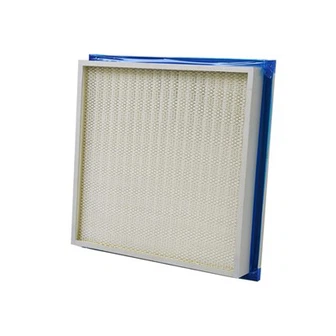
1. The main control parameters selected by the high-efficiency air filter are filtration efficiency, rated air volume, initial resistance under rated air volume, dust holding capacity, etc.
2. According to the method specified in GB/T6165-1985 "High-efficiency air filter performance test method transmittance and resistance", its transmittance is less than or equal to 0.1% (ie efficiency is greater than or equal to 99.9%) or the particle size is greater than or equal to 0.1μm. The filter with count transmittance ≤ 0.001% (ie efficiency ≥ 99.999%) is a high-efficiency air filter.
3. The commonly used filter materials for high-efficiency air filters are ultra-fine glass fiber.
4. The air filter should meet the fire protection requirements. The high-efficiency air filter is divided into three levels according to the degree of fire resistance: the first-level filter, all the materials of the filter are non-combustible, and the non-combustible materials should meet the GB8624-1997 grade A. Class 2 filter, the filter material should be incombustible material in accordance with GB8624-1997 grade A, the partition plate and frame can be made of combustible material in accordance with GB8624-1997 grade B2. 3-stage filter, all filter materials are available in line with GB8624-1997 B3 level
5. When designing, the final resistance can be regarded as twice the initial resistance as the calculated resistance of the filter.
6. The initial resistance of the high-efficiency air filter shall not exceed 10% of the resistance of the product sample.
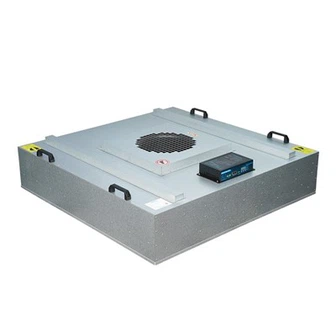
7. The high-efficiency air filter should not be used alone, and the high-efficiency air filter should be set at the end of the purification air-conditioning system.
8. The dust holding capacity should be provided by the manufacturer. The high-efficiency filter should be leak-tested when it leaves the factory. Other requirements are determined according to user needs.
9. In general non-parallel flow clean air conditioning systems, combined filter air outlets are often used.