

What is a Fan Filter Unit?
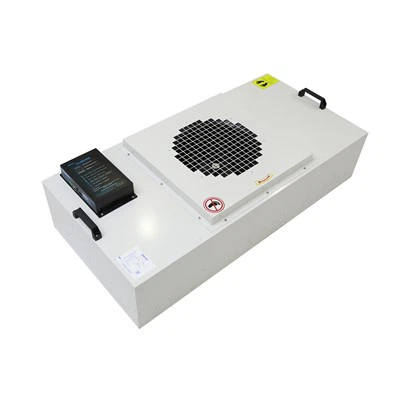
It is a self-powered air supply filtering device, the full name in English is (Fan Filter Unit), a modular terminal air supply device with filtering function. The fan filter unit inhales air from the top and filters it through HEPA. The filtered clean air is evenly sent out on the entire air outlet surface at a speed of about 0.45m/s±20%.
It is particularly suitable for assembly into ultra-clean production lines. It can be arranged as a single unit according to process needs, or multiple units can be connected in series to form a 100-level assembly line. It is particularly suitable for assembly into ultra-clean production lines. It can be arranged as a single unit according to process needs, or multiple units can be connected in series to form a 100-level assembly line.


The FFU fan filter unit uses an external rotor centrifugal fan, which has the characteristics of long life, low noise, maintenance-free, small vibration, and stepless speed adjustment. Suitable for obtaining a higher level of clean environment in various environments.
FFU provides high-quality clean air for clean rooms and micro-environments in different areas and different cleanliness levels. In the construction of new clean rooms, clean factories or renovations, it can not only improve the cleanliness level, reduce noise and vibration, but also greatly reduce the cost. Easy to install and maintain, it is an ideal component for clean environments.
The shell structure is made of high-quality aluminum-zinc plate, which is light in weight, corrosion-resistant, rust-proof, and beautiful.




Advantages Of A Fan Filter Unit?
High-efficiency filtration
FFU has a built-in high-efficiency air filter, which can effectively capture and filter particles, dust, bacteria and other pollutants in the air, providing a clean air environment.
Uniform air flow distribution
The air flow generated by the FFU through the fan can be evenly distributed to the entire filtration area, ensuring uniform air quality in the clean area and avoiding local pollution.
Independent control
Each FFU device can be controlled and adjusted independently, and the wind speed and working mode can be adjusted as needed to flexibly adapt to different work requirements.
Low noise
FFU usually adopts a silent design. The operation noise of the fan and filter is low and will not bring too much noise interference to the working environment.
Easy to install and maintain
FFU equipment has a simple structure, is easy to install, and can be flexibly arranged where needed. Additionally, filter replacement and maintenance are relatively easy.
Space-saving
FFU has a compact structure and takes up less space, making it suitable for achieving a clean environment in a limited space.
Flexible and easy replacement, installation, and movement
FFU is self-powered and self-contained and modular. The supporting filter is easy to replace, so it is not subject to regional restrictions; in a clean factory, it can be controlled by zone according to needs. Replace and move as needed.
Negative pressure ventilation
This is a unique feature of FFU. Because it can provide static pressure itself, the clean room is at a positive pressure relative to the outside world. In this way, external particles will not leak into the clean area, making sealing simple and safe.
Shorten the construction period
Using FFU eliminates the need for the production and installation of air ducts, shortening the construction period.
Reduce operating costs
Although the initial investment when choosing FFU is higher than using duct ventilation, it outstandingly displays energy saving and maintenance-free features in later operations.
Space saving
Compared with other systems, the FFU system occupies less floor height in the air supply static pressure box and basically does not occupy the clean indoor space.

According to the different classifications of chassis materials, FFU is divided into standard coated steel plates (including galvanized, galvanized, spray-coated, etc.), code-named G; stainless steel plates, code-named S; aluminum plates (aluminum alloy plates), The code is A; other materials are coded O.
FFU is classified according to motor mode and can be divided into AC motor and brushless DC motor. The AC single-phase motor code is A1; the AC three-phase motor code is A3; the DC brushless motor code is EC.
FFU is classified according to different control methods. AC power supply units are divided into single-working-mode units, represented by S; multi-working-mode step-control units, represented by M; stepless control units, including voltage regulation or frequency conversion control, etc. Items can be defaulted.
FFU is divided into standard static pressure type and high static pressure type according to the different static pressure of the unit. The standard static pressure type is coded as S; the high static pressure type is coded as H. This item can be defaulted for standard static pressure type.
According to the different filter efficiencies, FFU can be divided into high-efficiency filters, code-named H; ultra-high-efficiency filters, code-named U; if the unit inlet is equipped with a coarse-effect pre-filter, the code is P, without Pre-filter can be defaulted.
How FFU works
The fan inhales air from the top of the FFU and filters it through primary and high-efficiency filters. The filtered clean air is evenly sent out through the air outlet surface at an average wind speed of 0.45m/s ±20%.
The FFU fan filter unit adopts a lightweight structural design and can be installed in accordance with each manufacturer's system (grid/grid system). The structural size design of the FFU can also be changed according to the system. The diffuser plate is installed inside, the wind pressure is spread evenly, and the wind speed on the air outlet surface is average and stable. The metal structure of the downwind duct will never age. Prevent secondary pollution, the surface is smooth, the wind resistance is low, and the sound insulation effect is excellent. Special air inlet duct design reduces pressure loss and noise generation. The motor has high efficiency and the system consumes low current, saving energy costs. The single-phase motor provides three-stage speed regulation, which can increase or decrease the wind speed and air volume according to actual conditions. According to customer requirements, it can be used as a single unit or connected in series to form multiple 100-level production lines. Control methods such as electronic board speed regulation, gear speed regulation, and computer centralized control can be used. It has the characteristics of energy saving, stable operation, low noise, and digital adjustment. It is widely used in electronics, optics, national defense, laboratories, hospitals and other places that have air cleanliness requirements. It can also be assembled into various sizes of static 100-300,000-level products using support frame structural parts, anti-static curtains, etc. Clean work shed is very suitable for building a small area of clean area, which can save money and time in building a clean room.
Fan Filter Unit: Everything You Need to Know?
According to the material of the machine box, it is divided into standard coating steel plate (including galvanizing, aluminum zinc plating, spraying, etc.); Stainless steel plate; Aluminum plate (aluminum alloy plate); other materials. According to the classification of motor mode, it can be divided into ac single-phase motor; AC three-phase motor; Dc brushless motor. According to the control mode, the ac power unit is divided into a single operating unit according to the control mode of the unit. Multi-mode control unit; steeples speed control unit. According to the static pressure of the unit, it is divided into standard static pressure type and high static pressure type. According to the filter efficiency, it is divided into the efficient filter, and the code name is H; super-efficient filter, code name U; it is called P if it is equipped with prefilter at machine inlet, and the default is when there is no prefilter.

Chassis outer shell: There are three commonly used types of aluminum zinc (Galvalume), stainless steel (SUS430) and aluminum alloy (Alloy Aluminum). Others such as aluminum plate (Aluminum), stainless steel (SUS304) and galvanized plate are also used. The selection of box board thickness sometimes also needs to consider the passenger requirements. Depending on the material, the thickness of the box board is generally around 0.8~1.2mmt. If the aluminum plate is used, the thickness must reach 2.0mmt. In order to save costs during actual construction, the minimum thickness is often selected.
Air filter: There are two types: HEPA (High Efficiency Filter) and ULPA (Ultra High Efficiency Filter). Some large clean rooms often have insurance requirements. In this case, the filter itself must also have UL certification.
Air flow balancing device: With the continuous popularity of FFU, most manufacturers have begun to install air flow balancing devices to adjust the outlet air flow of FFU, thereby improving the air flow distribution in the clean room. At present, there are roughly three types of balancing devices: one is an orifice plate, which mainly adjusts the outlet airflow of the FFU through the density distribution of the holes on the plate. One is the grille, which mainly adjusts the outlet airflow of the FFU through the density of the grille. The other is the power curve, which mainly induces the flow of airflow through the shape of the curve, and also adjusts the airflow through the density distribution of the holes on the curve.
Air duct connecting parts: In situations with low cleanliness levels, when there is no static pressure box on the upper part of the ceiling, the FFU with air duct connecting parts makes the connection between the air duct and FFU very convenient.
Metal protective mesh: The metal protective mesh mainly protects the filter. Most of them are anti-static. The material is generally aluminum alloy mesh, and the surface is anodized aluminum alloy mesh.
Motor: Currently, both alternating current motors (AC) and direct current motors (DC) are used in FFU. DC motors are large in size, high in cost, easy to control, and consume high energy. AC motors are small in size, low in cost, require corresponding technology for control, and have low energy consumption. The lifespan of the motors currently used by FFU ranges from approximately 40,000 hours. Some excellent motors will have corresponding technologies, such as oil-free lubrication, sealed bearings, overheating protection, and significantly improved commutator life.
Knife edge
When the FFU is used in some special occasions, the FFU with a knife edge can be sealed with a liquid tank to meet the high sealing requirements.
Impeller
The impeller has two forms, forward tilt and backward tilt. The forward tilt is conducive to increasing the sagittal flow of the airflow organization and enhancing the ability to remove dust. Rear tilt helps reduce energy consumption and noise. FFU has two types: fan outer rotor rear-driven type (recommended) and traditional inner rotor forward-inclined type. The outer rotor rear-driven fan has a compact structure, high efficiency, long life, high static pressure, and low noise; the traditional inner rotor forward-inclined structure is too complex, has low efficiency, short life, low static pressure, and high noise).
Control unit
The control of FFU can be roughly divided into multi-speed switch, group control, software control, etc. The functions implemented at the same time include single unit control, partition control, alarm, operating status display, etc.
Pre-filter
Mainly to prevent possible damage to the filter caused by debris generated during construction, maintenance or other unexpected situations. The pre-filter can be placed on the pre-filter frame or the non-woven fabric can be directly pasted on the FFU air inlet.

Types of Fan Filter Unit?
According to fan type
1. AC FFU: This type of FFU uses an AC fan, which is relatively low-priced, but will generate a certain amount of heat and noise when running.
2. DC FFU: This type of FFU uses a DC fan, which has less heat and noise during operation and lower energy consumption, but the price is relatively high.
According to filter type
1. HEPA FFU: This type of FFU uses a HEPA (High Efficiency Particulate Air) filter, which can filter out particles above 0.3 microns and is suitable for environments that require higher cleanliness.
2. ULPA FFU: This type of FFU uses an ULPA (Ultra Low Penetration Air) filter, which can filter out particles above 0.12 microns and is suitable for environments that require extremely high cleanliness.
According to the control system
1. Manually controlled FFU: This type of FFU uses a manual control system, which is simple to operate, but has low flexibility and accuracy.
2. Automatic control FFU: This type of FFU uses an automatic control system, such as PLC or DDC, with more flexible and precise operation, and can achieve remote control and centralized control.
3. Wireless control FFU: This type of FFU uses a wireless control system, no wiring is required, installation and maintenance are more convenient, and it can be used with mobile APP or cloud platform to achieve intelligent operation.
1. Electronic manufacturing
In the field of electronic manufacturing, the requirements for air cleanliness are very high. FFU fans can provide efficient and stable air filtration to ensure the air quality of the production environment and avoid the impact of dust and impurities on electronic components, thereby improving product quality and yield.
2.Pharmaceutical industry
The pharmaceutical industry has extremely high requirements for air cleanliness. FFU fans are widely used in pharmaceutical production and packaging in the pharmaceutical industry to ensure clean air, prevent pollution, and ensure the quality and safety of pharmaceuticals.
3. Food processing
In the food processing industry, the requirements for air cleanliness are also very strict. FFU fans can provide high-quality air to avoid food contamination during processing and ensure food safety and quality.
4. Biological laboratory
In biological laboratories, the requirements for air cleanliness are very high. FFU fans can provide high-quality air to ensure the accuracy and reliability of experimental results.
5. Other fields
In addition to the above fields, FFU fans are also widely used in many fields such as aerospace, precision machinery, and cosmetics production. Its efficient and stable air filtration performance has been widely recognized.

FFU installation
1. Precautions for unloading and transportation
(1) FFU and high-efficiency filters have been packaged for multiple protections before leaving the factory. When unloading, please use a forklift to unload the entire pallet. When unloading goods, prevent the goods from tipping and avoid severe vibration and collision.
(2) After unloading, the equipment should be temporarily stored in a dry and ventilated room. If it can only be stored outdoors, it should be covered with a tarpaulin to avoid rain and water.
(3) Since the high-efficiency filter uses ultra-fine glass fiber filter paper, the filter material is easily broken and damaged, causing particle leakage. Therefore, the filter must not be tipped or crushed during unpacking and transportation to prevent severe vibration and collision.
(4) When taking out the high-efficiency filter, it is prohibited to use a knife or sharp object to cut the packaging bag to avoid scratching the filter paper.
(5) Each high-efficiency filter should be carried by two people. The operator must wear gloves and handle it with care. Hold the filter frame with both hands. It is forbidden to hold the filter protection net with your hands and it is forbidden to touch it with sharp objects. Filter paper, do not twist the filter.
(6) Filters cannot be placed on top of each other. They should be horizontally ordered and placed neatly against the wall in the installation waiting for installation.
2. Installation conditions of high efficiency filter
(1) Before installing the high-efficiency filter, the clean room must be thoroughly cleaned and wiped. If there is dust inside the purified air-conditioning system, it should be cleaned and wiped again to meet the cleaning requirements. If a high-efficiency filter is installed in a technical mezzanine or suspended ceiling, the technical mezzanine or suspended ceiling should also be thoroughly cleaned and wiped.
(2) The clean room must be sealed during installation. The FFU must be installed and started to operate. The purification air conditioner must be put into trial operation and run continuously for more than 12 hours. The high-efficiency filter must be installed immediately after cleaning and wiping the clean room again.
(3) Keep the clean room clean and free of dust. All keels have been installed and leveled.
(4) Installation personnel must be equipped with clean clothes and clean gloves to prevent artificial contamination of the box and filter.
(5) In order to ensure the long-term and effective work of the high-efficiency filter, the installation environment should not be in oily smoke, dusty, and humid air. Try to avoid contact with water or other corrosive liquids so as not to affect its effectiveness.
(6) It is recommended that the number of installation personnel in each group is 6.
3. Precautions for installation of FFU high-efficiency filter
(1) Before installing a high-efficiency filter, the appearance of the filter must be inspected, including whether the filter paper, sealing gasket, and frame are damaged, whether the size and technical performance meet the design requirements, and whether the appearance or filter paper is seriously damaged. Installation should be prohibited, take photos and report them to the manufacturer for processing.
(2) When installing, you can only hold the filter frame and handle it with care. Prevent severe vibration and collision, and it is strictly forbidden for the installer's fingers or other tools to touch the filter paper inside the filter.
(3) When installing the filter, pay attention to the direction so that the arrow marked on the filter frame points outward, that is, the arrow on the outer frame should be consistent with the direction of the air flow.
(4) During the installation process, the filter protection net must not be stepped on, and debris is not allowed to be discarded on the surface of the filter. Do not step on the filter protection net.
(5) Other installation precautions: Wear gloves and be careful that the box may cut your fingers. The FFU installation should be aligned with the filter. The edge of the FFU box must not be pressed on the filter. It is prohibited to cover the FFU with objects. It is prohibited to step on the FFU air inlet circle.


When selecting and installing FFU, you should pay attention to the following issues:
Noise control
The fans of the FFU fan filter unit are generally used in parallel. When designing, the superposition of FFU noise must be considered. The non-unidirectional flow clean room should not be greater than 60dB, and the unidirectional flow and mixed flow clean rooms should not be greater than 65dB. "Requirements. Therefore, when choosing a fan, it is best to choose a high-performance, push-out, direct-drive rear radial blade fan, which can reduce the overall noise.
Selection of fan casing
When selecting the FFU fan housing structure, you must not only consider avoiding fan leakage and eliminating damage caused during transportation and handling, but also consider the ability to be disinfected with disinfectants and the environment in which the FFU is used. Therefore, it is best to choose stainless steel or aluminum alloy. material for the shell.
Selection of dragon skeleton
Since the FFU fan filter unit is installed directly between the ceiling frames, in order to make the filter replacement easy and fast, the FFU fan operation must be balanced to reduce the chance of installation imbalance. Therefore, professional matching keel frames are generally considered. This kind of keel frame is mechanically cold-rolled into a special geometric shape (U-shaped) steel. The metal surface is subjected to anti-corrosion treatment (such as electrostatic spraying, hot and cold galvanizing, epoxy, etc.) according to its different environment, which can ensure that it is consistent with The strength is similar to that of channel steel and meets the needs of FFU operation.
Selection of control method
At present, FFU generally uses single-phase multi-speed AC motors, three-phase multi-speed AC motors and DC motors. There are roughly four power supply voltages for motors: 110V, 220V, 270V, and 380V.
Its control methods are mainly divided into the following categories:
Multi-speed switch control system: This system only includes a speed control switch and a power switch that come with the FFU. Since the control components are provided by the FFU and are distributed in various locations on the ceiling of the clean room, the staff must adjust the FFU through the shift switch on site, which is extremely inconvenient to control. Moreover, the adjustable range of the wind speed of the FFU is limited to a few levels. . The advantage of using multi-speed switch control method is simple control and low cost. However, there are many shortcomings: such as: high energy consumption, inability to adjust speed smoothly, no feedback signal, and inability to achieve flexible group control, etc.
Continuous speed adjustment control: Compared with the multi-speed switch control method, the continuous speed adjustment control of this system has an additional continuous speed regulator, which makes the FFU fan speed continuously adjustable, but at the same time, it also sacrifices the motor efficiency so that it can The consumption is higher than the multi-speed switch control method.
Computer control: Compared with the previous two methods, this system has advanced functions of the computer control method: not only can it adopt a distributed control method, it can easily realize centralized monitoring and control of FFU; Single unit, multiple units and partition control. In addition, the control system can be set up to reserve a communication interface to communicate with the host computer or network, thereby realizing remote communication and management functions.
Remote control: The remote control method of this system is a supplement to the computer control method. Each FFU can be controlled using a remote control, which complements the computer control method. These control methods should be selected according to the actual situation.
FFU maintenance and management: When using the FFU air supply method, it is often not a single device but dozens or hundreds of FFUs arranged on the ceiling, which makes maintenance and management difficult. Generally, high-efficiency filters are replaced from the clean room, and most fans need to be maintained at the top of the keel frame (inside the static plenum box). However, if the static plenum box is not high enough to maintain the fan from the inside, then it is necessary to consider maintaining the fan from inside the clean room. The feasibility of carrying out maintenance on the fan is out. In short, when applying FFU, we must consider the actual situation to achieve the purpose of retaining its characteristics and reducing costs.
FAQ
Q: 1. Are you a manufacture or trading company?
Snyli Environmental Technology (Shandong) Co., Ltd was established in 2010, is a professional service provider of air purification products integrating R&D, production and sales, with registered brand- SYNLI.
Q: 2. Where are air filters commonly used?
Q: 3. What are your testing criteria?
Q: 4. What is the international standard for air filters?
American :Pre (MERV5-7), Medium (MERV8-14), HEPA (MERV15-19) ULPA(MERV 20)
Q: 5. What is your sample policy?
Q: 6. How about your after-sales service?
Snyli Environmental Technology (Shandong) Co., Ltd. is well-known as one of the leading fan filter unit manufacturers and suppliers in China. Please feel free to wholesale high quality fan filter unit at competitive price from our factory. Contact us for more details.
module air filter improvement for ceiling, air filter system for ceiling module, ceiling based air purification unit